
What topics and trends defined most-cited Metabolism and Genetic Disorders research in the Class of 2026?
Metabolism and genetic disorders research in the Class of 2026 is driven by rapid expansion in genomic newborn screening and whole-genome diagnostics for inborn metabolic errors. Concurrently, β-hydroxybutyrate and ketogenic signaling saw a 5-fold surge, highlighting novel epigenetic modifications like Lysine β-hydroxybutyrylation while sub-cellular organelle interaction studies saw relative consolidation.
At a glance
- Field
- Metabolism and Genetic Disorders
- Cohort label
- Class of 2026 (2024 publications)
- Papers analyzed
- 6,444
- Papers ranked
- 20
- Top topics in ranked papers
- β-hydroxybutyrate, genomic newborn screening, ketogenic diet, Lysine β-hydroxybutyrylation, Whole genome sequencing
- Publication window
- Jan 1, 2024 – Dec 31, 2024
- Eligibility
- Research articles; reviews excluded
- Citation window
- 18 months post-publication
- 18m citation range
- 30–221
- Data source
- OpenAlex · Retrieved Jul 2026
- License
- CC BY 4.0
Rankings
20 papers ranked by 18-month citation count
Cellular ATP demand creates metabolically distinct subpopulations of mitochondria
Nature202410.1038/s41586-024-08146-w
The underappreciated diversity of bile acid modifications
Cell202410.1016/j.cell.2024.02.019
Expanded Newborn Screening Using Genome Sequencing for Early Actionable Conditions
JAMA202410.1001/jama.2024.19662
Interim analyses of a first-in-human phase 1/2 mRNA trial for propionic acidaemia
Nature202410.1038/s41586-024-07266-7
Infant microbes and metabolites point to childhood neurodevelopmental disorders
Cell202410.1016/j.cell.2024.02.035
MTFP1 controls mitochondrial fusion to regulate inner membrane quality control and maintain mtDNA levels
Cell202410.1016/j.cell.2024.05.017
Lentiviral Gene Therapy for Cerebral Adrenoleukodystrophy
New England Journal of Medicine202410.1056/nejmoa2400442
Motion of VAPB molecules reveals ER–mitochondria contact site subdomains
Nature202410.1038/s41586-023-06956-y
Exploring the vitamin biosynthesis landscape of the human gut microbiota
mSystems202410.1128/msystems.00929-24
Pyrimidines maintain mitochondrial pyruvate oxidation to support de novo lipogenesis
Science202410.1126/science.adh2771
Mitochondria transfer-based therapies reduce the morbidity and mortality of Leigh syndrome
Nature Metabolism202410.1038/s42255-024-01125-5
<i>APOE3</i> Christchurch Heterozygosity and Autosomal Dominant Alzheimer’s Disease
New England Journal of Medicine202410.1056/nejmoa2308583
The hidden impact of in-source fragmentation in metabolic and chemical mass spectrometry data interpretation
Nature Metabolism202410.1038/s42255-024-01076-x
Carnitine palmitoyltransferase 1 facilitates fatty acid oxidation in a non-cell-autonomous manner
Cell Reports202410.1016/j.celrep.2024.115006
Ketogenic diet-produced β-hydroxybutyric acid accumulates brain GABA and increases GABA/glutamate ratio to inhibit epilepsy
Cell Discovery202410.1038/s41421-023-00636-x
Gene selection for genomic newborn screening: Moving toward consensus?
Genetics in Medicine202410.1016/j.gim.2024.101077
Hierarchical tricarboxylic acid cycle regulation by hepatocyte arginase 2 links the urea cycle to oxidative metabolism
Cell Metabolism202410.1016/j.cmet.2024.07.007
Hexokinase 1 forms rings that regulate mitochondrial fission during energy stress
Molecular Cell202410.1016/j.molcel.2024.06.009
Ketogenic β‐hydroxybutyrate regulates β‐hydroxybutyrylation of <scp>TCA</scp> cycle‐associated enzymes and attenuates disease‐associated pathologies in Alzheimer's mice
Aging Cell202410.1111/acel.14368
A spatial map of hepatic mitochondria uncovers functional heterogeneity shaped by nutrient-sensing signaling
Nature Communications202410.1038/s41467-024-45751-9
Topic trends
Dominant research themes and year-over-year shifts in Metabolism and Genetic Disorders
What Topics Define the Class of 2026?
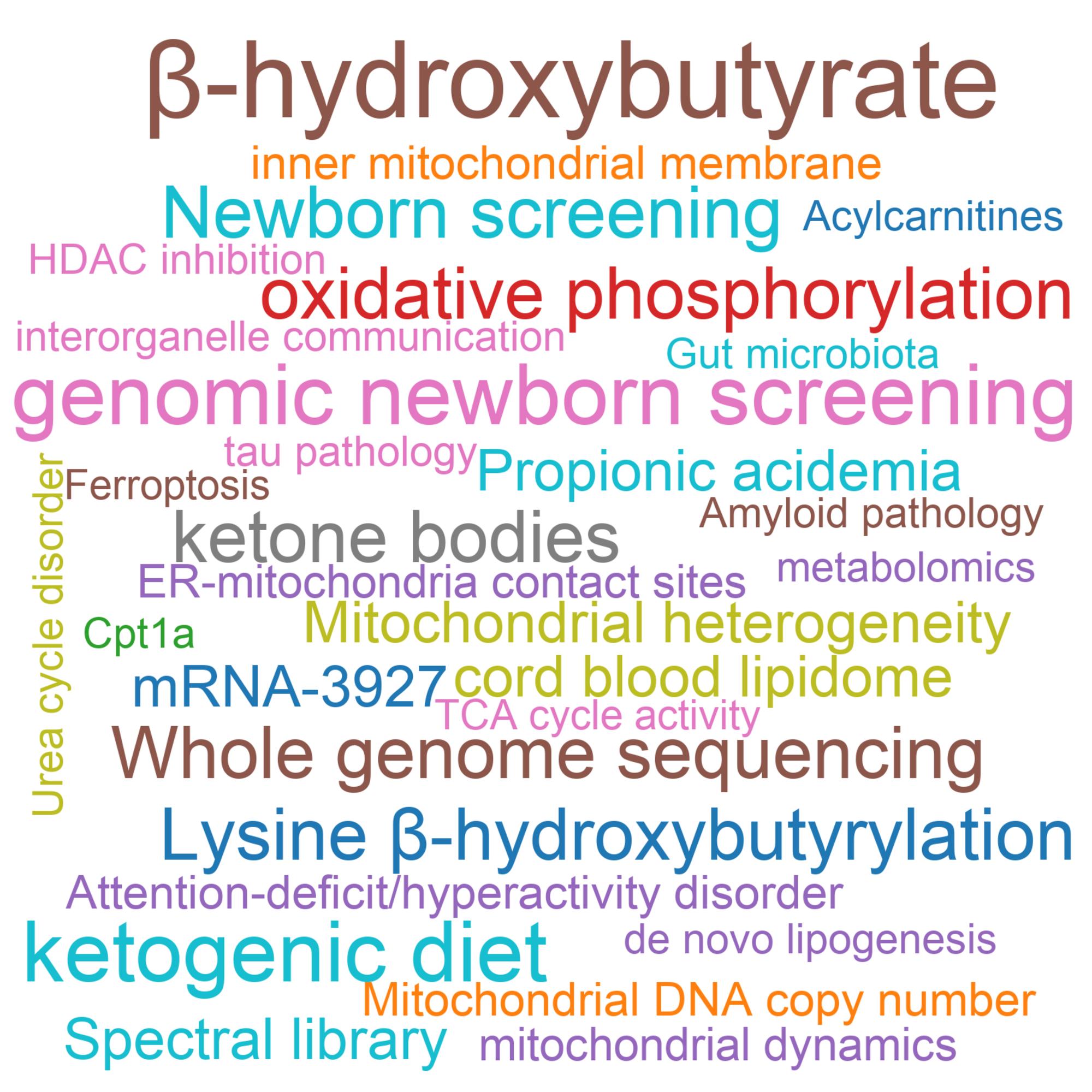
In the Class of 2026, research in metabolism and genetic disorders is defined by a strong convergence between metabolic ketone signaling and precision genomic diagnostics. The most prominent theme centers on β-hydroxybutyrate (10% normalized frequency) and ketone body dynamics, alongside broader investigations into ketogenic diets (8%) and novel post-translational modifications such as Lysine β-hydroxybutyrylation (6%). These findings highlight how ketone metabolites function not merely as energy substrates, but as pivotal epigenetic and signaling regulators in cellular homeostasis and metabolic dysfunction. Concurrently, genomic newborn screening (8%), whole genome sequencing (6%), and traditional newborn screening (6%) form a dominant diagnostic pillar. High-impact literature increasingly focuses on first-tier genomic sequencing for early detection of inborn errors of metabolism, including rare pediatric conditions such as propionic acidemia, phenylketonuria, and urea cycle disorders. Complementing these genomic diagnostic frameworks are analytical tools assessing acylcarnitines and oxidative phosphorylation defects, alongside lipid nanoparticle vectors for targeted metabolic gene therapies. Together, these top themes demonstrate a clinical shift toward early, population-scale genomic screening coupled with mechanistic insights into metabolite-driven epigenetic regulation.
How Did Topics Shift from the Class of 2025 to the Class of 2026?
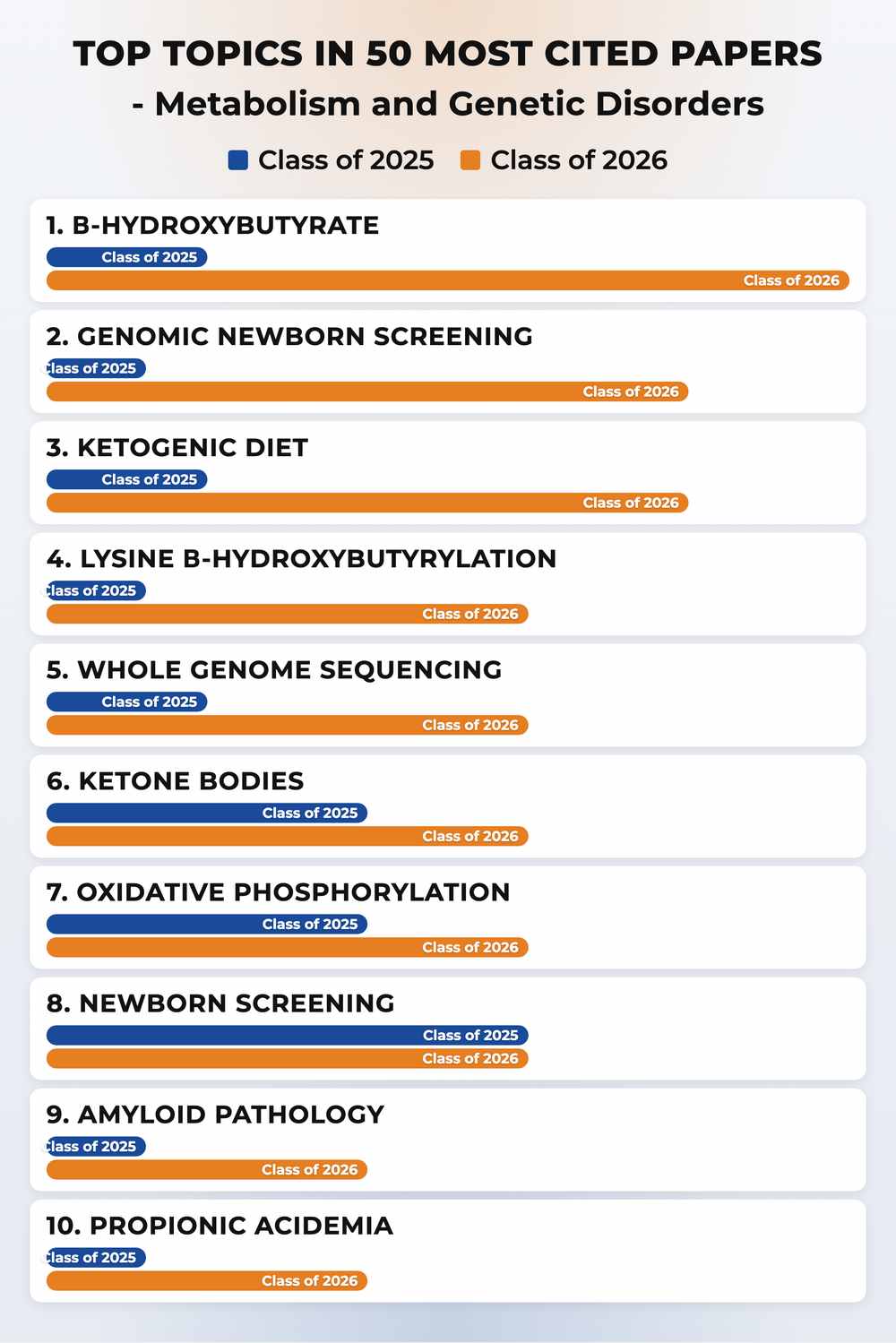
Comparing the Class of 2025 to the Class of 2026 reveals a pronounced paradigm shift toward early-life genomic screening and specialized metabolite-driven epigenetics. The most dramatic rise occurred in genomic newborn screening, which expanded from zero mentions in the 2025 cohort to an 8% normalized frequency in 2026, alongside a 3-fold increase in whole genome sequencing applications (2% to 6%). This shift reflects rapid clinical translation of comprehensive sequencing panels for diagnosing rare inborn errors of metabolism, such as propionic acidemia, early in life. Simultaneously, metabolic signaling research experienced substantial growth. Mentions of β-hydroxybutyrate increased 5-fold (2% to 10%), while ketogenic diet investigations quadrupled (2% to 8%). This surge was accompanied by the emergence of Lysine β-hydroxybutyrylation (6%) and related organelle dynamics like mitochondrial heterogeneity and TCA cycle activity. Conversely, structural sub-cellular topics such as ER-mitochondria contact sites experienced a slight relative decline (6% to 4%), as attention pivoted toward dynamic functional metabolomics, ferroptosis, and lipid nanoparticle-mediated therapeutic delivery. Overall, the trajectory underscores a rapid evolution from broad cellular ultrastructure toward high-resolution genomic screening and metabolite-directed therapeutic targets.
Methodology
PRI identifies high-impact research using a transparent, topic-agnostic framework applied consistently across scientific domains. Bibliographic records are drawn from OpenAlex, including publication dates, citation relationships, and document types.
This ranking covers the Class of 2026 cohort: journal articles published in 2024. Reviews and other non-article document types are excluded to ensure comparability.
Research impact is quantified with an 18-month post-publication citation window—the number of citing works published within 18 months of each paper's publication date. This metric captures early impact while controlling for publication age.
An LLM-based relevance classifier then reviews each candidate's title and abstract to confirm substantive alignment with the target domain. Only papers classified as relevant appear in the final ranking.
Zheng Su, Tinsley Li, Thematic Shifts in Early-High-Impact Cancer Genomics and Diagnostics Research: A Bibliometric and Semantic Analysis. bioRxiv 2026.07.04.736459; doi: https://doi.org/10.64898/2026.07.04.736459
Cite this ranking
Pepkio Research Index (PRI). Topics and Trends in Most Cited Metabolism and Genetic Disorders Papers, Class of 2026. https://pri.pepkio.com/top-papers/metabolism-and-genetic-disorders/2026. Accessed 2026-10-21.

Methodology
Zheng Su, Tinsley Li, Thematic Shifts in Early-High-Impact Cancer Genomics and Diagnostics Research: A Bibliometric and Semantic Analysis. bioRxiv 2026.07.04.736459; doi: https://doi.org/10.64898/2026.07.04.736459