
What topics and trends defined most-cited Diet and metabolism studies research in the Class of 2026?
Research in diet and metabolism is centered on gut microbiota and host-microbiome interactions, with microbial metabolism, intestinal lipid absorption, and tryptophan pathways emerging as rapid risers. Meanwhile, broad descriptive topics such as short-chain fatty acids and caloric restriction declined as attention shifted toward precise mechanistic pathways and GLP-1 therapies.
At a glance
- Field
- Diet and metabolism studies
- Cohort label
- Class of 2026 (2024 publications)
- Papers analyzed
- 15,608
- Papers ranked
- 20
- Top topics in ranked papers
- Gut microbiota, Host-microbiome interactions, Microbial metabolism, Ketogenic diet, GLP-1 receptor agonists
- Publication window
- Jan 1, 2024 – Dec 31, 2024
- Eligibility
- Research articles; reviews excluded
- Citation window
- 18 months post-publication
- 18m citation range
- 80–221
- Data source
- OpenAlex · Retrieved July 2026
- License
- CC BY 4.0
Rankings
20 papers ranked by 18-month citation count
Cellular ATP demand creates metabolically distinct subpopulations of mitochondria
Nature202410.1038/s41586-024-08146-w
A core microbiome signature as an indicator of health
Cell202410.1016/j.cell.2024.09.019
Gut symbionts alleviate MASH through a secondary bile acid biosynthetic pathway
Cell202410.1016/j.cell.2024.03.034
Metformin decelerates aging clock in male monkeys
Cell202410.1016/j.cell.2024.08.021
Gut microbiome and metabolome profiling in Framingham heart study reveals cholesterol-metabolizing bacteria
Cell202410.1016/j.cell.2024.03.014
Gut microbiota regulates stress responsivity via the circadian system
Cell Metabolism202410.1016/j.cmet.2024.10.003
Dietary fibre directs microbial tryptophan metabolism via metabolic interactions in the gut microbiota
Nature Microbiology202410.1038/s41564-024-01737-3
Resistant starch intake facilitates weight loss in humans by reshaping the gut microbiota
Nature Metabolism202410.1038/s42255-024-00988-y
Muscle matters: the effects of medically induced weight loss on skeletal muscle
The Lancet Diabetes & Endocrinology202410.1016/s2213-8587(24)00272-9
Microbiota metabolism of intestinal amino acids impacts host nutrient homeostasis and physiology
Cell Host & Microbe202410.1016/j.chom.2024.04.004
Gut physiology and environment explain variations in human gut microbiome composition and metabolism
Nature Microbiology202410.1038/s41564-024-01856-x
The Development and Evaluation of a Literature-Based Dietary Index for Gut Microbiota
Nutrients202410.3390/nu16071045
The impact of weight loss on fat-free mass, muscle, bone and hematopoiesis health: Implications for emerging pharmacotherapies aiming at fat reduction and lean mass preservation
Metabolism202410.1016/j.metabol.2024.156057
Gut microbiota modulates neurotransmitter and gut-brain signaling
Microbiological Research202410.1016/j.micres.2024.127858
Targeting Lactobacillus johnsonii to reverse chronic kidney disease
Signal Transduction and Targeted Therapy202410.1038/s41392-024-01913-1
Lithocholic acid phenocopies anti-ageing effects of calorie restriction
Nature202410.1038/s41586-024-08329-5
Ketogenic Diet Intervention on Metabolic and Psychiatric Health in Bipolar and Schizophrenia: A Pilot Trial
Psychiatry Research202410.1016/j.psychres.2024.115866
Dietaryindex: a user-friendly and versatile R package for standardizing dietary pattern analysis in epidemiological and clinical studies
American Journal of Clinical Nutrition202410.1016/j.ajcnut.2024.08.021
5-year follow-up of the randomised Diabetes Remission Clinical Trial (DiRECT) of continued support for weight loss maintenance in the UK: an extension study
The Lancet Diabetes & Endocrinology202410.1016/s2213-8587(23)00385-6
A brain-to-gut signal controls intestinal fat absorption
Nature202410.1038/s41586-024-07929-5
Topic trends
Dominant research themes and year-over-year shifts in Diet and metabolism studies
What Topics Define the Class of 2026?
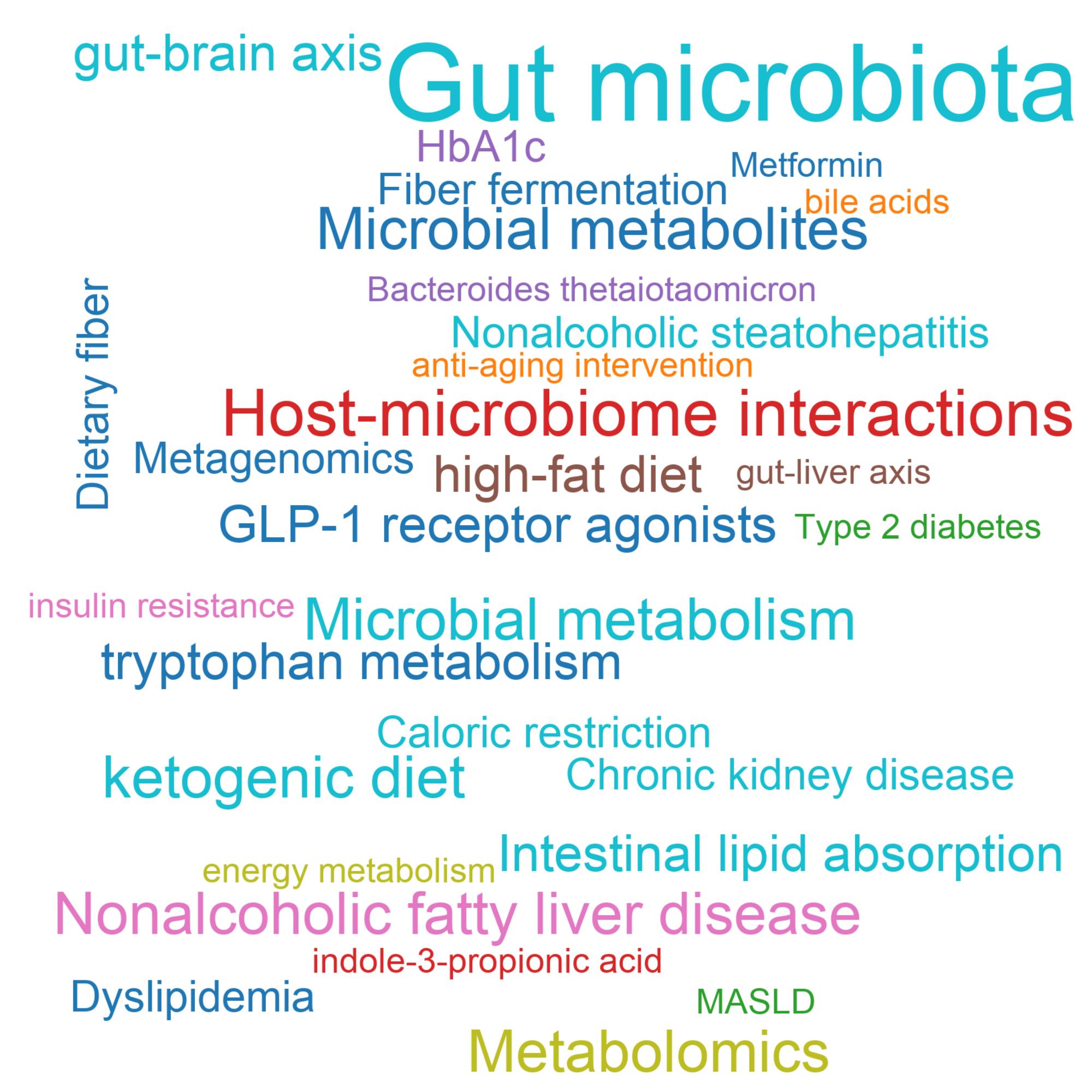
Gut microbiota dominates the research landscape in diet and metabolism, appearing in 34% of highly cited 2024 papers (17 out of 50 top publications). This strong representation underscores the central role of the intestinal microbiome in regulating metabolic homeostasis, energy balance, and systemic health. Interconnected metabolic sub-themes feature prominently across the cohort, including host-microbiome interactions (12%), microbial metabolism (10%), microbial metabolites (10%), and the gut-brain axis (8%). Dietary interventions and pharmacological strategies focus heavily on managing metabolic disorders such as nonalcoholic fatty liver disease (NAFLD/MASLD, 10%), type 2 diabetes, and obesity. Notably, ketogenic diets (10%), high-fat diet models (8%), and GLP-1 receptor agonists (8%) represent primary experimental and therapeutic modalities in the top literature. Emerging mechanistic areas include intestinal lipid absorption (8%), tryptophan metabolism (8%), and fiber fermentation (6%), reflecting a clear research pivot toward identifying specific biochemical pathways and metabolite mediators that connect dietary inputs to host metabolic responses.
How Did Topics Shift from the Class of 2025 to the Class of 2026?
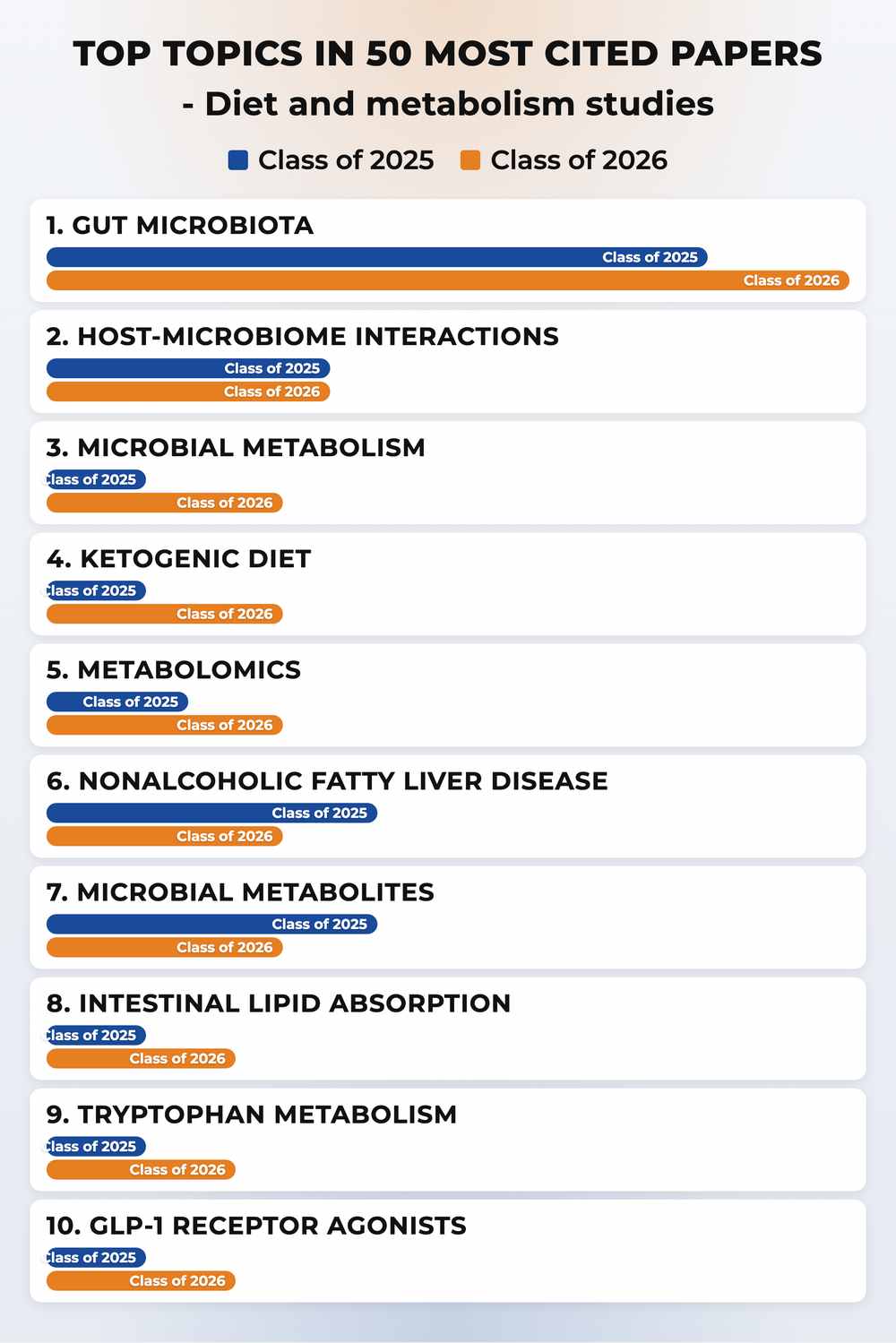
Comparing the Class of 2025 (2023 publications) to the Class of 2026 (2024 publications) reveals a clear transition from general metabolite profiling toward specific metabolic pathways and gut-targeted mechanisms. The fastest-growing concepts include microbial metabolism (+8 percentage points, expanding 5-fold from 2% to 10%), intestinal lipid absorption (+8 p.p., reaching 8%), and tryptophan metabolism (+8 p.p., reaching 8%). Fiber fermentation also gained momentum (+6 p.p.), alongside ketogenic diet studies (+6 p.p., rising to 10%), highlighting increased interest in targeted nutritional strategies. Conversely, broad descriptive concepts saw marked declines. Short-chain fatty acids (SCFAs) experienced the largest drop (-18 p.p.), falling from 22% (11 papers) in 2023 to 4% (2 papers) in 2024. General mentions of type 2 diabetes (-8 p.p.), nonalcoholic fatty liver disease (-4 p.p.), and caloric restriction (-4 p.p.) also contracted as researchers focused on specific therapeutic agents like GLP-1 receptor agonists and precise molecular mechanisms. Overall, the field is evolving from broad observational microbiome cataloging toward mechanistic studies of diet-host-microbiome cross-talk.
Methodology
PRI identifies high-impact research using a transparent, topic-agnostic framework applied consistently across scientific domains. Bibliographic records are drawn from OpenAlex, including publication dates, citation relationships, and document types.
This ranking covers the Class of 2026 cohort: journal articles published in 2024. Reviews and other non-article document types are excluded to ensure comparability.
Research impact is quantified with an 18-month post-publication citation window—the number of citing works published within 18 months of each paper's publication date. This metric captures early impact while controlling for publication age.
An LLM-based relevance classifier then reviews each candidate's title and abstract to confirm substantive alignment with the target domain. Only papers classified as relevant appear in the final ranking.
Zheng Su, Tinsley Li, Thematic Shifts in Early-High-Impact Cancer Genomics and Diagnostics Research: A Bibliometric and Semantic Analysis. bioRxiv 2026.07.04.736459; doi: https://doi.org/10.64898/2026.07.04.736459
Cite this ranking
Pepkio Research Index (PRI). Topics and Trends in Most Cited Diet and metabolism studies Papers, Class of 2026. https://pri.pepkio.com/top-papers/diet-and-metabolism-studies/2026. Accessed 2026-10-16.

Methodology
Zheng Su, Tinsley Li, Thematic Shifts in Early-High-Impact Cancer Genomics and Diagnostics Research: A Bibliometric and Semantic Analysis. bioRxiv 2026.07.04.736459; doi: https://doi.org/10.64898/2026.07.04.736459
Source data
The full ranking corpus and analysis files are openly available on an external repository. Please cite the dataset below when reusing this data.
View source dataset →Pepkio Research Index (2026). Diet and metabolism studies [Data set]. Figshare.