
What topics and trends defined most-cited Cancer-related Molecular Pathways research in the Class of 2026?
The Class of 2026 in Cancer-related Molecular Pathways is defined by a deep focus on targeted therapies for breast cancer, particularly CDK4/6 inhibitors and endocrine therapy. However, the field is rapidly pivoting toward novel resistance mechanisms, marked by a surge in research on CDK2 and post-translational modifications.
At a glance
- Field
- Cancer-related Molecular Pathways
- Cohort label
- Class of 2026 (2024 publications)
- Papers analyzed
- 3,171
- Papers ranked
- 20
- Top topics in ranked papers
- CDK4/6 inhibitors, TP53 mutation, endocrine therapy, breast cancer
- Publication window
- Jan 1, 2024 – Dec 31, 2024
- Eligibility
- Research articles; reviews excluded
- Citation window
- 18 months post-publication
- 18m citation range
- 39–272
- Data source
- OpenAlex · Retrieved June 2026
- License
- CC BY 4.0
Rankings
20 papers ranked by 18-month citation count
Alanyl-tRNA synthetase, AARS1, is a lactate sensor and lactyltransferase that lactylates p53 and contributes to tumorigenesis
Cell202410.1016/j.cell.2024.04.002
Imlunestrant with or without Abemaciclib in Advanced Breast Cancer
New England Journal of Medicine202410.1056/nejmoa2410858
Abemaciclib plus a nonsteroidal aromatase inhibitor as initial therapy for HR+, HER2− advanced breast cancer: final overall survival results of MONARCH 3
Annals of Oncology202410.1016/j.annonc.2024.04.013
Overall Survival With Palbociclib Plus Letrozole in Advanced Breast Cancer
Journal of Clinical Oncology202410.1200/jco.23.00137
Ononin inhibits triple-negative breast cancer lung metastasis by targeting the EGFR-mediated PI3K/Akt/mTOR pathway
Science China Life Sciences202410.1007/s11427-023-2499-2
PACE: A Randomized Phase II Study of Fulvestrant, Palbociclib, and Avelumab After Progression on Cyclin-Dependent Kinase 4/6 Inhibitor and Aromatase Inhibitor for Hormone Receptor–Positive/Human Epidermal Growth Factor Receptor–Negative Metastatic Breast Cancer
Journal of Clinical Oncology202410.1200/jco.23.01940
Discovery of WRN inhibitor HRO761 with synthetic lethality in MSI cancers
Nature202410.1038/s41586-024-07350-y
Direct and selective pharmacological disruption of the YAP–TEAD interface by IAG933 inhibits Hippo-dependent and RAS–MAPK-altered cancers
Nature Cancer202410.1038/s43018-024-00754-9
Cell cycle dysregulation in cancer
Pharmacological Reviews202410.1016/j.pharmr.2024.100030
Abemaciclib Plus Fulvestrant in Advanced Breast Cancer After Progression on CDK4/6 Inhibition: Results From the Phase III postMONARCH Trial
Journal of Clinical Oncology202410.1200/jco-24-02086
Final Results of RIGHT Choice: Ribociclib Plus Endocrine Therapy Versus Combination Chemotherapy in Premenopausal Women With Clinically Aggressive Hormone Receptor–Positive/Human Epidermal Growth Factor Receptor 2–Negative Advanced Breast Cancer
Journal of Clinical Oncology202410.1200/jco.24.00144
p53 at the crossroads of tumor immunity
Nature Cancer202410.1038/s43018-024-00796-z
TSPAN8 <sup>+</sup> myofibroblastic cancer–associated fibroblasts promote chemoresistance in patients with breast cancer
Science Translational Medicine202410.1126/scitranslmed.adj5705
Relocalizing transcriptional kinases to activate apoptosis
Science202410.1126/science.adl5361
Anti-tumor efficacy of HRS-4642 and its potential combination with proteasome inhibition in KRAS G12D-mutant cancer
Cancer Cell202410.1016/j.ccell.2024.06.001
Mechanisms of Response and Tolerance to Active RAS Inhibition in <i>KRAS</i> -Mutant Non–Small Cell Lung Cancer
Cancer Discovery202410.1158/2159-8290.cd-24-0421
Control of cell proliferation by memories of mitosis
Science202410.1126/science.add9528
Lactate enhances NMNAT1 lactylation to sustain nuclear NAD+ salvage pathway and promote survival of pancreatic adenocarcinoma cells under glucose-deprived conditions
Cancer Letters202410.1016/j.canlet.2024.216806
Sonrotoclax overcomes BCL2 G101V mutation–induced venetoclax resistance in preclinical models of hematologic malignancy
Blood202410.1182/blood.2023019706
Checkpoint Inhibition in Addition to Dabrafenib/Trametinib for BRAF <sup>V600E</sup> -Mutated Anaplastic Thyroid Carcinoma
Thyroid202410.1089/thy.2023.0573
Topic trends
Dominant research themes and year-over-year shifts in Cancer-related Molecular Pathways
What Topics Define the Class of 2026?
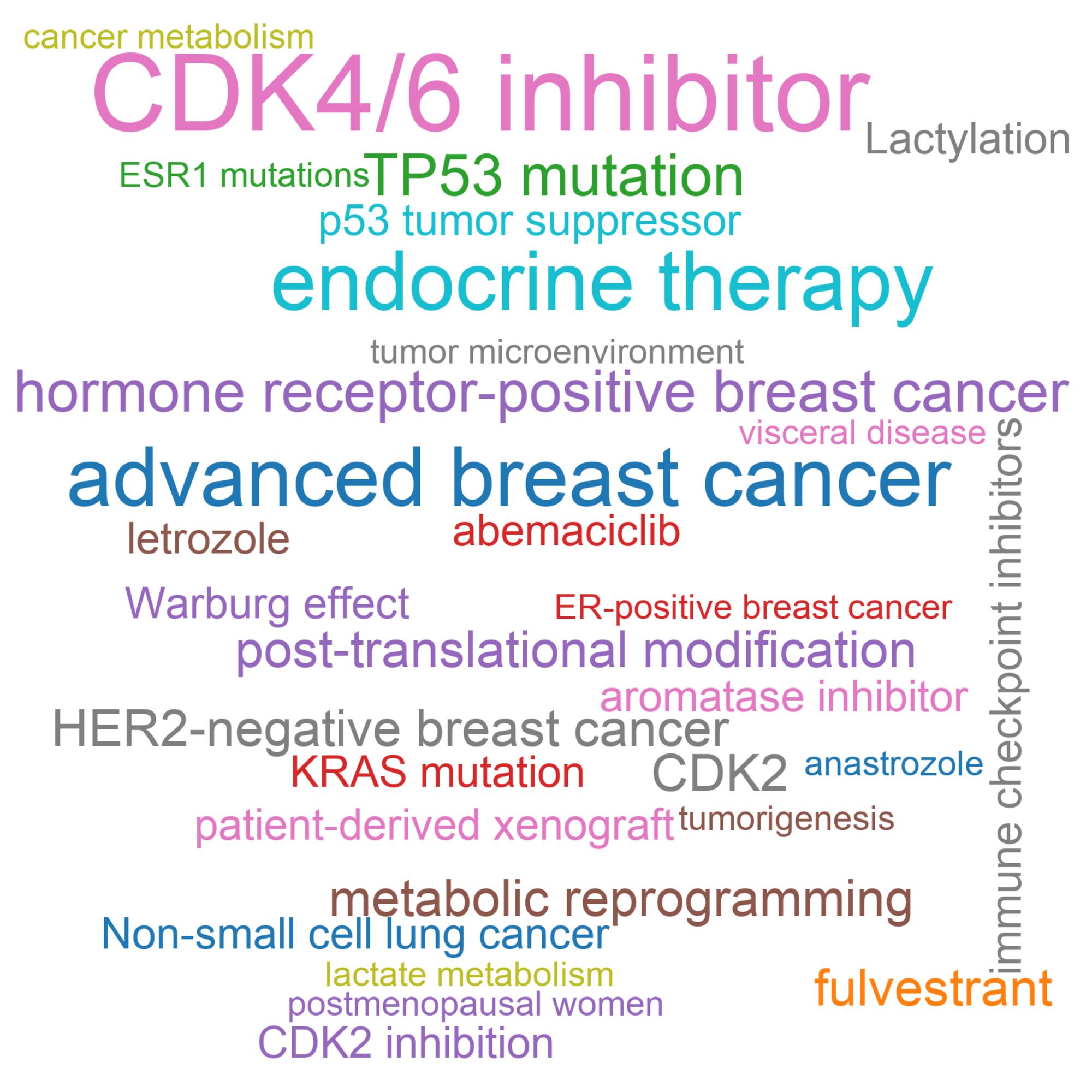
The research landscape for the Class of 2026 is heavily anchored in targeted therapies and biomarker-driven treatments, particularly for breast cancer. The most prominent theme is the continued focus on CDK4/6 inhibitors and their clinical application in advanced, hormone receptor-positive, and HER2-negative breast cancers. Complementing this is a strong emphasis on endocrine therapy and specific agents like fulvestrant. Beyond targeted inhibitors, the molecular underpinnings of cancer progression remain critical areas of investigation, with significant attention given to TP53 mutations and the mechanisms of metabolic reprogramming. Furthermore, post-translational modifications are emerging as important focal points for understanding signaling pathways and potential therapeutic targets. Together, these topics underscore a mature but evolving field dedicated to refining precision medicine and overcoming therapeutic resistance in oncology.
How Did Topics Shift from the Class of 2025 to the Class of 2026?
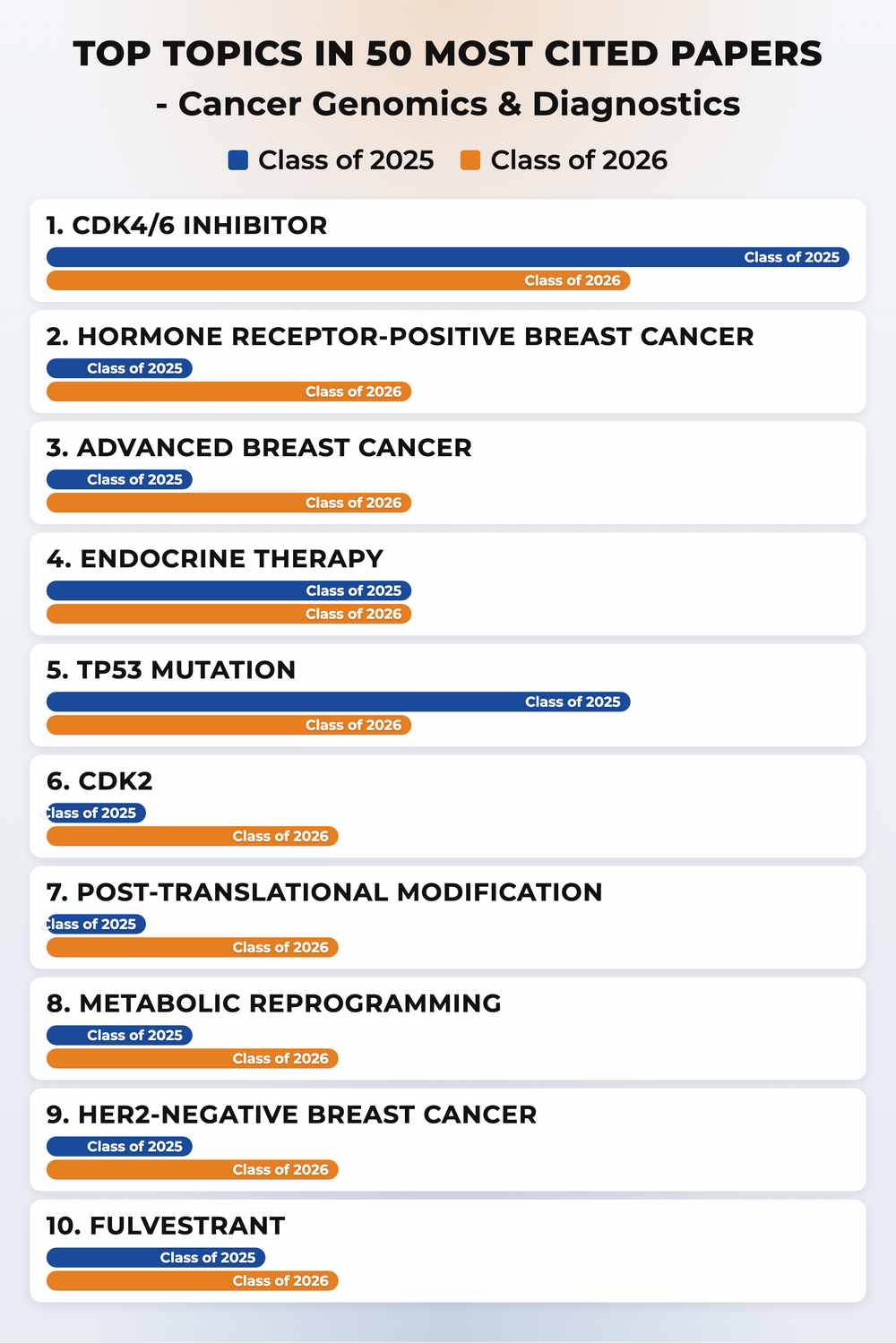
A comparison between the Class of 2025 and 2026 reveals a notable maturation in research priorities, marked by shifts from established targets to novel resistance mechanisms. While CDK4/6 inhibitors remain dominant, their relative frequency experienced a slight decline, alongside a decreased focus on generic TP53 mutations. In their place, we observe a sharp, four-fold increase in studies investigating CDK2 and post-translational modifications. This suggests a strategic pivot toward addressing resistance pathways that emerge following initial CDK4/6 inhibition. Additionally, clinical classifications such as advanced breast cancer and hormone receptor-positive breast cancer saw significant growth, reflecting an increasing dedication to specific patient stratifications. Overall, the field is transitioning from initial pathway characterization toward a more nuanced understanding of secondary targets and metabolic reprogramming in advanced disease states.
Methodology
PRI identifies high-impact research using a transparent, topic-agnostic framework applied consistently across scientific domains. Bibliographic records are drawn from OpenAlex, including publication dates, citation relationships, and document types.
This ranking covers the Class of 2026 cohort: journal articles published in 2024. Reviews and other non-article document types are excluded to ensure comparability.
Research impact is quantified with an 18-month post-publication citation window—the number of citing works published within 18 months of each paper's publication date. This metric captures early impact while controlling for publication age.
An LLM-based relevance classifier then reviews each candidate's title and abstract to confirm substantive alignment with the target domain. Only papers classified as relevant appear in the final ranking.
Zheng Su, Tinsley Li, Thematic Shifts in Early-High-Impact Cancer Genomics and Diagnostics Research: A Bibliometric and Semantic Analysis. bioRxiv 2026.07.04.736459; doi: https://doi.org/10.64898/2026.07.04.736459
Cite this ranking
Pepkio Research Index (PRI). Topics and Trends in Most Cited Cancer-related Molecular Pathways Papers, Class of 2026. https://pri.pepkio.com/top-papers/cancer-related-molecular-pathways/2026. Accessed 2026-10-24.

Methodology
Zheng Su, Tinsley Li, Thematic Shifts in Early-High-Impact Cancer Genomics and Diagnostics Research: A Bibliometric and Semantic Analysis. bioRxiv 2026.07.04.736459; doi: https://doi.org/10.64898/2026.07.04.736459