
What topics and trends defined most-cited Cancer-related molecular mechanisms research research in the Class of 2026?
Ferroptosis, lipid peroxidation, and long non-coding RNAs dominate the most impactful cancer molecular mechanism research of 2024. While targeted topics like immune evasion surged significantly, broader subjects like biomarkers and metastasis saw a relative decline compared to the previous year.
At a glance
- Field
- Cancer-related molecular mechanisms research
- Cohort label
- Class of 2026 (2024 publications)
- Papers analyzed
- 12,024
- Papers ranked
- 20
- Top topics in ranked papers
- Ferroptosis, Lipid peroxidation, Long non-coding RNA, N6-methyladenosine (m6A)
- Publication window
- Jan 1, 2024 – Dec 31, 2024
- Eligibility
- Research articles; reviews excluded
- Citation window
- 18 months post-publication
- 18m citation range
- 56–178
- Data source
- OpenAlex · Retrieved Jul 2026
- License
- CC BY 4.0
Rankings
20 papers ranked by 18-month citation count
miRTarBase 2025: updates to the collection of experimentally validated microRNA–target interactions
Nucleic Acids Research202410.1093/nar/gkae1072
Phospholipids with two polyunsaturated fatty acyl tails promote ferroptosis
Cell202410.1016/j.cell.2024.01.030
Zeb1 mediates EMT/plasticity-associated ferroptosis sensitivity in cancer cells by regulating lipogenic enzyme expression and phospholipid composition
Nature Cell Biology202410.1038/s41556-024-01464-1
Targeting and engineering long non-coding RNAs for cancer therapy
Nature Reviews Genetics202410.1038/s41576-024-00693-2
Claudin 18.2 as a novel therapeutic target
Nature Reviews Clinical Oncology202410.1038/s41571-024-00874-2
PD-1 signaling limits expression of phospholipid phosphatase 1 and promotes intratumoral CD8+ T cell ferroptosis
Immunity202410.1016/j.immuni.2024.08.003
Lactate reprograms glioblastoma immunity through CBX3-regulated histone lactylation
Journal of Clinical Investigation202410.1172/jci176851
Itaconate transporter SLC13A3 impairs tumor immunity via endowing ferroptosis resistance
Cancer Cell202410.1016/j.ccell.2024.10.010
OPA1 promotes ferroptosis by augmenting mitochondrial ROS and suppressing an integrated stress response
Molecular Cell202410.1016/j.molcel.2024.07.020
RNA m5C oxidation by TET2 regulates chromatin state and leukaemogenesis
Nature202410.1038/s41586-024-07969-x
Spatial transcriptomics reveals discrete tumour microenvironments and autocrine loops within ovarian cancer subclones
Nature Communications202410.1038/s41467-024-47271-y
crVDAC3 alleviates ferroptosis by impeding HSPB1 ubiquitination and confers trastuzumab deruxtecan resistance in HER2-low breast cancer
Drug Resistance Updates202410.1016/j.drup.2024.101126
NF-κB role on tumor proliferation, migration, invasion and immune escape
Cancer Gene Therapy202410.1038/s41417-024-00811-6
A non-canonical role for a small nucleolar RNA in ribosome biogenesis and senescence
Cell202410.1016/j.cell.2024.06.019
PTBP1 Lactylation Promotes Glioma Stem Cell Maintenance through PFKFB4-Driven Glycolysis
Cancer Research202410.1158/0008-5472.can-24-1412
SOX17 enables immune evasion of early colorectal adenomas and cancers
Nature202410.1038/s41586-024-07135-3
Mitophagy mediated by BNIP3 and NIX protects against ferroptosis by downregulating mitochondrial reactive oxygen species
Cell Death and Differentiation202410.1038/s41418-024-01280-y
Revealing the role of serum exosomal novel long non-coding RNA NAMPT-AS as a promising diagnostic/prognostic biomarker in colorectal cancer patients
Life Sciences202410.1016/j.lfs.2024.122850
Targeted activation of ferroptosis in colorectal cancer via LGR4 targeting overcomes acquired drug resistance
Nature Cancer202410.1038/s43018-023-00715-8
Integrative analysis of genomic and epigenomic regulation reveals miRNA mediated tumor heterogeneity and immune evasion in lower grade glioma
Communications Biology202410.1038/s42003-024-06488-9
Topic trends
Dominant research themes and year-over-year shifts in Cancer-related molecular mechanisms research
What Topics Define the Class of 2026?
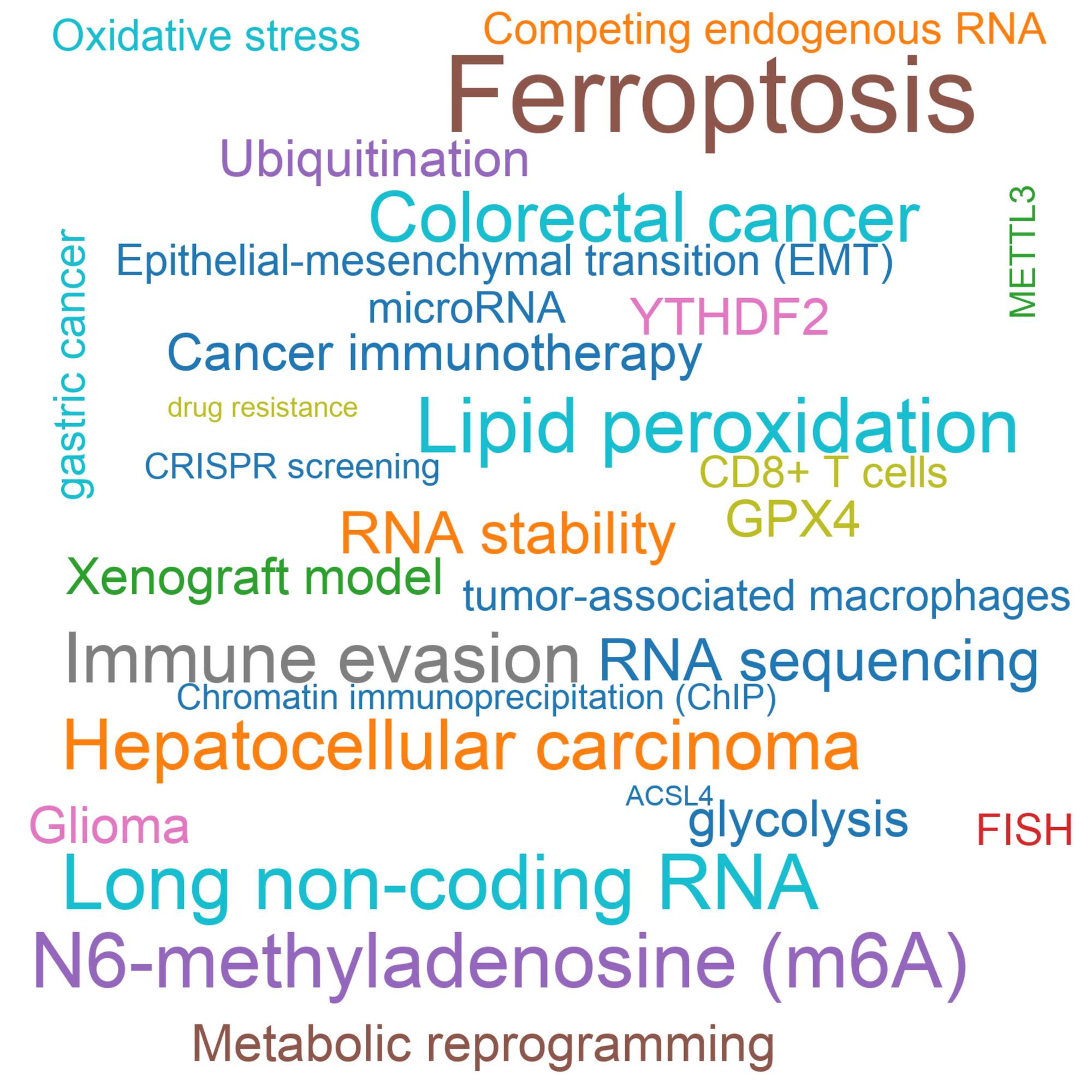
Ferroptosis and lipid peroxidation are the most prominent themes defining the 2024 cohort for cancer molecular mechanisms, reflecting a deep, growing interest in targeting alternative cell death pathways for cancer therapy. Non-coding RNAs, particularly long non-coding RNAs (lncRNAs), and epigenetic modifications like N6-methyladenosine (m6A) also feature heavily, underscoring the critical role of post-transcriptional regulation in tumor progression. The prominence of these highly specific molecular mechanisms highlights a broader shift towards precision oncology and the search for novel therapeutic vulnerabilities in cancer cells.
How Did Topics Shift from the Class of 2025 to the Class of 2026?
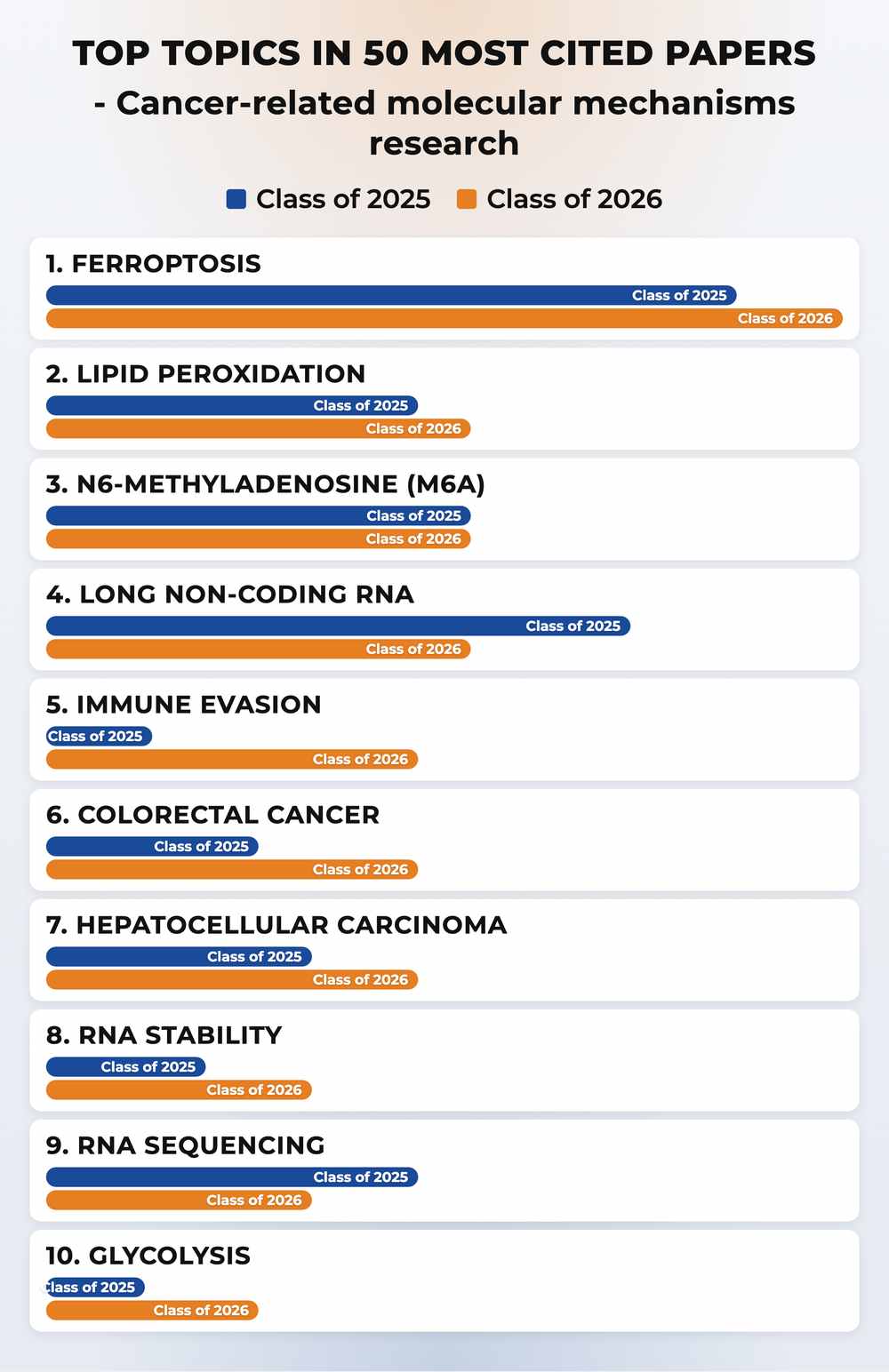
The transition from the 2023 to 2024 cohort reveals a notable shift towards specialized, actionable mechanisms. Topics like immune evasion and cancer immunotherapy saw the most significant growth, with immune evasion experiencing an impressive 3.5-fold increase in relative frequency. Ferroptosis and lipid peroxidation also continued to rise. Conversely, broader, more traditional topics such as biomarkers, cell death, and metastasis decreased in relative prominence. This trend indicates a maturing field where researchers are increasingly focusing on the precise molecular interactions that drive therapeutic resistance and immune escape, rather than general tumor characteristics.
Methodology
PRI identifies high-impact research using a transparent, topic-agnostic framework applied consistently across scientific domains. Bibliographic records are drawn from OpenAlex, including publication dates, citation relationships, and document types.
This ranking covers the Class of 2026 cohort: journal articles published in 2024. Reviews and other non-article document types are excluded to ensure comparability.
Research impact is quantified with an 18-month post-publication citation window—the number of citing works published within 18 months of each paper's publication date. This metric captures early impact while controlling for publication age.
An LLM-based relevance classifier then reviews each candidate's title and abstract to confirm substantive alignment with the target domain. Only papers classified as relevant appear in the final ranking.
Zheng Su, Tinsley Li, Thematic Shifts in Early-High-Impact Cancer Genomics and Diagnostics Research: A Bibliometric and Semantic Analysis. bioRxiv 2026.07.04.736459; doi: https://doi.org/10.64898/2026.07.04.736459
Cite this ranking
Pepkio Research Index (PRI). Topics and Trends in Most Cited Cancer-related molecular mechanisms research Papers, Class of 2026. https://pri.pepkio.com/top-papers/cancer-related-molecular-mechanisms-research/2026. Accessed 2026-10-16.

Methodology
Zheng Su, Tinsley Li, Thematic Shifts in Early-High-Impact Cancer Genomics and Diagnostics Research: A Bibliometric and Semantic Analysis. bioRxiv 2026.07.04.736459; doi: https://doi.org/10.64898/2026.07.04.736459