
What topics and trends defined most-cited Neuropeptides and Animal Physiology research in the Class of 2026?
GLP-1 receptor agonists, sensory neurons, type 2 diabetes, and neuroimmune interactions define the Class of 2026 neuropeptides and animal physiology cohort. Metabolic incretin signaling, dual GIP/GLP-1 agonists, and pain/neuroimmune pathways rose sharply from the Class of 2025, while traditional G protein coupling and allosteric GPCR framing receded among top-cited papers.
At a glance
- Field
- Neuropeptides and Animal Physiology
- Cohort label
- Class of 2026 (2024 publications)
- Papers analyzed
- 2,715
- Papers ranked
- 20
- Top topics in ranked papers
- GLP-1 receptor agonists, Sensory neurons, Type 2 diabetes mellitus, Neuroimmune interaction, GPCR signaling
- Publication window
- Jan 1, 2024 – Dec 31, 2024
- Eligibility
- Research articles; reviews excluded
- Citation window
- 18 months post-publication
- 18m citation range
- 24–127
- Data source
- OpenAlex · Retrieved Jul 2026
- License
- CC BY 4.0
Rankings
20 papers ranked by 18-month citation count
Neuronal substance P drives metastasis through an extracellular RNA–TLR7 axis
Nature202410.1038/s41586-024-07767-5
A GIPR antagonist conjugated to GLP-1 analogues promotes weight loss with improved metabolic parameters in preclinical and phase 1 settings
Nature Metabolism202410.1038/s42255-023-00966-w
A chemogenetic screen reveals that Trpv1-expressing neurons control regulatory T cells in the gut
Science202410.1126/science.adk1679
Neuropeptide signalling orchestrates T cell differentiation
Nature202410.1038/s41586-024-08049-w
Distinct µ-opioid ensembles trigger positive and negative fentanyl reinforcement
Nature202410.1038/s41586-024-07440-x
Ligand efficacy modulates conformational dynamics of the µ-opioid receptor
Nature202410.1038/s41586-024-07295-2
Unlocking opioid neuropeptide dynamics with genetically encoded biosensors
Nature Neuroscience202410.1038/s41593-024-01697-1
GLP-1R–positive neurons in the lateral septum mediate the anorectic and weight-lowering effects of liraglutide in mice
Journal of Clinical Investigation202410.1172/jci178239
Inhalable cardiac targeting peptide modified nanomedicine prevents pressure overload heart failure in male mice
Nature Communications202410.1038/s41467-024-50312-1
A µ-opioid receptor modulator that works cooperatively with naloxone
Nature202410.1038/s41586-024-07587-7
The pharmacological basis for nonpeptide agonism of the GLP-1 receptor by orforglipron
Science Translational Medicine202410.1126/scitranslmed.adp5765
Inputs to the locus coeruleus from the periaqueductal gray and rostroventral medulla shape opioid-mediated descending pain modulation
Science Advances202410.1126/sciadv.adj9581
Pituitary adenylate cyclase-activating polypeptide signalling as a therapeutic target in migraine
Nature Reviews Neurology202410.1038/s41582-024-01011-4
Somatosensory cortex and central amygdala regulate neuropathic pain-mediated peripheral immune response via vagal projections to the spleen
Nature Neuroscience202410.1038/s41593-023-01561-8
Basolateral amygdala parvalbumin and cholecystokinin-expressing GABAergic neurons modulate depressive and anxiety-like behaviors
Translational Psychiatry202410.1038/s41398-024-03135-z
Cytokines reprogram airway sensory neurons in asthma
Cell Reports202410.1016/j.celrep.2024.115045
Machine learning designs new GCGR/GLP-1R dual agonists with enhanced biological potency
Nature Chemistry202410.1038/s41557-024-01532-x
Profiling the proximal proteome of the activated μ-opioid receptor
Nature Chemical Biology202410.1038/s41589-024-01588-3
Beneath the surface: endosomal GPCR signaling
Trends in Biochemical Sciences202410.1016/j.tibs.2024.03.006
GPCR-dependent and -independent arrestin signaling
Trends in Pharmacological Sciences202410.1016/j.tips.2024.05.007
Topic trends
Dominant research themes and year-over-year shifts in Neuropeptides and Animal Physiology
What Topics Define the Class of 2026?
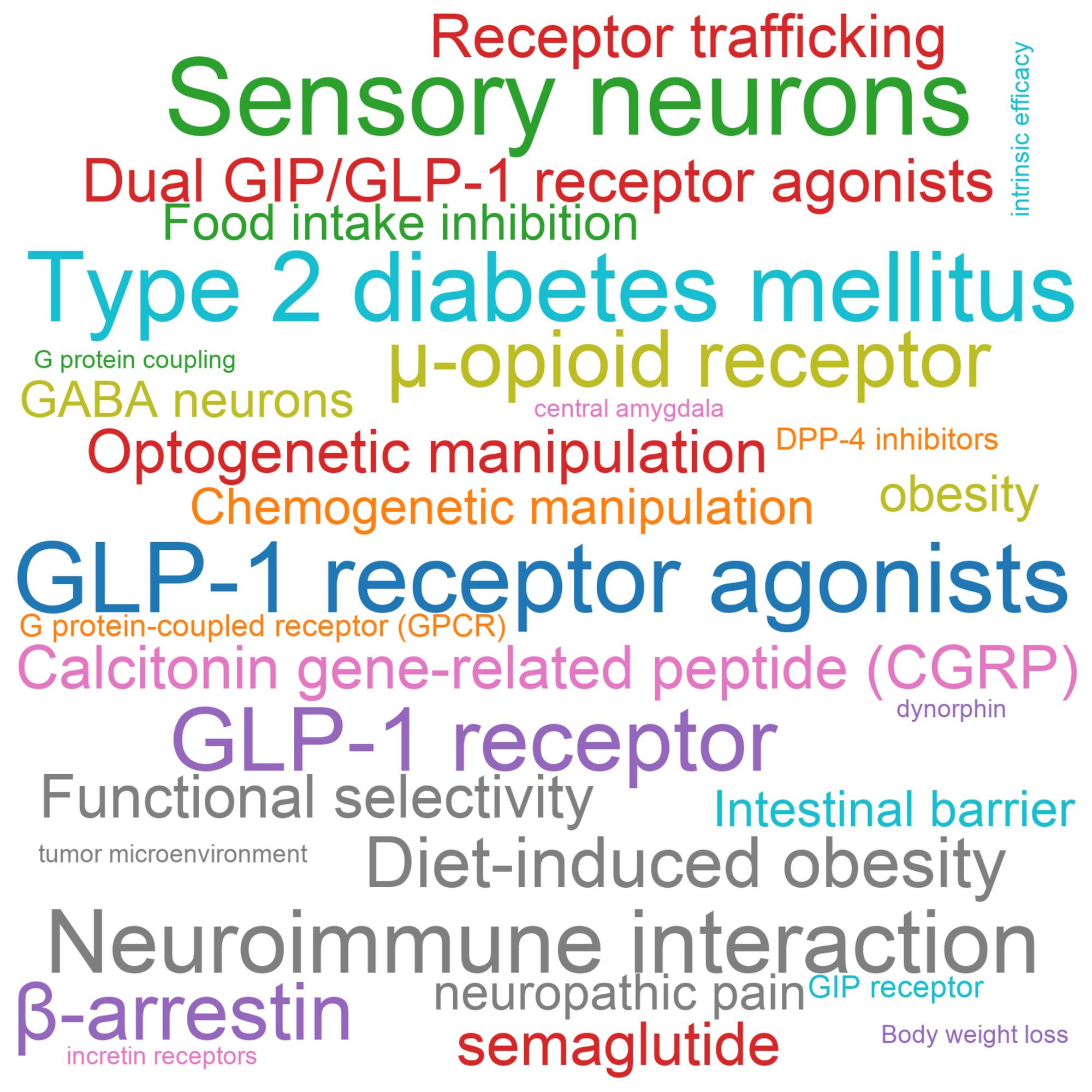
The informative word cloud across the highest 18-month-cited neuropeptides and animal physiology papers reveals a research landscape structured around metabolic neuropeptide signaling, sensory neurobiology, and GPCR functional selectivity. GLP-1 receptor agonists lead the cohort at 7 of 42 ranked papers (normalized frequency 0.167), co-occurring prominently with sensory neurons (7 papers, 0.167) and type 2 diabetes mellitus (7 papers, 0.167). The GLP-1 receptor (6 papers, 0.143) and neuroimmune interaction (6 papers, 0.143) form a central mechanistic bridge between central metabolic control and peripheral tissue innervation. Classic neuropeptide and receptor systems retain major representation, including β-arrestin (5 papers, 0.119), μ-opioid receptor (5 papers, 0.119), and calcitonin gene-related peptide (CGRP, 4 papers, 0.095). High-impact methodological and translational clusters feature optogenetic manipulation (4 papers, 0.095), chemogenetic manipulation (3 papers, 0.071), and functional selectivity (4 papers, 0.095) alongside receptor trafficking (4 papers, 0.095). Metabolic and therapeutic topics—specifically dual GIP/GLP-1 receptor agonists (4 papers, 0.095), diet-induced obesity (4 papers, 0.095), semaglutide (4 papers, 0.095), and DPP-4 inhibitors (3 papers, 0.071)—highlight how neuropeptide biology is increasingly tied to systemic cardiometabolic regulation and targeted neuro-pharmacology.
How Did Topics Shift from the Class of 2025 to the Class of 2026?
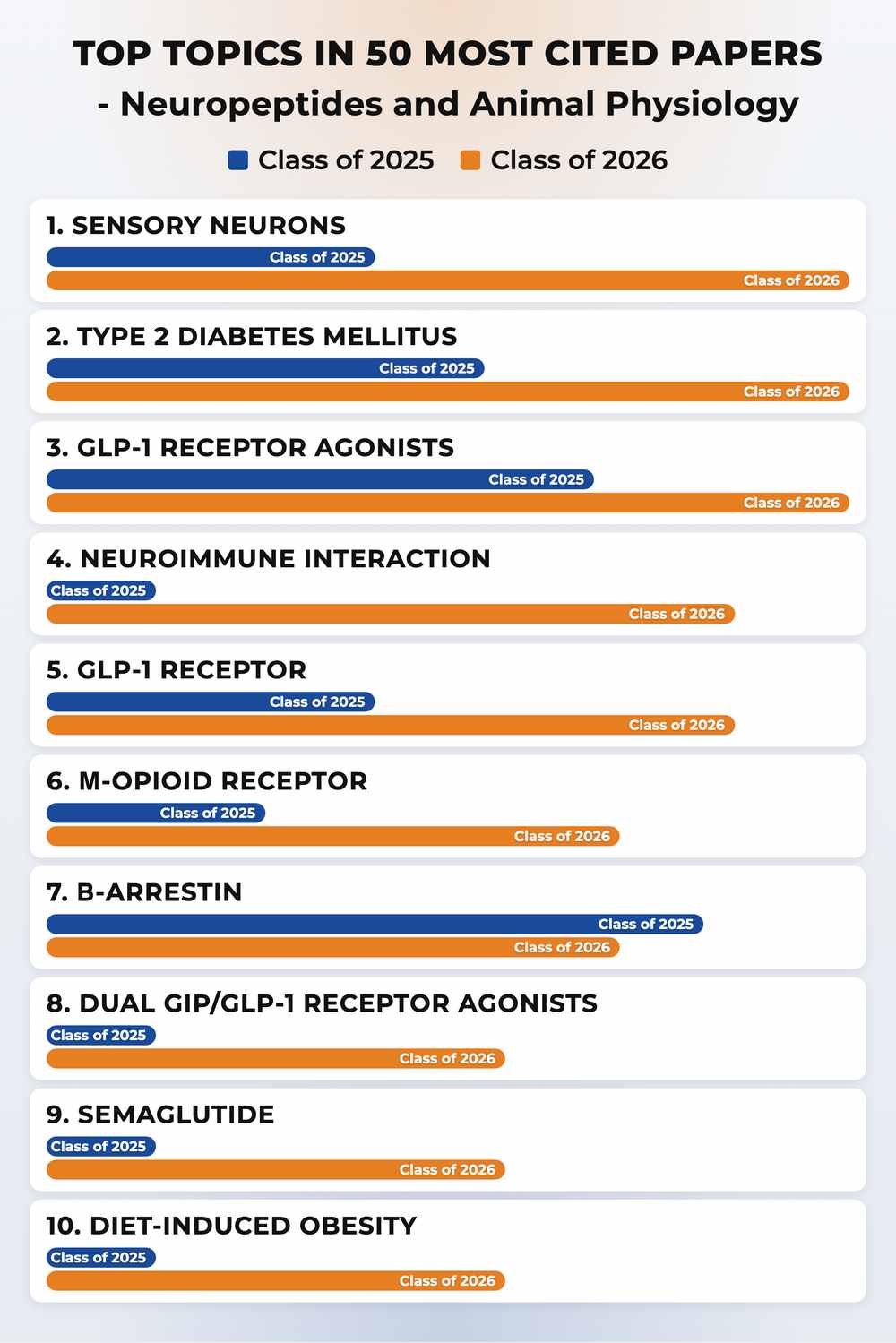
Comparing normalized concept frequencies between the Class of 2025 (2023 publications) and Class of 2026 (2024 publications) reveals a clear shift from foundational GPCR signal-transduction biophysics toward neuroimmune crosstalk and incretin-based metabolic physiology. Neuroimmune interaction demonstrated the largest net increase in normalized frequency (+0.120; rising from 1 paper to 6 papers, fold change 6.29), reflecting growing interest in peripheral nerve-immune organ axes. Sensory neurons (+0.098; 3 to 7 papers) and μ-opioid receptor (+0.074; 2 to 5 papers) also expanded substantially, alongside CGRP (+0.050; 2 to 4 papers) in pain and neurovascular physiology. Metabolic neuropeptides saw synchronized gains across type 2 diabetes (+0.076; 4 to 7 papers), GLP-1 receptor (+0.075; 3 to 6 papers), dual GIP/GLP-1 receptor agonists (+0.073; 1 to 4 papers), semaglutide (+0.073; 1 to 4 papers), and diet-induced obesity (+0.073; 1 to 4 papers). Conversely, baseline G protein coupling exhibited the steepest decline (−0.179; dropping from 10 to 2 papers, fold change 0.21), with allosteric modulation (−0.066; 5 to 2 papers) and general GPCR terms (−0.042) also receding. Together, these trends mark a strategic transition in top-cited neuropeptide literature from isolated in vitro receptor dynamics to integrated whole-animal physiological systems.
Methodology
PRI identifies high-impact research using a transparent, topic-agnostic framework applied consistently across scientific domains. Bibliographic records are drawn from OpenAlex, including publication dates, citation relationships, and document types.
This ranking covers the Class of 2026 cohort: journal articles published in 2024. Reviews and other non-article document types are excluded to ensure comparability.
Research impact is quantified with an 18-month post-publication citation window—the number of citing works published within 18 months of each paper's publication date. This metric captures early impact while controlling for publication age.
An LLM-based relevance classifier then reviews each candidate's title and abstract to confirm substantive alignment with the target domain. Only papers classified as relevant appear in the final ranking.
Zheng Su, Tinsley Li, Thematic Shifts in Early-High-Impact Cancer Genomics and Diagnostics Research: A Bibliometric and Semantic Analysis. bioRxiv 2026.07.04.736459; doi: https://doi.org/10.64898/2026.07.04.736459
Cite this ranking
Pepkio Research Index (PRI). Topics and Trends in Most Cited Neuropeptides and Animal Physiology Papers, Class of 2026. https://pri.pepkio.com/top-papers/neuropeptides-and-animal-physiology/2026. Accessed 2026-09-13.

Methodology
Zheng Su, Tinsley Li, Thematic Shifts in Early-High-Impact Cancer Genomics and Diagnostics Research: A Bibliometric and Semantic Analysis. bioRxiv 2026.07.04.736459; doi: https://doi.org/10.64898/2026.07.04.736459