
What topics and trends defined most-cited Probiotics and Fermented Foods research in the Class of 2026?
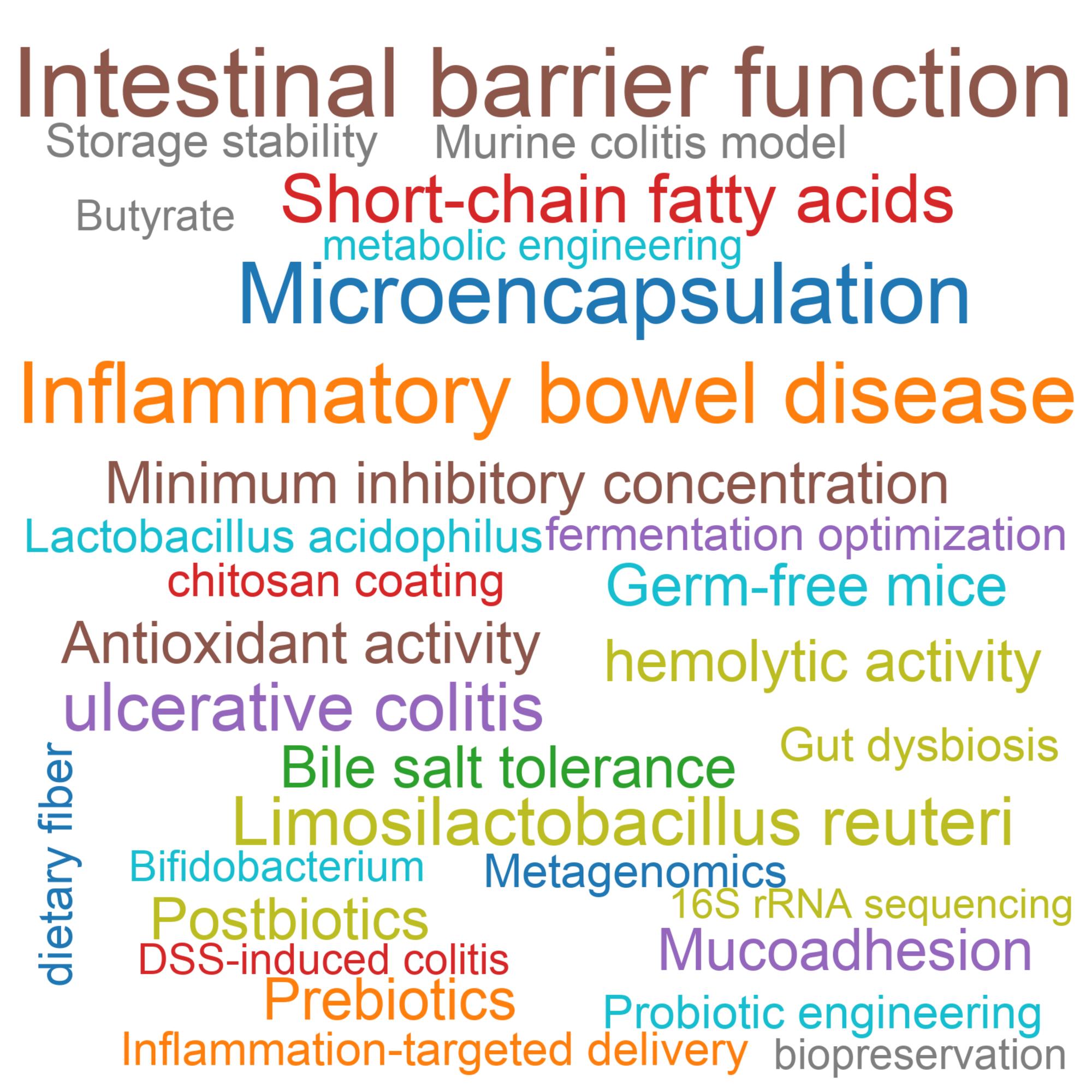
Intestinal barrier function and microencapsulation for probiotics are the most dominant topics in the Class of 2026, alongside therapeutic applications for conditions like inflammatory bowel disease (IBD) and ulcerative colitis. Notably, specific strains such as Limosilactobacillus reuteri saw massive growth compared to the previous cohort, reinforcing a shift toward targeted therapies.
At a glance
- Field
- Probiotics and Fermented Foods
- Cohort label
- Class of 2026 (2024 publications)
- Papers analyzed
- 9,612
- Papers ranked
- 20
- Top topics in ranked papers
- Intestinal barrier function, Inflammatory bowel disease, Microencapsulation
- Publication window
- Jan 1, 2024 – Dec 31, 2024
- Eligibility
- Research articles; reviews excluded
- Citation window
- 18 months post-publication
- 18m citation range
- 38–117
- Data source
- OpenAlex · Retrieved July 2026
- License
- CC BY 4.0
Rankings
20 papers ranked by 18-month citation count
Bacteroides uniformis degrades β-glucan to promote Lactobacillus johnsonii improving indole-3-lactic acid levels in alleviating colitis
Microbiome202410.1186/s40168-024-01896-9
Unexplored microbial diversity from 2,500 food metagenomes and links with the human microbiome
Cell202410.1016/j.cell.2024.07.039
Galactooligosaccharides and Limosilactobacillus reuteri synergistically alleviate gut inflammation and barrier dysfunction by enriching Bacteroides acidifaciens for pentadecanoic acid biosynthesis
Nature Communications202410.1038/s41467-024-53144-1
Reinforcement of the intestinal mucosal barrier via mucus-penetrating PEGylated bacteria
Nature Biomedical Engineering202410.1038/s41551-024-01224-4
Responsively Degradable Nanoarmor‐Assisted Super Resistance and Stable Colonization of Probiotics for Enhanced Inflammation‐Targeted Delivery
Advanced Materials202410.1002/adma.202308728
Lactobacillus acidophilus suppresses non-alcoholic fatty liver disease-associated hepatocellular carcinoma through producing valeric acid
EBioMedicine202410.1016/j.ebiom.2023.104952
Targeted delivery of the probiotic Saccharomyces boulardii to the extracellular matrix enhances gut residence time and recovery in murine colitis
Nature Communications202410.1038/s41467-024-48128-0
Microencapsulation of probiotics in chitosan-coated alginate/gellan gum: Optimization for viability and stability enhancement
Food Hydrocolloids202410.1016/j.foodhyd.2024.109788
Encapsulation method of probiotic embedded delivery system and its application in food
Food Hydrocolloids202410.1016/j.foodhyd.2024.110625
Precision fermentation in the realm of microbial protein production: State-of-the-art and future insights
Food Research International202410.1016/j.foodres.2024.115527
Antibacterial mechanisms of diacetyl on Listeria monocytogenes and its application in Inner Mongolian cheese preservation via gelatin-based edible films
Food Control202410.1016/j.foodcont.2024.110920
Primary succession of Bifidobacteria drives pathogen resistance in neonatal microbiota assembly
Nature Microbiology202410.1038/s41564-024-01804-9
<i>Clostridium sporogenes</i> -derived metabolites protect mice against colonic inflammation
Gut Microbes202410.1080/19490976.2024.2412669
Clinical Use of Paraprobiotics for Pregnant Women with Periodontitis: Randomized Clinical Trial
Dentistry Journal202410.3390/dj12040116
Lactobacillaceae differentially impact butyrate-producing gut microbiota to drive CNS autoimmunity
Gut Microbes202410.1080/19490976.2024.2418415
Taking SCFAs produced by Lactobacillus reuteri orally reshapes gut microbiota and elicits antitumor responses
Journal of Nanobiotechnology202410.1186/s12951-024-02506-4
Functional roles and engineering strategies to improve the industrial functionalities of lactic acid bacteria during food fermentation
Biotechnology Advances202410.1016/j.biotechadv.2024.108397
Design and reporting of prebiotic and probiotic clinical trials in the context of diet and the gut microbiome
Nature Microbiology202410.1038/s41564-024-01831-6
Gastrointestinal Self-Adaptive and Nutrient Self-Sufficient <i>Akkermansia muciniphila</i>–Gelatin Porous Microgels for Synergistic Therapy of Ulcerative Colitis
ACS Nano202410.1021/acsnano.4c07658
Akkermansia muciniphila ONE effectively ameliorates dextran sulfate sodium (DSS)-induced ulcerative colitis in mice
npj Science of Food202410.1038/s41538-024-00339-x
Topic trends
Dominant research themes and year-over-year shifts in Probiotics and Fermented Foods
What Topics Define the Class of 2026?
The Class of 2026 for Probiotics and Fermented Foods is heavily defined by research into delivery mechanisms and therapeutic efficacy. Intestinal barrier function (26% normalized frequency) and microencapsulation (22%) are the top themes, highlighting a major push to ensure probiotics survive digestion to reach the lower gut and actively restore epithelial integrity. Beyond delivery, therapeutic applications are highly prominent, particularly concerning inflammatory bowel diseases (22%). Conditions like ulcerative colitis feature prominently (15%), underscoring the field's focus on clinical and preclinical models of gut inflammation. Collectively, these topics suggest the field is maturing past general microbiome associations to focus on targeted delivery and specific therapeutic outcomes.
How Did Topics Shift from the Class of 2025 to the Class of 2026?
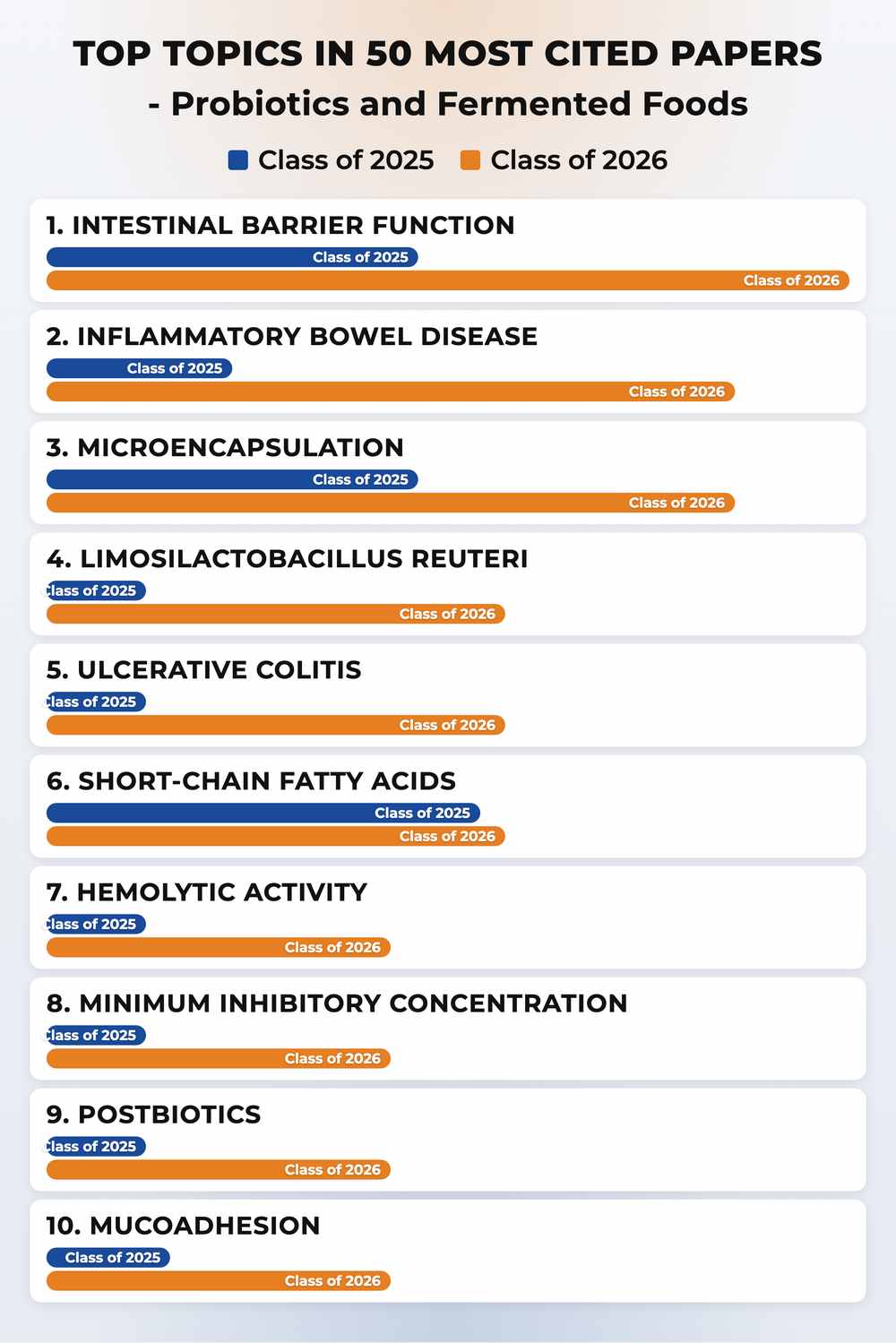
The most striking shift between the cohorts is the massive rise in specific targeted applications and bacterial strains. Limosilactobacillus reuteri jumped from negligible presence to 15% of top papers, showing a shift towards analyzing specific impactful strains rather than broad microbial communities. Inflammatory bowel disease models and ulcerative colitis also saw tremendous growth, increasing by nearly 4-fold and 7-fold respectively. Meanwhile, microencapsulation nearly doubled in frequency. This pattern mirrors the field's overall trajectory: transitioning from studying general metabolic effects to focusing on advanced encapsulation materials required to deliver specific probiotic strains effectively for complex diseases.
Methodology
PRI identifies high-impact research using a transparent, topic-agnostic framework applied consistently across scientific domains. Bibliographic records are drawn from OpenAlex, including publication dates, citation relationships, and document types.
This ranking covers the Class of 2026 cohort: journal articles published in 2024. Reviews and other non-article document types are excluded to ensure comparability.
Research impact is quantified with an 18-month post-publication citation window—the number of citing works published within 18 months of each paper's publication date. This metric captures early impact while controlling for publication age.
An LLM-based relevance classifier then reviews each candidate's title and abstract to confirm substantive alignment with the target domain. Only papers classified as relevant appear in the final ranking.
Zheng Su, Tinsley Li, Thematic Shifts in Early-High-Impact Cancer Genomics and Diagnostics Research: A Bibliometric and Semantic Analysis. bioRxiv 2026.07.04.736459; doi: https://doi.org/10.64898/2026.07.04.736459
Cite this ranking
Pepkio Research Index (PRI). Topics and Trends in Most Cited Probiotics and Fermented Foods Papers, Class of 2026. https://pri.pepkio.com/top-papers/probiotics-and-fermented-foods/2026. Accessed 2026-10-16.

Methodology
Zheng Su, Tinsley Li, Thematic Shifts in Early-High-Impact Cancer Genomics and Diagnostics Research: A Bibliometric and Semantic Analysis. bioRxiv 2026.07.04.736459; doi: https://doi.org/10.64898/2026.07.04.736459