
What topics and trends defined most-cited Bacteriophages and microbial interactions research in the Class of 2026?
The Class of 2026 highlights the critical role of bacteriophages in microbial interactions, emphasizing phage therapy, anti-phage defense systems, and the intricate dynamics of the virome. Key developments show increased research on phage cocktails for combating multidrug resistance and the complex evolutionary arms race between phages and bacterial defense mechanisms.
At a glance
- Field
- Bacteriophages and microbial interactions
- Cohort label
- Class of 2026 (2024 publications)
- Papers analyzed
- 7,418
- Papers ranked
- 20
- Top topics in ranked papers
- Phage therapy, Anti-phage defense systems, Phage cocktails, Phage immune evasion
- Publication window
- Jan 1, 2024 – Dec 31, 2024
- Eligibility
- Research articles; reviews excluded
- Citation window
- 18 months post-publication
- 18m citation range
- 61–262
- Data source
- OpenAlex · Retrieved Jul 2026
- License
- CC BY 4.0
Rankings
20 papers ranked by 18-month citation count
Personalized bacteriophage therapy outcomes for 100 consecutive cases: a multicentre, multinational, retrospective observational study
Nature Microbiology202410.1038/s41564-024-01705-x
Probiotic neoantigen delivery vectors for precision cancer immunotherapy
Nature202410.1038/s41586-024-08033-4
Prediction of strain level phage–host interactions across the Escherichia genus using only genomic information
Nature Microbiology202410.1038/s41564-024-01832-5
A blueprint for broadly effective bacteriophage-antibiotic cocktails against bacterial infections
Nature Communications202410.1038/s41467-024-53994-9
Prophage-encoded antibiotic resistance genes are enriched in human-impacted environments
Nature Communications202410.1038/s41467-024-52450-y
LysSYL‐Loaded pH‐Switchable Self‐Assembling Peptide Hydrogels Promote Methicillin‐Resistant <i>Staphylococcus Aureus</i> Elimination and Wound Healing
Advanced Materials202410.1002/adma.202412154
In situ targeted base editing of bacteria in the mouse gut
Nature202410.1038/s41586-024-07681-w
Birth of protein folds and functions in the virome
Nature202410.1038/s41586-024-07809-y
Rapid species-level metagenome profiling and containment estimation with sylph
Nature Biotechnology202410.1038/s41587-024-02412-y
Soil viral–host interactions regulate microplastic-dependent carbon storage
Proceedings of the National Academy of Sciences202410.1073/pnas.2413245121
A Klebsiella-phage cocktail to broaden the host range and delay bacteriophage resistance both in vitro and in vivo
npj Biofilms and Microbiomes202410.1038/s41522-024-00603-8
Safety, pharmacokinetics, and pharmacodynamics of LBP-EC01, a CRISPR-Cas3-enhanced bacteriophage cocktail, in uncomplicated urinary tract infections due to Escherichia coli (ELIMINATE): the randomised, open-label, first part of a two-part phase 2 trial
The Lancet Infectious Diseases202410.1016/s1473-3099(24)00424-9
A Comprehensive Resource for Exploring Antiphage Defense: DefenseFinder Webservice,Wiki and Databases
Peer Community Journal202410.24072/pcjournal.470
BFVD—a large repository of predicted viral protein structures
Nucleic Acids Research202410.1093/nar/gkae1119
High-quality metagenome assembly from long accurate reads with metaMDBG
Nature Biotechnology202410.1038/s41587-023-01983-6
A global atlas of soil viruses reveals unexplored biodiversity and potential biogeochemical impacts
Nature Microbiology202410.1038/s41564-024-01686-x
A virally encoded tRNA neutralizes the PARIS antiviral defence system
Nature202410.1038/s41586-024-07874-3
Diverse anti-defence systems are encoded in the leading region of plasmids
Nature202410.1038/s41586-024-07994-w
Bacterial defense systems exhibit synergistic anti-phage activity
Cell Host & Microbe202410.1016/j.chom.2024.01.015
Targeting Pseudomonas aeruginosa biofilm with an evolutionary trained bacteriophage cocktail exploiting phage resistance trade-offs
Nature Communications202410.1038/s41467-024-52595-w
Topic trends
Dominant research themes and year-over-year shifts in Bacteriophages and microbial interactions
What Topics Define the Class of 2026?
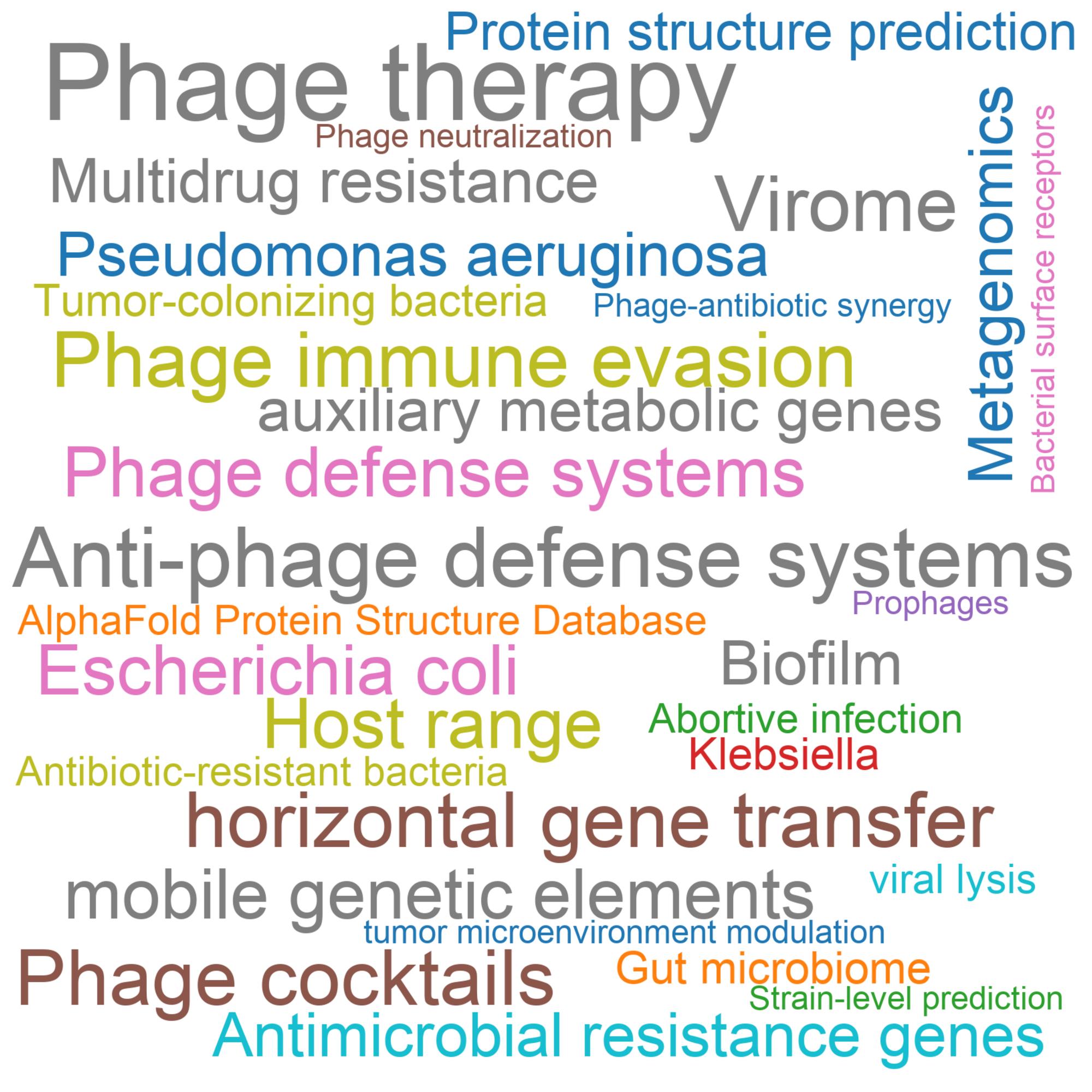
In the Class of 2026, research on bacteriophages and microbial interactions is dominated by topics central to understanding and exploiting phage-host dynamics. Phage therapy emerges as the leading theme, driven by the pressing need for alternatives to conventional antibiotics in the face of widespread multidrug resistance. Closely tied to this is the intense study of anti-phage defense systems and phage immune evasion, highlighting the evolutionary arms race between bacteria and viruses. Additionally, there is a strong focus on the broader virome and horizontal gene transfer, underscoring the vital role phages play in driving microbial evolution, ecosystem functioning, and the dissemination of antimicrobial resistance genes. These dominant topics collectively define a field deeply invested in both the foundational biology of phages and their transformative therapeutic potential.
How Did Topics Shift from the Class of 2025 to the Class of 2026?
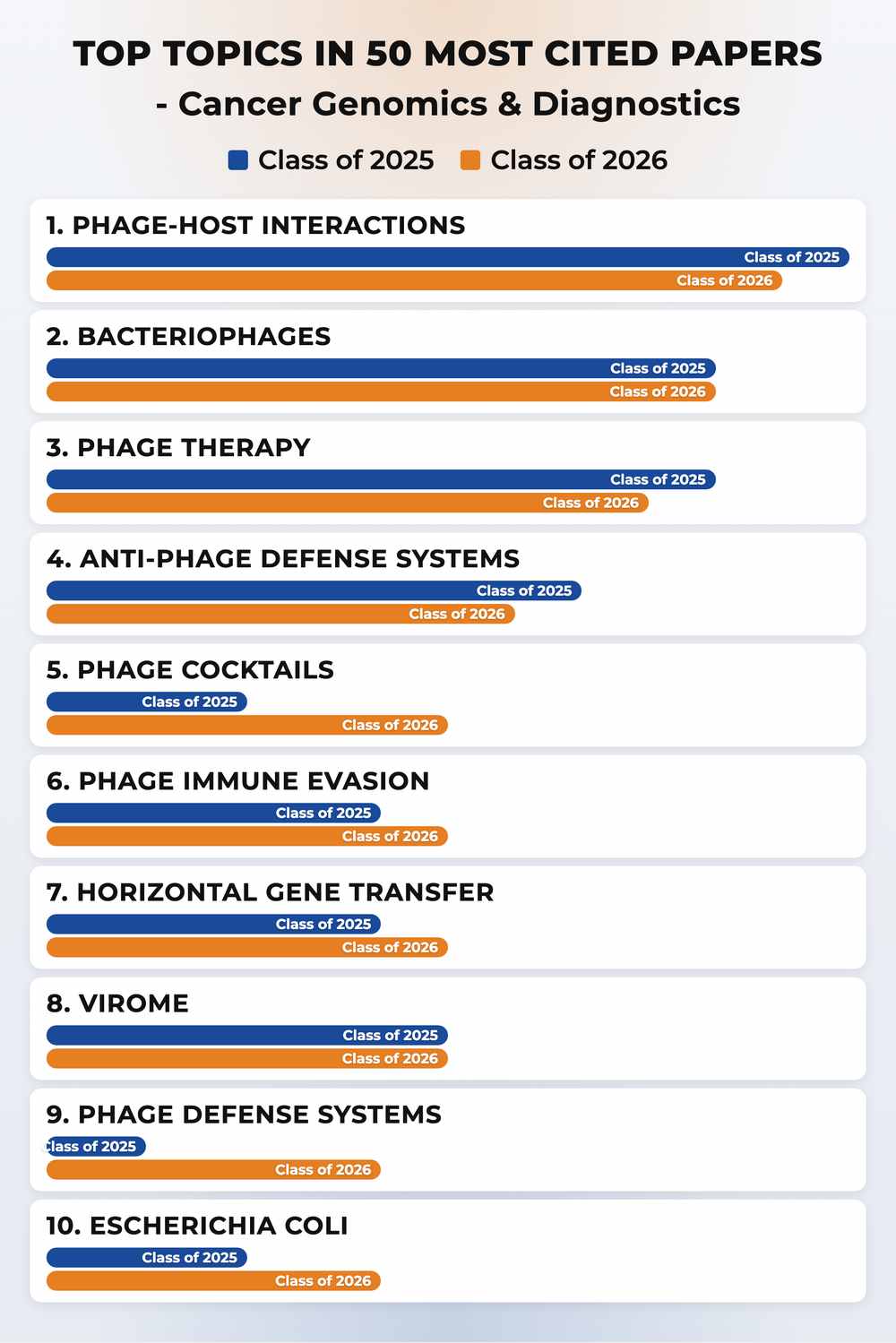
The transition to the Class of 2026 reveals notable shifts in research priorities within bacteriophage studies. There is a marked surge in the exploration of phage cocktails, likely reflecting a strategic shift toward more robust and resilient therapeutic approaches designed to overcome bacterial resistance. Conversely, some foundational topics like basic host range analysis have seen a relative decline, suggesting the field is moving beyond simple characterizations toward more complex functional and therapeutic applications. Furthermore, the rising prominence of topics such as protein structure prediction underscores a growing integration of advanced computational tools into phage research. This evolution highlights a discipline that is rapidly maturing, leveraging both deeper mechanistic insights and cutting-edge technologies to tackle complex clinical and ecological challenges.
Methodology
PRI identifies high-impact research using a transparent, topic-agnostic framework applied consistently across scientific domains. Bibliographic records are drawn from OpenAlex, including publication dates, citation relationships, and document types.
This ranking covers the Class of 2026 cohort: journal articles published in 2024. Reviews and other non-article document types are excluded to ensure comparability.
Research impact is quantified with an 18-month post-publication citation window—the number of citing works published within 18 months of each paper's publication date. This metric captures early impact while controlling for publication age.
An LLM-based relevance classifier then reviews each candidate's title and abstract to confirm substantive alignment with the target domain. Only papers classified as relevant appear in the final ranking.
Zheng Su, Tinsley Li, Thematic Shifts in Early-High-Impact Cancer Genomics and Diagnostics Research: A Bibliometric and Semantic Analysis. bioRxiv 2026.07.04.736459; doi: https://doi.org/10.64898/2026.07.04.736459
Cite this ranking
Pepkio Research Index (PRI). Topics and Trends in Most Cited Bacteriophages and microbial interactions Papers, Class of 2026. https://pri.pepkio.com/top-papers/bacteriophages-and-microbial-interactions/2026. Accessed 2026-10-14.

Methodology
Zheng Su, Tinsley Li, Thematic Shifts in Early-High-Impact Cancer Genomics and Diagnostics Research: A Bibliometric and Semantic Analysis. bioRxiv 2026.07.04.736459; doi: https://doi.org/10.64898/2026.07.04.736459