
What topics and trends defined most-cited Gut microbiota and health research in the Class of 2026?
The Class of 2026 ranking in gut microbiota and health underscores a strong pivot toward microbiome-immune interactions. Fecal microbiota transplantation and immune checkpoint blockade remain central, while research is rapidly expanding into specific metabolites like indole-3-lactic acid and their roles in therapeutic response and disease modulation.
At a glance
- Field
- Gut microbiota and health
- Cohort label
- Class of 2026 (2024 publications)
- Papers analyzed
- 17221
- Papers ranked
- 20
- Top topics in ranked papers
- Fecal microbiota transplantation, Immune checkpoint blockade, Inflammatory bowel disease
- Publication window
- Jan 1, 2024 – Dec 31, 2024
- Eligibility
- Research articles; reviews excluded
- Citation window
- 18 months post-publication
- 18m citation range
- 109–222
- Data source
- OpenAlex · Retrieved June 2026
- License
- CC BY 4.0
Rankings
20 papers ranked by 18-month citation count
A distinct Fusobacterium nucleatum clade dominates the colorectal cancer niche
Nature202410.1038/s41586-024-07182-w
EzBioCloud: a genome-driven database and platform for microbiome identification and discovery
INTERNATIONAL JOURNAL OF SYSTEMATIC AND EVOLUTIONARY MICROBIOLOGY202410.1099/ijsem.0.006421
Microbial metabolite enhances immunotherapy efficacy by modulating T cell stemness in pan-cancer
Cell202410.1016/j.cell.2024.02.022
A core microbiome signature as an indicator of health
Cell202410.1016/j.cell.2024.09.019
Gut symbionts alleviate MASH through a secondary bile acid biosynthetic pathway
Cell202410.1016/j.cell.2024.03.034
Fusobacterium nucleatum facilitates anti-PD-1 therapy in microsatellite stable colorectal cancer
Cancer Cell202410.1016/j.ccell.2024.08.019
Microbiota-derived indoles alleviate intestinal inflammation and modulate microbiome by microbial cross-feeding
Microbiome202410.1186/s40168-024-01750-y
Gut microbiome and metabolome profiling in Framingham heart study reveals cholesterol-metabolizing bacteria
Cell202410.1016/j.cell.2024.03.014
Dubosiella newyorkensis modulates immune tolerance in colitis via the L-lysine-activated AhR-IDO1-Kyn pathway
Nature Communications202410.1038/s41467-024-45636-x
Bile acids modified by the intestinal microbiota promote colorectal cancer growth by suppressing CD8+ T cell effector functions
Immunity202410.1016/j.immuni.2024.02.014
Dietary fibre directs microbial tryptophan metabolism via metabolic interactions in the gut microbiota
Nature Microbiology202410.1038/s41564-024-01737-3
Immunoregulatory role of the gut microbiota in inflammatory depression
Nature Communications202410.1038/s41467-024-47273-w
Wekemo Bioincloud: A user‐friendly platform for meta‐omics data analyses
iMeta202410.1002/imt2.175
Streptococcus anginosus promotes gastric inflammation, atrophy, and tumorigenesis in mice
Cell202410.1016/j.cell.2024.01.004
Resistant starch intake facilitates weight loss in humans by reshaping the gut microbiota
Nature Metabolism202410.1038/s42255-024-00988-y
Engineered probiotic ameliorates ulcerative colitis by restoring gut microbiota and redox homeostasis
Cell Host & Microbe202410.1016/j.chom.2024.07.028
A pan-cancer analysis of the microbiome in metastatic cancer
Cell202410.1016/j.cell.2024.03.021
Bacteroides uniformis degrades β-glucan to promote Lactobacillus johnsonii improving indole-3-lactic acid levels in alleviating colitis
Microbiome202410.1186/s40168-024-01896-9
Fecal microbiota transplantation improves anti-PD-1 inhibitor efficacy in unresectable or metastatic solid cancers refractory to anti-PD-1 inhibitor
Cell Host & Microbe202410.1016/j.chom.2024.06.010
The gut commensal Blautia maintains colonic mucus function under low-fiber consumption through secretion of short-chain fatty acids
Nature Communications202410.1038/s41467-024-47594-w
Topic trends
Dominant research themes and year-over-year shifts in Gut microbiota and health
What Topics Define the Class of 2026?
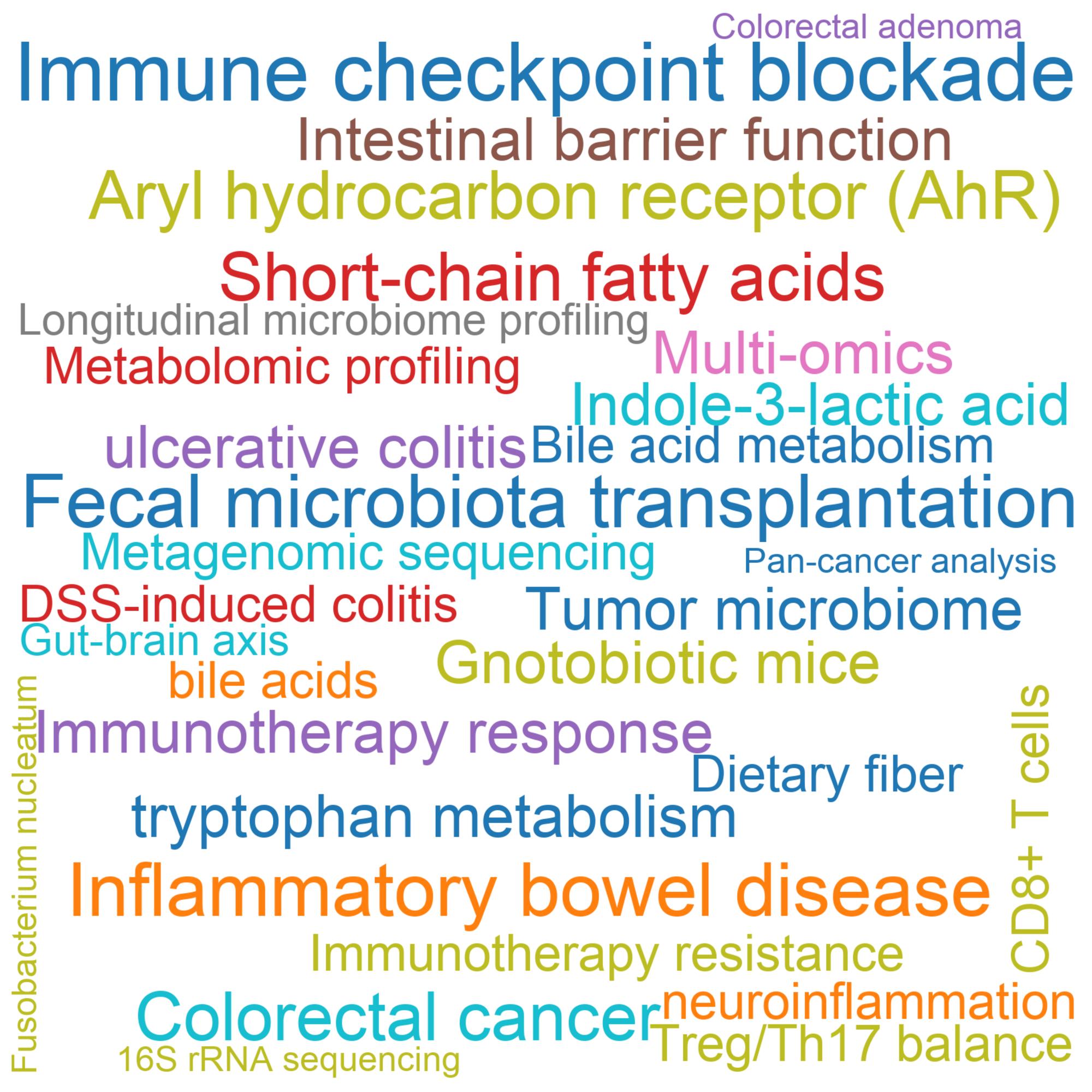
The Class of 2026 for gut microbiota and health is heavily defined by therapeutic interventions and their molecular underpinnings. Interventions such as fecal microbiota transplantation (FMT) and immune checkpoint blockade (ICB) dominate the landscape, reflecting a translational focus on modulating the microbiome to improve clinical outcomes, particularly in colorectal cancer and inflammatory bowel disease. Mechanistic studies are increasingly prominent, with a strong emphasis on short-chain fatty acids and tryptophan metabolism. Researchers are actively investigating how specific microbial metabolites, like indole-3-lactic acid, interact with host pathways such as the aryl hydrocarbon receptor (AhR) to regulate intestinal barrier function and immune tolerance. This highlights a maturation in the field from broad compositional surveys toward precise, multi-omics characterization of host-microbe interactions and their therapeutic potential.
How Did Topics Shift from the Class of 2025 to the Class of 2026?
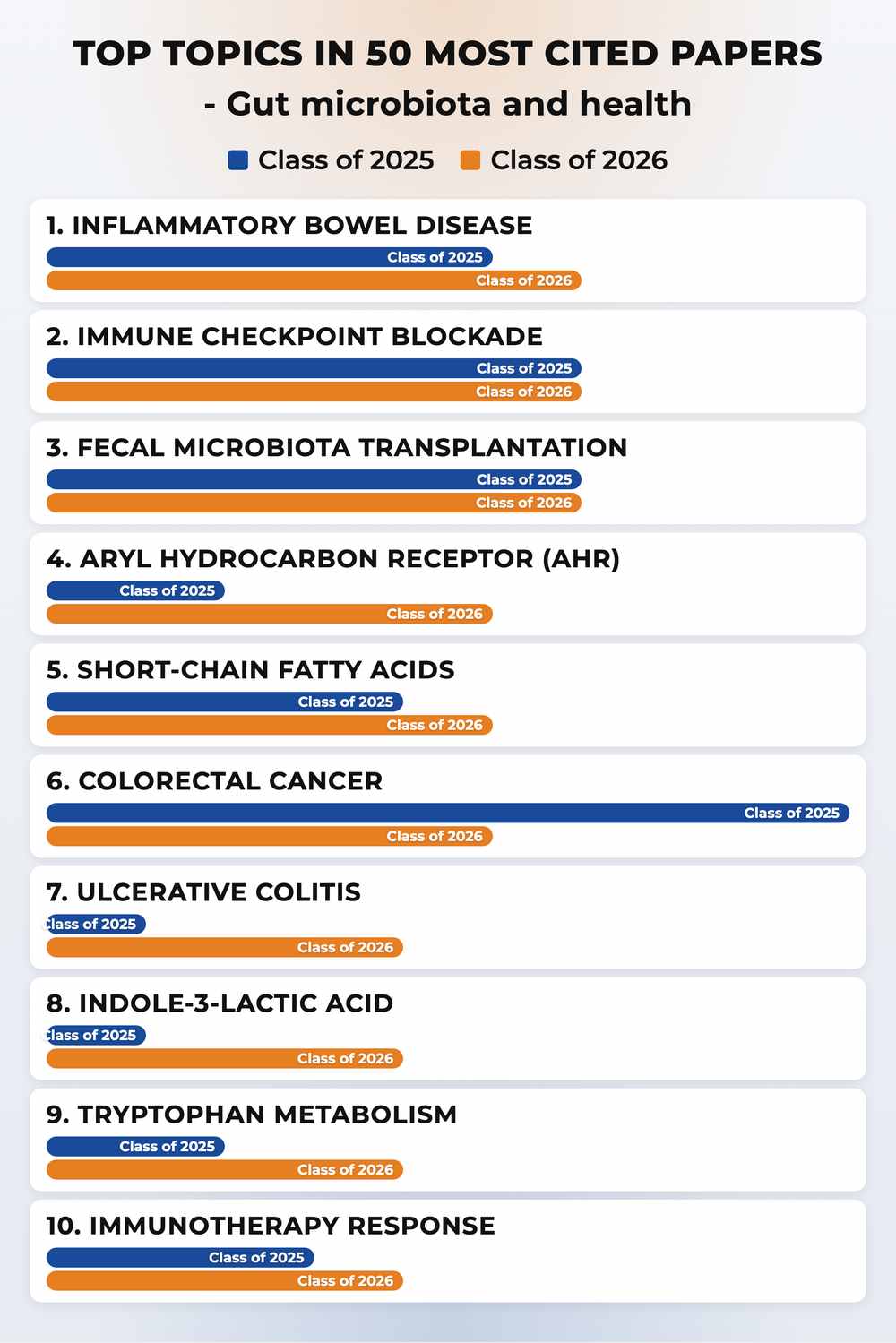
Comparing the Class of 2025 to 2026 reveals a significant shift from broad microbiome profiling to highly specific metabolic and disease-focused investigations. The most dramatic rise was seen in ulcerative colitis and DSS-induced colitis, indicating intensified research into inflammatory disease models. Specific metabolites also surged in focus; indole-3-lactic acid saw a massive four-fold increase in frequency, reflecting growing interest in tryptophan metabolism and its immunomodulatory effects. Dietary fiber and its role in shaping the microbiome also emerged as rapidly trending areas. Conversely, broader terms like colorectal cancer and general metagenomic sequencing experienced relative declines or stabilization, suggesting the field is moving past initial exploratory sequencing and broad disease associations toward defining the precise molecular mechanisms and specific bacterial strains (like Bacteroides and Clostridium) that drive health and disease.
Methodology
PRI identifies high-impact research using a transparent, topic-agnostic framework applied consistently across scientific domains. Bibliographic records are drawn from OpenAlex, including publication dates, citation relationships, and document types.
This ranking covers the Class of 2026 cohort: journal articles published in 2024. Reviews and other non-article document types are excluded to ensure comparability.
Research impact is quantified with an 18-month post-publication citation window—the number of citing works published within 18 months of each paper's publication date. This metric captures early impact while controlling for publication age.
An LLM-based relevance classifier then reviews each candidate's title and abstract to confirm substantive alignment with the target domain. Only papers classified as relevant appear in the final ranking.
Zheng Su, Tinsley Li, Thematic Shifts in Early-High-Impact Cancer Genomics and Diagnostics Research: A Bibliometric and Semantic Analysis. bioRxiv 2026.07.04.736459; doi: https://doi.org/10.64898/2026.07.04.736459
Cite this ranking
Pepkio Research Index (PRI). Topics and Trends in Most Cited Gut microbiota and health Papers, Class of 2026. https://pri.pepkio.com/top-papers/gut-microbiota-and-health/2026. Accessed 2026-10-16.

Methodology
Zheng Su, Tinsley Li, Thematic Shifts in Early-High-Impact Cancer Genomics and Diagnostics Research: A Bibliometric and Semantic Analysis. bioRxiv 2026.07.04.736459; doi: https://doi.org/10.64898/2026.07.04.736459