
What topics and trends defined most-cited Growth Hormone and Insulin-like Growth Factors research in the Class of 2026?
The Class of 2026 is driven by precision treatment in acromegaly and evolving research on Insulin-like growth factor 1 receptors. Notably, acromegaly and pituitary adenoma saw significant growth in focus compared to the previous cohort, while traditional broad approaches shifted toward targeted biochemical control and related metabolic mechanisms.
At a glance
- Field
- Growth Hormone and Insulin-like Growth Factors
- Cohort label
- Class of 2026 (2024 publications)
- Papers analyzed
- 2,917
- Papers ranked
- 20
- Top topics in ranked papers
- acromegaly, biochemical control, Insulin-like growth factor 1 receptor
- Publication window
- Jan 1, 2024 – Dec 31, 2024
- Eligibility
- Research articles; reviews excluded
- Citation window
- 18 months post-publication
- 18m citation range
- 11–31
- Data source
- OpenAlex · Retrieved September 2026
- License
- CC BY 4.0
Rankings
20 papers ranked by 18-month citation count
Exercise-Induced Reduction of IGF1R Sumoylation Attenuates Neuroinflammation in APP/PS1 Transgenic Mice
Journal of Advanced Research202410.1016/j.jare.2024.03.025
IGF1 drives Wnt-induced joint damage and is a potential therapeutic target for osteoarthritis
Nature Communications202410.1038/s41467-024-53604-8
Disease-relevant upregulation of P2Y1 receptor in astrocytes enhances neuronal excitability via IGFBP2
Nature Communications202410.1038/s41467-024-50190-7
Acromegaly Disease Control Maintained After Switching From Injected Somatostatin Receptor Ligands to Oral Paltusotine
The Journal of Clinical Endocrinology & Metabolism202410.1210/clinem/dgae385
IGFBP2/ITGA5 promotes gefitinib resistance via activating STAT3/CXCL1 axis in non-small cell lung cancer
Cell Death and Disease202410.1038/s41419-024-06843-y
Octreotide Subcutaneous Depot for Acromegaly: A Randomized, Double-blind, Placebo-controlled Phase 3 Trial, ACROINNOVA 1
The Journal of Clinical Endocrinology & Metabolism202410.1210/clinem/dgae707
Cancer-associated fibroblasts promote the progression and chemoresistance of HCC by inducing IGF-1
Cellular Signalling202410.1016/j.cellsig.2024.111378
Cardiometabolic Risk Assessment in a Cohort of Children and Adolescents Diagnosed with Hyperinsulinemia
Diseases202410.3390/diseases12060119
Activation of the insulin receptor by insulin-like growth factor 2
Nature Communications202410.1038/s41467-024-46990-6
Central and peripheral regulation of the GH/IGF-1 axis: GHRH and beyond
Reviews in Endocrine and Metabolic Disorders202410.1007/s11154-024-09933-6
Targeting IGF2 to reprogram the tumor microenvironment for enhanced viro-immunotherapy
Neuro-Oncology202410.1093/neuonc/noae105
Insulin and IGF-1 have both overlapping and distinct effects on CD4+ T cell mitochondria, metabolism, and function
Scientific Reports202410.1038/s41598-024-54836-w
Differences Between GH- and PRL-Cosecreting and GH-Secreting Pituitary Adenomas: a Series of 604 Cases
The Journal of Clinical Endocrinology & Metabolism202410.1210/clinem/dgae126
Changes in acromegaly comorbidities, treatment, and outcome over three decades: a nationwide cohort study
Frontiers in Endocrinology202410.3389/fendo.2024.1380436
Insulin‐like growth factor‐1 in cirrhosis is linked to hepatic dysfunction and fibrogenesis and predicts liver‐related mortality
Alimentary Pharmacology & Therapeutics202410.1111/apt.18289
Protective Activities of Growth Hormone-Releasing Hormone Antagonists against Toxin-Induced Endothelial Injury
Endocrines202410.3390/endocrines5010008
Anastrozole vs Letrozole to Augment Height in Pubertal Males With Idiopathic Short Stature: A 3-Year Randomized Trial
Journal of the Endocrine Society202410.1210/jendso/bvae141
Endocrine and cellular physiology and pathology of the insulin-like growth factor acid-labile subunit
Nature Reviews Endocrinology202410.1038/s41574-024-00970-4
A spatiotemporal molecular atlas of mouse spinal cord injury identifies a distinct astrocyte subpopulation and therapeutic potential of IGFBP2
Developmental Cell202410.1016/j.devcel.2024.06.016
The changing landscape of acromegaly – an epidemiological perspective
Reviews in Endocrine and Metabolic Disorders202410.1007/s11154-024-09875-z
Topic trends
Dominant research themes and year-over-year shifts in Growth Hormone and Insulin-like Growth Factors
What Topics Define the Class of 2026?
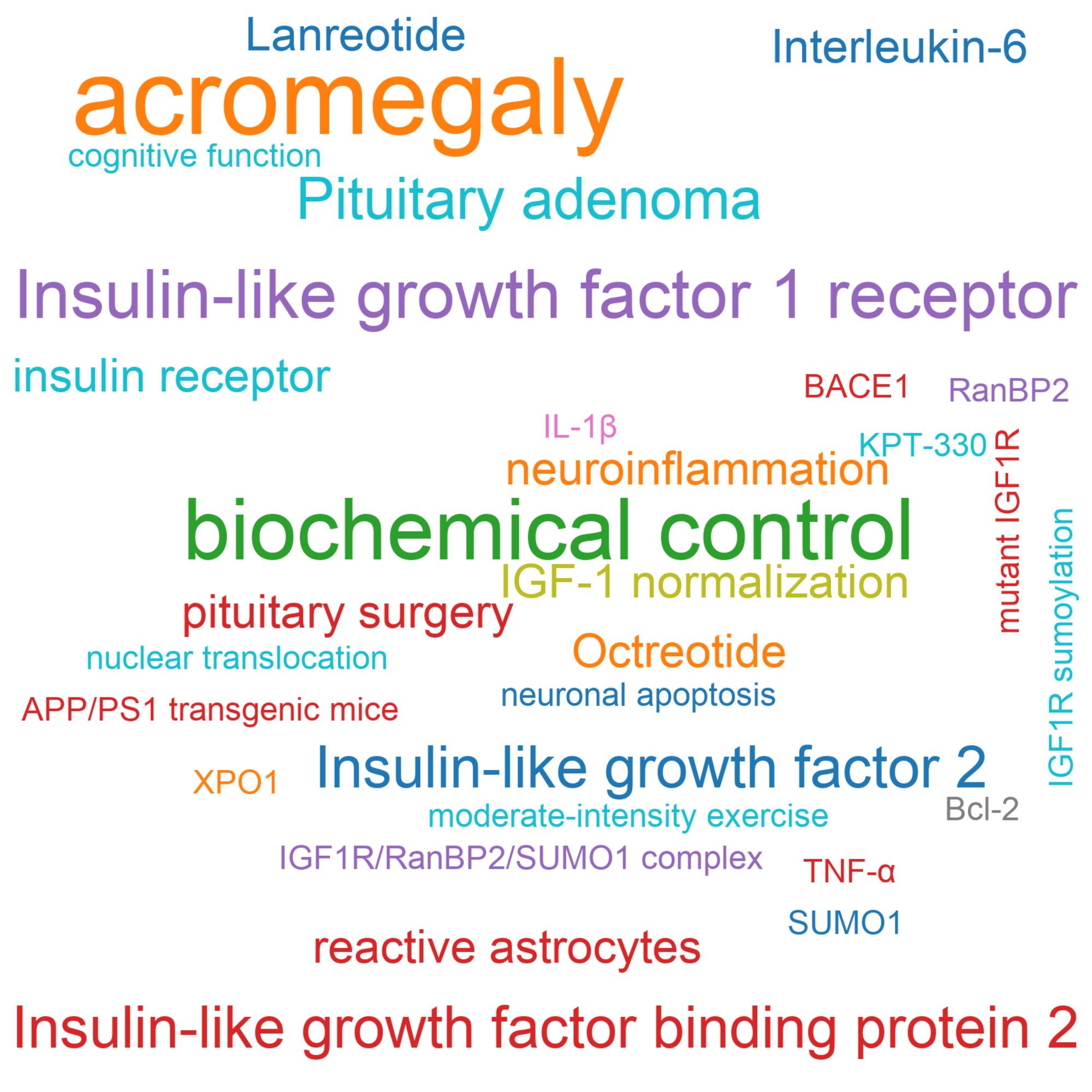
The research landscape for the Class of 2026 is prominently shaped by investigations into targeted treatments and precise physiological mechanisms. Acromegaly, biochemical control, and the Insulin-like growth factor 1 receptor stand out as central themes, reflecting a strong clinical focus on effective management of related disorders. Furthermore, topics such as Pituitary adenoma and IGF-1 normalization highlight an ongoing drive to refine diagnosis and therapeutic outcomes. This strong concentration suggests the field is moving beyond basic discovery toward advanced, clinically applicable interventions that target underlying mechanisms of disease.
How Did Topics Shift from the Class of 2025 to the Class of 2026?
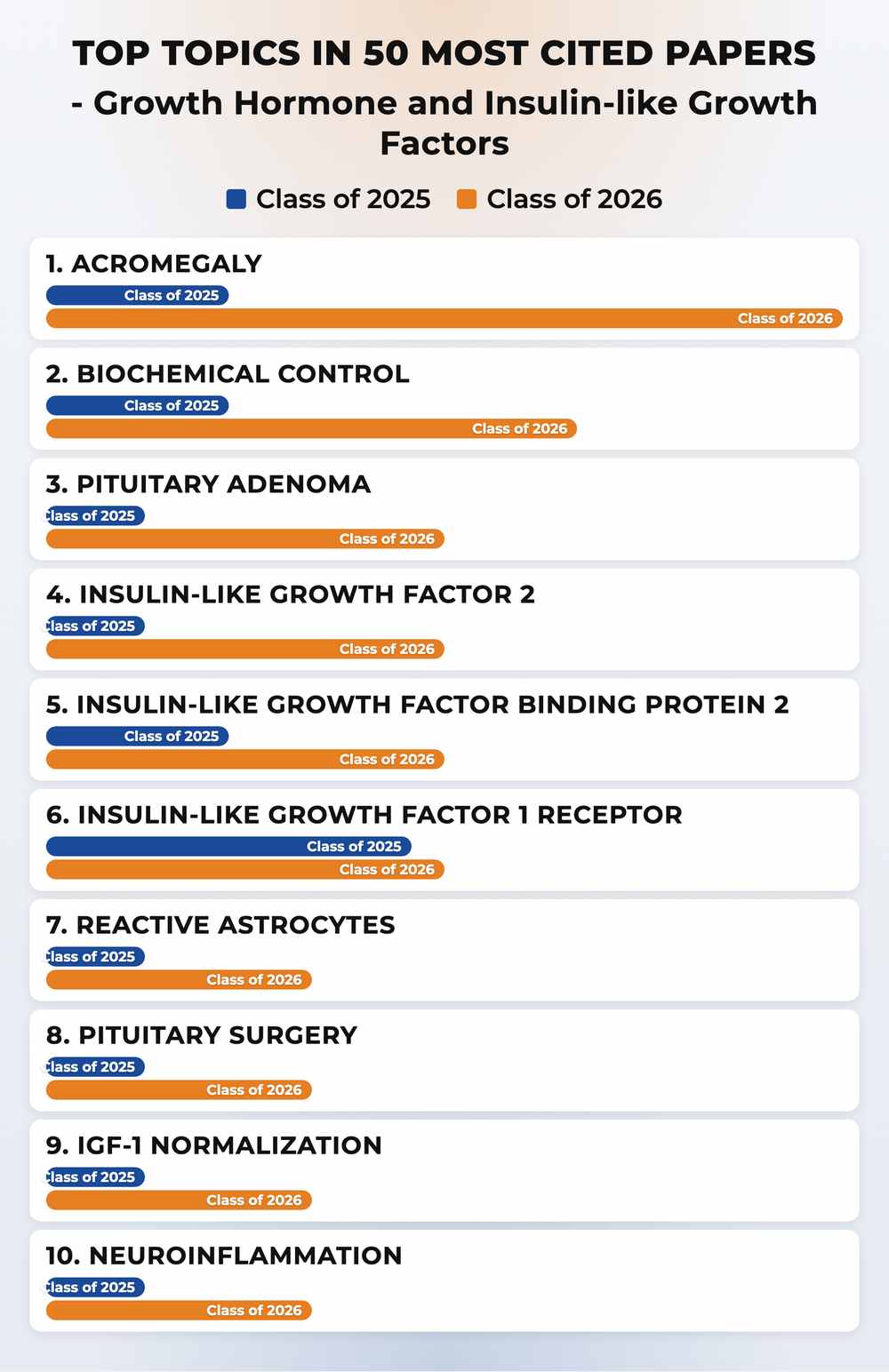
The shift from the Class of 2025 to the Class of 2026 reveals a notable pivot toward specialized clinical targets. Acromegaly and Pituitary adenoma experienced substantial growth, indicating an increased research priority on these conditions and their management. Concurrently, broader metabolic topics like Insulin-like growth factor 1 receptor biology maintained a steady presence but with growing context around precise biochemical control. These trends demonstrate a field increasingly prioritizing targeted therapeutic strategies and refined clinical outcomes over more generalized endocrinological studies.
Methodology
PRI identifies high-impact research using a transparent, topic-agnostic framework applied consistently across scientific domains. Bibliographic records are drawn from OpenAlex, including publication dates, citation relationships, and document types.
This ranking covers the Class of 2026 cohort: journal articles published in 2024. Reviews and other non-article document types are excluded to ensure comparability.
Research impact is quantified with an 18-month post-publication citation window—the number of citing works published within 18 months of each paper's publication date. This metric captures early impact while controlling for publication age.
An LLM-based relevance classifier then reviews each candidate's title and abstract to confirm substantive alignment with the target domain. Only papers classified as relevant appear in the final ranking.
Zheng Su, Tinsley Li, Thematic Shifts in Early-High-Impact Cancer Genomics and Diagnostics Research: A Bibliometric and Semantic Analysis. bioRxiv 2026.07.04.736459; doi: https://doi.org/10.64898/2026.07.04.736459
Cite this ranking
Pepkio Research Index (PRI). Topics and Trends in Most Cited Growth Hormone and Insulin-like Growth Factors Papers, Class of 2026. https://pri.pepkio.com/top-papers/growth-hormone-and-insulin-like-growth-factors/2026. Accessed 2026-10-24.

Methodology
Zheng Su, Tinsley Li, Thematic Shifts in Early-High-Impact Cancer Genomics and Diagnostics Research: A Bibliometric and Semantic Analysis. bioRxiv 2026.07.04.736459; doi: https://doi.org/10.64898/2026.07.04.736459