
What topics and trends defined most-cited Immune Cell Function and Interaction research in the Class of 2026?
In 2024, research on Immune Cell Function and Interaction was defined by a strong focus on the tumor microenvironment and T cell exhaustion. The largest shifts were seen in the rising interest in CD8+ T cell exhaustion and CAR T cell persistence, reflecting a pivot towards understanding and overcoming limitations in cellular immunotherapies.
At a glance
- Field
- Immune Cell Function and Interaction
- Cohort label
- Class of 2026 (2024 publications)
- Papers analyzed
- 9,447
- Papers ranked
- 20
- Top topics in ranked papers
- Tumor microenvironment, T cell exhaustion, CD8+ T cells
- Publication window
- Jan 1, 2024 – Dec 31, 2024
- Eligibility
- Research articles; reviews excluded
- Citation window
- 18 months post-publication
- 18m citation range
- 105–236
- Data source
- OpenAlex · Retrieved July 2026
- License
- CC BY 4.0
Rankings
20 papers ranked by 18-month citation count
Safety, efficacy and determinants of response of allogeneic CD19-specific CAR-NK cells in CD19+ B cell tumors: a phase 1/2 trial
Nature Medicine202410.1038/s41591-023-02785-8
Interleukin-15-armoured GPC3 CAR T cells for patients with solid cancers
Nature202410.1038/s41586-024-08261-8
LAG-3 and PD-1 synergize on CD8+ T cells to drive T cell exhaustion and hinder autocrine IFN-γ-dependent anti-tumor immunity
Cell202410.1016/j.cell.2024.07.016
High-dimensional single-cell analysis of human natural killer cell heterogeneity
Nature Immunology202410.1038/s41590-024-01883-0
Combined JAK inhibition and PD-1 immunotherapy for non–small cell lung cancer patients
Science202410.1126/science.adf1329
Xist ribonucleoproteins promote female sex-biased autoimmunity
Cell202410.1016/j.cell.2023.12.037
Dysfunction of exhausted T cells is enforced by MCT11-mediated lactate metabolism
Nature Immunology202410.1038/s41590-024-01999-3
Depleting myeloid-biased haematopoietic stem cells rejuvenates aged immunity
Nature202410.1038/s41586-024-07238-x
A blueprint for tumor-infiltrating B cells across human cancers
Science202410.1126/science.adj4857
IL-10-expressing CAR T cells resist dysfunction and mediate durable clearance of solid tumors and metastases
Nature Biotechnology202410.1038/s41587-023-02060-8
Cancer SLC6A6-mediated taurine uptake transactivates immune checkpoint genes and induces exhaustion in CD8+ T cells
Cell202410.1016/j.cell.2024.03.011
Blockade of LAG-3 and PD-1 leads to co-expression of cytotoxic and exhaustion gene modules in CD8+ T cells to promote antitumor immunity
Cell202410.1016/j.cell.2024.06.036
Dual impacts of serine/glycine-free diet in enhancing antitumor immunity and promoting evasion via PD-L1 lactylation
Cell Metabolism202410.1016/j.cmet.2024.10.019
Antigen presentation by tumor-associated macrophages drives T cells from a progenitor exhaustion state to terminal exhaustion
Immunity202410.1016/j.immuni.2024.11.026
Identification of the novel exhausted T cell CD8 + markers in breast cancer
Scientific Reports202410.1038/s41598-024-70184-1
IL-10 constrains sphingolipid metabolism to limit inflammation
Nature202410.1038/s41586-024-07098-5
JAK inhibition enhances checkpoint blockade immunotherapy in patients with Hodgkin lymphoma
Science202410.1126/science.ade8520
Smoking changes adaptive immunity with persistent effects
Nature202410.1038/s41586-023-06968-8
CCL19-producing fibroblasts promote tertiary lymphoid structure formation enhancing anti-tumor IgG response in colorectal cancer liver metastasis
Cancer Cell202410.1016/j.ccell.2024.07.006
The type 2 cytokine Fc–IL-4 revitalizes exhausted CD8+ T cells against cancer
Nature202410.1038/s41586-024-07962-4
Topic trends
Dominant research themes and year-over-year shifts in Immune Cell Function and Interaction
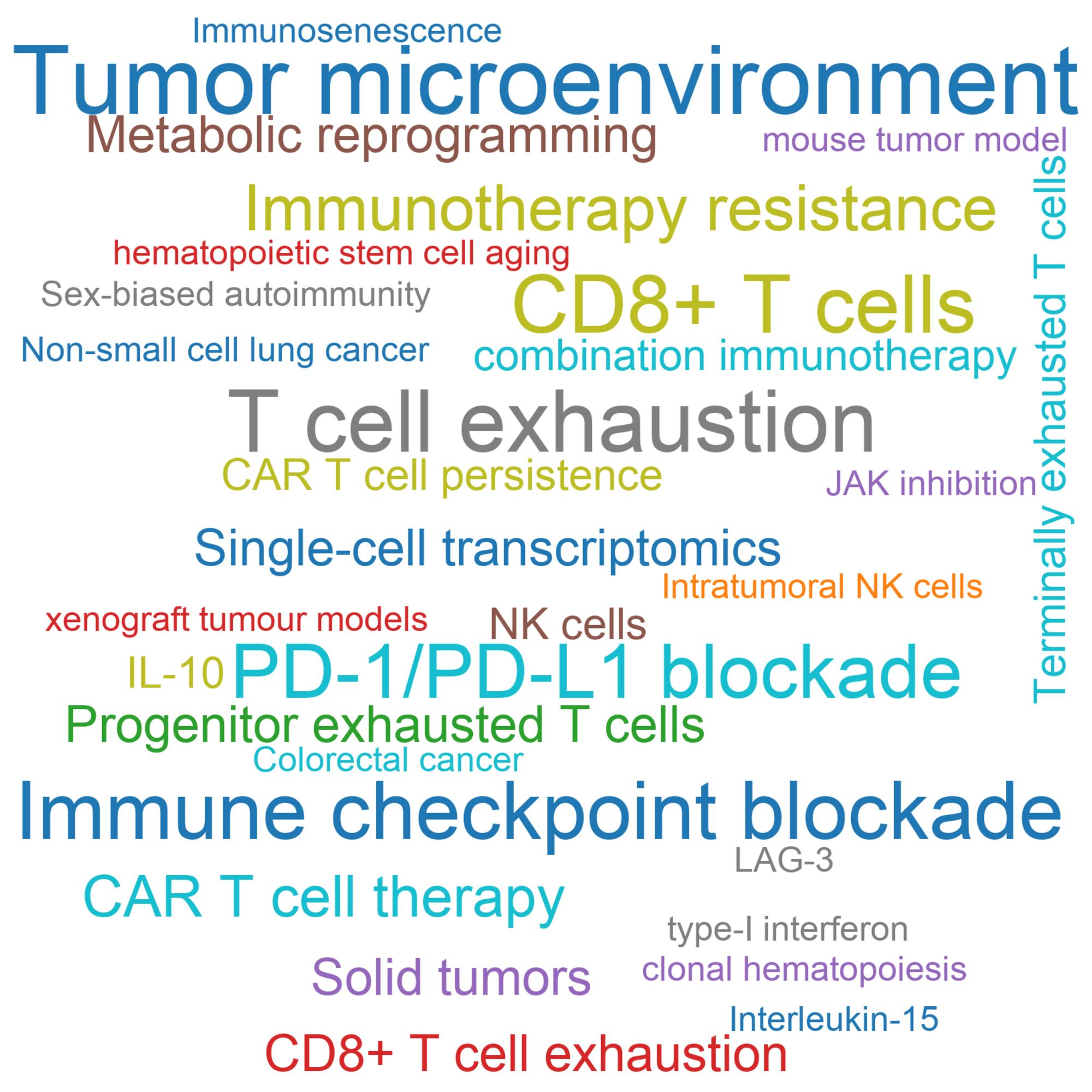
What Topics Define the Class of 2026?
The 2024 cohort for Immune Cell Function and Interaction is heavily anchored in understanding the complex dynamics within the tumor microenvironment. T cell exhaustion and the specific role of CD8+ T cells are the most dominant themes, reflecting a significant ongoing effort to characterize the states that limit antitumor immunity. Immune checkpoint blockade and PD-1/PD-L1 pathways remain foundational, indicating that researchers are continuing to refine and understand the mechanisms of established immunotherapies. The strong presence of these interrelated topics suggests the field's primary focus is on decoding the suppressive networks that tumors use to evade immune destruction, aiming to unlock more durable responses to therapies.
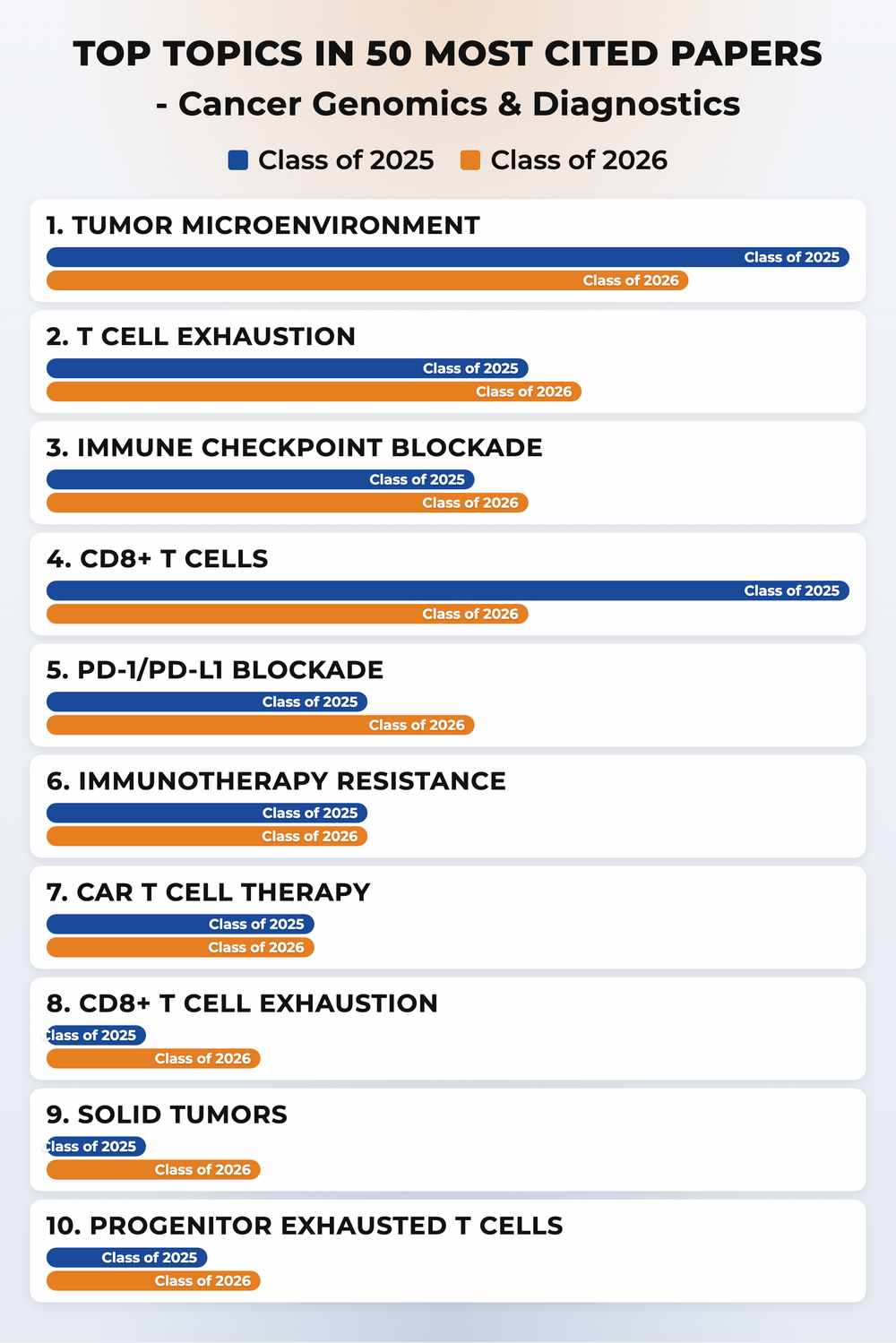
How Did Topics Shift from the Class of 2025 to the Class of 2026?
The most striking shift from the previous cohort is the explosive growth of specialized studies on CD8+ T cell exhaustion and CAR T cell persistence. Both topics emerged as major focal points, indicating a strategic pivot from broad immunotherapy applications towards addressing the specific challenges of therapeutic cell longevity and functional decline. We also see significant increases in studies involving IL-10 and combination immunotherapies. Conversely, broader terms like 'antitumor immunity' and 'cancer immunotherapy' saw a decline in relative frequency, suggesting that research has moved past general concepts and into highly specific, mechanistic investigations of immune cell interactions and therapeutic resistance.
Methodology
PRI identifies high-impact research using a transparent, topic-agnostic framework applied consistently across scientific domains. Bibliographic records are drawn from OpenAlex, including publication dates, citation relationships, and document types.
This ranking covers the Class of 2026 cohort: journal articles published in 2024. Reviews and other non-article document types are excluded to ensure comparability.
Research impact is quantified with an 18-month post-publication citation window—the number of citing works published within 18 months of each paper's publication date. This metric captures early impact while controlling for publication age.
An LLM-based relevance classifier then reviews each candidate's title and abstract to confirm substantive alignment with the target domain. Only papers classified as relevant appear in the final ranking.
Zheng Su, Tinsley Li, Thematic Shifts in Early-High-Impact Cancer Genomics and Diagnostics Research: A Bibliometric and Semantic Analysis. bioRxiv 2026.07.04.736459; doi: https://doi.org/10.64898/2026.07.04.736459
Cite this ranking
Pepkio Research Index (PRI). Topics and Trends in Most Cited Immune Cell Function and Interaction Papers, Class of 2026. https://pri.pepkio.com/top-papers/immune-cell-function-and-interaction/2026. Accessed 2026-10-14.

Methodology
Zheng Su, Tinsley Li, Thematic Shifts in Early-High-Impact Cancer Genomics and Diagnostics Research: A Bibliometric and Semantic Analysis. bioRxiv 2026.07.04.736459; doi: https://doi.org/10.64898/2026.07.04.736459