
What topics and trends defined most-cited Aquaculture Nutrition and Growth research in the Class of 2026?
The 2026 cohort in Aquaculture Nutrition and Growth highlights a strong focus on commercially vital species like Nile tilapia and Litopenaeus vannamei. Research is rapidly shifting toward immunological responses, stress indicators, and functional interventions such as probiotics and selenium nanoparticles, moving beyond generalized nutritional profiling.
At a glance
- Field
- Aquaculture Nutrition and Growth
- Cohort label
- Class of 2026 (2024 publications)
- Papers analyzed
- 8,907
- Papers ranked
- 20
- Top topics in ranked papers
- Nile tilapia, Litopenaeus vannamei, Feed conversion ratio, Malondialdehyde
- Publication window
- Jan 1, 2024 – Dec 31, 2024
- Eligibility
- Research articles; reviews excluded
- Citation window
- 18 months post-publication
- 18m citation range
- 22–34
- Data source
- OpenAlex · Retrieved Jul 2026
- License
- CC BY 4.0
Rankings
20 papers ranked by 18-month citation count
Effects of chronic cold stress and thermal stress on growth performance, hepatic apoptosis, oxidative stress, immune response and gut microbiota of juvenile hybrid sturgeon (Acipenser baerii ♀ × A. schrenkii ♂)
Fish & Shellfish Immunology202410.1016/j.fsi.2024.110078
Acute stress response in gill of Pacific white shrimp Litopenaeus vannamei to high alkalinity
Aquaculture202410.1016/j.aquaculture.2024.740766
Effects of different thermal methods and degrees on the flavor of channel catfish (Ictalurus punctatus) fillets: Fatty acids, volatile flavor and taste compounds
Food Chemistry202410.1016/j.foodchem.2024.140887
Effects of dietary tryptophan levels on growth performance, plasma profile, intestinal antioxidant capacity and growth related genes in rainbow trout (Oncorhynchus mykiss) fingerlings
Aquaculture202410.1016/j.aquaculture.2024.740710
Application of nutrition interventions strategy to enhance fish flesh quality
Journal of Food Composition and Analysis202410.1016/j.jfca.2024.107010
Characterization of Selected Microalgae Species as Potential Sources of Nutrients and Antioxidants
Foods202410.3390/foods13132160
Effect of myosin-kappa carrageenan pickering emulsions on the quality of bighead carp surimi gels
Food Hydrocolloids202410.1016/j.foodhyd.2024.110890
Effects of saline and alkaline stresses on the survival, growth, and physiological responses in juvenile mandarin fish (Siniperca chuatsi)
Aquaculture202410.1016/j.aquaculture.2024.741143
Effects of Temperature and Light on Microalgal Growth and Nutrient Removal in Turtle Aquaculture Wastewater
Biology202410.3390/biology13110901
Life cycle assessment on environmental feasibility of microalgae-based wastewater treatment for shrimp recirculating aquaculture systems
Bioresource Technology202410.1016/j.biortech.2024.130578
Efficacy of nutritional selenium nanoparticles on growth performance, immune response, antioxidant capacity, expression of growth and immune-related genes, and post-stress recovery in juvenile Sobaity seabream (Sparidentex hasta)
Fish & Shellfish Immunology202410.1016/j.fsi.2024.109452
Dietary nanocomposite of vitamin C and vitamin E enhanced the performance of Nile tilapia
Scientific Reports202410.1038/s41598-024-65507-1
Effects of calcium chloride on the gelling and digestive characteristics of myofibrillar protein in Litopenaeus vannamei
Food Chemistry202410.1016/j.foodchem.2023.138348
Shrimp Cultured in Low-Salt Saline–Alkali Water has a Better Amino Acid Nutrition and Umami─Comparison of Flavors between Saline–Alkali Water- and Seawater-Cultured <i>Litopenaeus vannamei</i>
Journal of Agricultural and Food Chemistry202410.1021/acs.jafc.3c08435
Effects of ammonia nitrogen stress on the physiological, biochemical, and metabolic levels of the gill tissue of juvenile four-finger threadfin (Eleutheronema tetradactylum)
Aquatic Toxicology202410.1016/j.aquatox.2024.107049
Omega-3 fatty acids from fish by-products: Innovative extraction and application in food and feed
Food and Bioproducts Processing202410.1016/j.fbp.2024.02.007
Dietary multi-strains Bacillus spp. enhanced growth performance, blood metabolites, digestive tissues histology, gene expression of Oreochromis niloticus, and resistance to Aspergillus flavus infection
Aquaculture International202410.1007/s10499-024-01502-7
Comprehensive analysis of histophysiology, transcriptome and metabolome tolerance mechanisms in black porgy (Acanthopagrus schlegelii) under low temperature stress
The Science of The Total Environment202410.1016/j.scitotenv.2024.172318
Effects of Lactobacillus plantarum and Bacillus subtilis on growth, immunity and intestinal flora of largemouth bass(Micropterus salmoides)
Aquaculture202410.1016/j.aquaculture.2024.740581
Unraveling novel antioxidant peptides from Asian swamp eel: Identification, in silico selection, and mechanistic insights through quantum chemical calculation and molecular docking
Food Chemistry202410.1016/j.foodchem.2024.141668
Topic trends
Dominant research themes and year-over-year shifts in Aquaculture Nutrition and Growth
What Topics Define the Class of 2026?
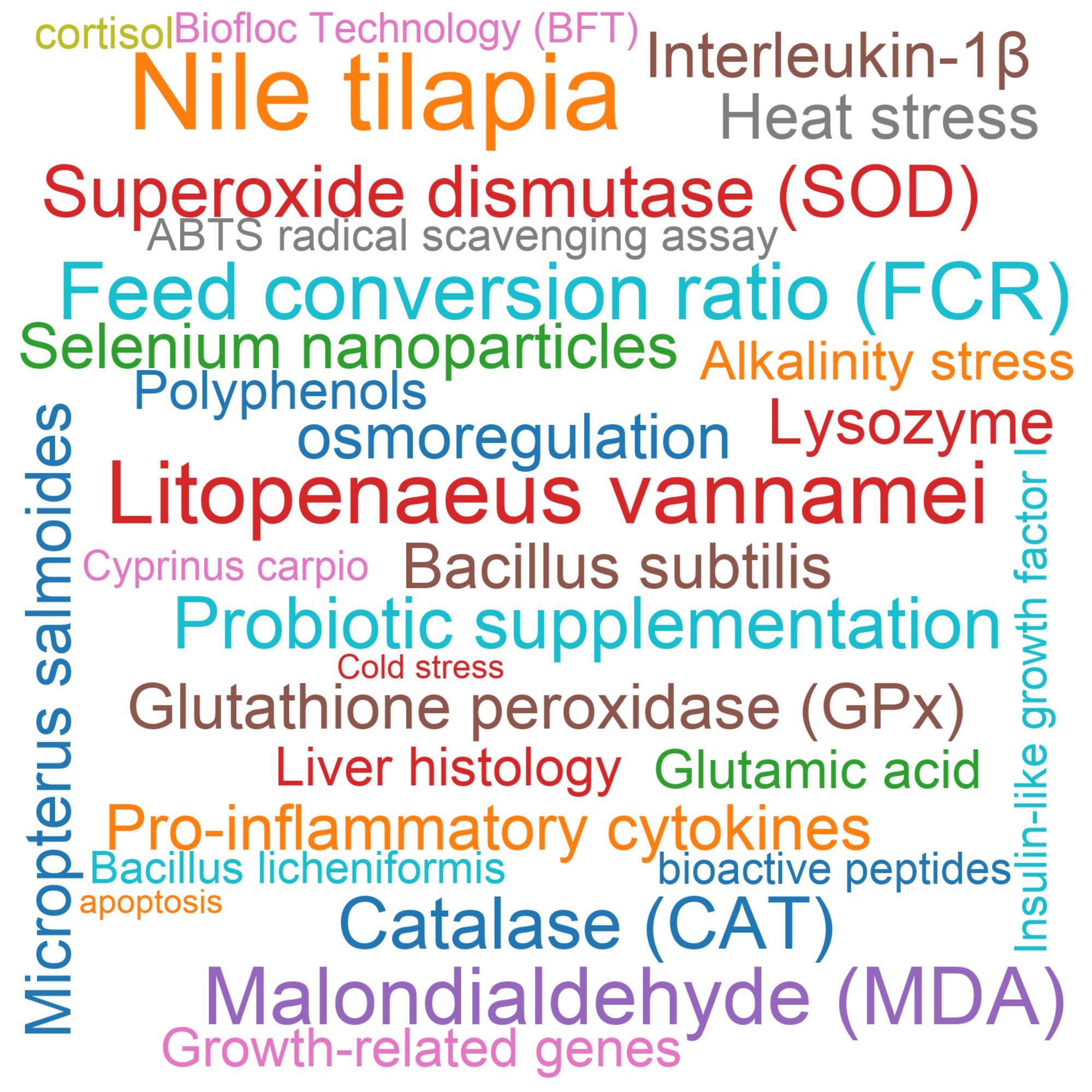
The class of 2026 is largely defined by research focused on specific commercially important species such as Nile tilapia and Litopenaeus vannamei (Pacific white shrimp). Studies prominently measure standard aquaculture metrics like the Feed conversion ratio (FCR) alongside stress and immune indicators such as Malondialdehyde (MDA), Catalase (CAT), and Superoxide dismutase (SOD). There is a distinct emphasis on probiotic supplementation and its effects on antioxidant status and overall growth performance in these key aquaculture species, indicating a move toward optimizing both health and yield.
How Did Topics Shift from the Class of 2025 to the Class of 2026?
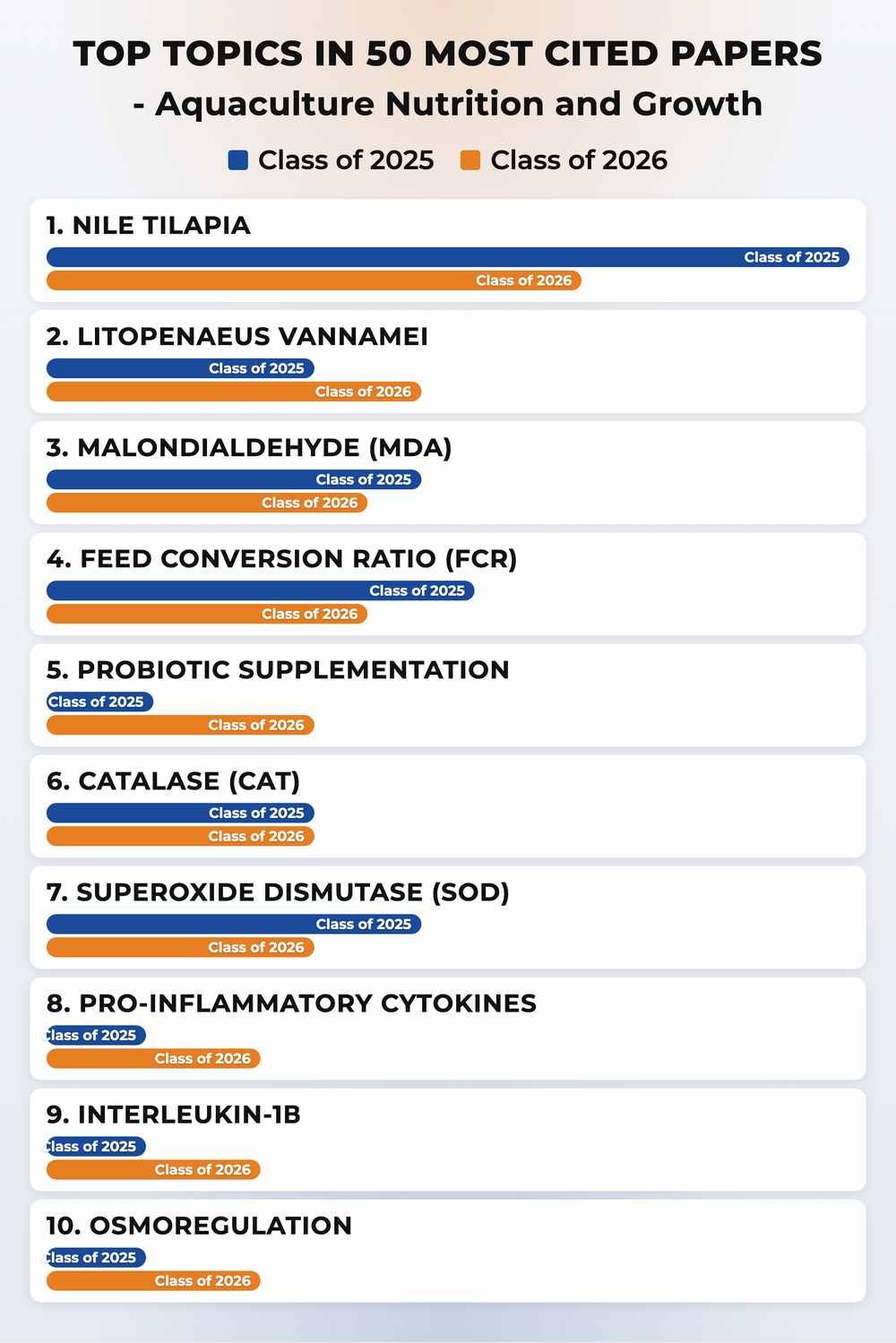
We observe a pronounced shift toward immunological and environmental stress responses. Mentions of Interleukin-1β, pro-inflammatory cytokines, and osmoregulation surged dramatically, indicating increased attention on fish health under changing environmental conditions and disease pressures. Research into specific interventions, such as selenium nanoparticles and Bacillus species (e.g., B. subtilis, B. licheniformis), has also grown significantly. Conversely, generalized topics like digestive enzymes declined steeply, suggesting the field is moving beyond basic nutritional profiling toward targeted functional foods, immune status enhancement, and precise stress mitigation strategies in aquaculture.
Methodology
PRI identifies high-impact research using a transparent, topic-agnostic framework applied consistently across scientific domains. Bibliographic records are drawn from OpenAlex, including publication dates, citation relationships, and document types.
This ranking covers the Class of 2026 cohort: journal articles published in 2024. Reviews and other non-article document types are excluded to ensure comparability.
Research impact is quantified with an 18-month post-publication citation window—the number of citing works published within 18 months of each paper's publication date. This metric captures early impact while controlling for publication age.
An LLM-based relevance classifier then reviews each candidate's title and abstract to confirm substantive alignment with the target domain. Only papers classified as relevant appear in the final ranking.
Zheng Su, Tinsley Li, Thematic Shifts in Early-High-Impact Cancer Genomics and Diagnostics Research: A Bibliometric and Semantic Analysis. bioRxiv 2026.07.04.736459; doi: https://doi.org/10.64898/2026.07.04.736459
Cite this ranking
Pepkio Research Index (PRI). Topics and Trends in Most Cited Aquaculture Nutrition and Growth Papers, Class of 2026. https://pri.pepkio.com/top-papers/aquaculture-nutrition-and-growth/2026. Accessed 2026-10-14.

Methodology
Zheng Su, Tinsley Li, Thematic Shifts in Early-High-Impact Cancer Genomics and Diagnostics Research: A Bibliometric and Semantic Analysis. bioRxiv 2026.07.04.736459; doi: https://doi.org/10.64898/2026.07.04.736459