
What topics and trends defined most-cited Reproductive Physiology in Livestock research in the Class of 2026?
Research in livestock reproductive physiology for the Class of 2026 highlights metabolic stress management during the transition period and heat stress resilience. Key trend shifts reveal a surge in rumen microbiome profiling and pro-inflammatory cytokine signaling, moving away from broad observational herd studies toward precision molecular physiology.
At a glance
- Field
- Reproductive Physiology in Livestock
- Cohort label
- Class of 2026 (2024 publications)
- Papers analyzed
- 4,041
- Papers ranked
- 20
- Top topics in ranked papers
- Transition period, heat stress, rumen microbiome, folliculogenesis, metabolic stress
- Publication window
- Jan 1, 2024 – Dec 31, 2024
- Eligibility
- Research articles; reviews excluded
- Citation window
- 18 months post-publication
- 18m citation range
- 15–28
- Data source
- OpenAlex · Retrieved Jul 2026
- License
- CC BY 4.0
Rankings
20 papers ranked by 18-month citation count
Phenotypic variation of dairy cows’ hematic metabolites and feasibility of non-invasive monitoring of the metabolic status in the transition period
Frontiers in Veterinary Science202410.3389/fvets.2024.1437352
An integrated microbiome- and metabolome-genome-wide association study reveals the role of heritable ruminal microbial carbohydrate metabolism in lactation performance in Holstein dairy cows
Microbiome202410.1186/s40168-024-01937-3
Immunoregulation and male reproductive function: Impacts and mechanistic insights into inflammation
Andrology202410.1111/andr.13772
Rumen and hindgut microbiome regulate average daily gain of preweaning Holstein heifer calves in different ways
Microbiome202410.1186/s40168-024-01844-7
Melatonin alleviates heat stress-induced spermatogenesis dysfunction in male dairy goats by regulating arachidonic acid metabolism mediated by remodeling the gut microbiota
Microbiome202410.1186/s40168-024-01942-6
Succession of rumen microbiota and metabolites across different reproductive periods in different sheep breeds and their impact on the growth and development of offspring lambs
Microbiome202410.1186/s40168-024-01892-z
Single nucleus/cell RNA-seq of the chicken hypothalamic-pituitary-ovarian axis offers new insights into the molecular regulatory mechanisms of ovarian development
动物学研究202410.24272/j.issn.2095-8137.2024.037
The Impact of Heat Stress on the Physiological, Productive, and Reproductive Status of Dairy Cows
Agriculture202410.3390/agriculture14081241
Extracellular vesicles-coupled miRNAs from oviduct and uterus modulate signaling pathways related to lipid metabolism and bovine early embryo development
Journal of Animal Science and Biotechnology/Journal of animal science and biotechnology202410.1186/s40104-024-01008-5
Effects of a range of effective inclusion levels of Asparagopsis armata steeped in oil on enteric methane emissions of dairy cows
Animal Feed Science and Technology202410.1016/j.anifeedsci.2024.115932
Multiomics Analyses Provide New Insight into Genetic Variation of Reproductive Adaptability in Tibetan Sheep
Molecular Biology and Evolution202410.1093/molbev/msae058
Curcumin mitigates polycystic ovary syndrome in mice by suppressing TLR4/MyD88/NF-κB signaling pathway activation and reducing intestinal mucosal permeability
Scientific Reports202410.1038/s41598-024-81034-5
Supplementing vitamins and minerals to beef heifers during gestation: impacts on mineral status in the dam and offspring, and growth and physiological responses of female offspring from birth to puberty
Journal of Animal Science202410.1093/jas/skae002
Alterations in the gut microbiota and its metabolites contribute to metabolic maladaptation in dairy cows during the development of hyperketonemia
mSystems202410.1128/msystems.00023-24
Impact of heat stress during close-up dry period on performance, fertility and immunometabolic blood indices of dairy cows: prospective cohort study
Scientific Reports202410.1038/s41598-024-72294-2
Late-gestation heat stress alters placental structure and function in multiparous dairy cows
Journal of Dairy Science202410.3168/jds.2024-25529
Luteolin attenuates <i>Staphylococcus aureus</i> -induced endometritis through inhibiting ferroptosis and inflammation via activating the Nrf2/GPX4 signaling pathway
Microbiology Spectrum202410.1128/spectrum.03279-23
Consequences of gene editing of <i>PRLR</i> on thermotolerance, growth, and male reproduction in cattle
FASEB BioAdvances202410.1096/fba.2024-00029
Metabolic reprogramming and heterogeneity during the decidualization process of endometrial stromal cells
Cell Communication and Signaling202410.1186/s12964-024-01763-y
Dynamic changes in the transcriptome and metabolome of pig ovaries across developmental stages and gestation
BMC Genomics202410.1186/s12864-024-11122-3
Topic trends
Dominant research themes and year-over-year shifts in Reproductive Physiology in Livestock
What Topics Define the Class of 2026?
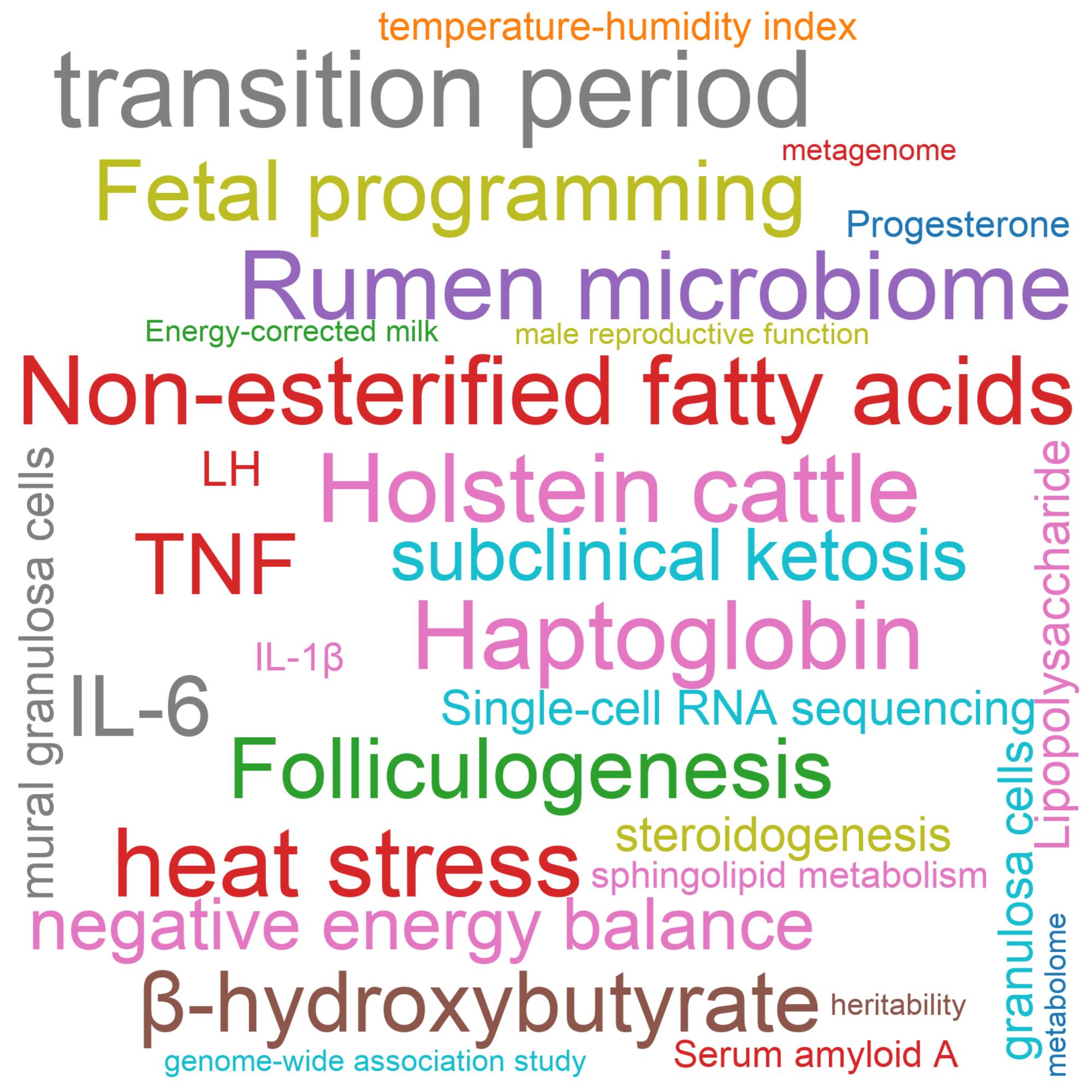
The Class of 2026 ranking in livestock reproductive physiology underscores a strong emphasis on metabolic adaptation, systemic inflammation, and environmental stress during critical production phases. A primary focal point is the transition period around calving and lactation onset, where high metabolic demand triggers intense energy mobilization. Key circulating biomarkers such as non-esterified fatty acids (NEFA), β-hydroxybutyrate (BHB), and acute-phase proteins like haptoglobin feature prominently in evaluations of metabolic stress and subclinical ketosis. In parallel, research heavily investigates environmental impacts—specifically heat stress and temperature-humidity index dynamics—on reproductive performance and cellular function. Mechanistic studies highlight ovarian granulosa cell function, folliculogenesis, and luteal dynamics, examining how hyperthermia and systemic inflammation impair oocyte quality and hormone synthesis. Furthermore, the role of pro-inflammatory cytokines such as TNF and IL-6 is widely examined to elucidate the systemic cross-talk between uterine or metabolic inflammation and fertility. Integrating rumen microbiome composition with host physiology also emerges as a central theme, reflecting a holistic focus on nutrition, immunity, and reproductive efficiency in modern livestock production.
How Did Topics Shift from the Class of 2025 to the Class of 2026?
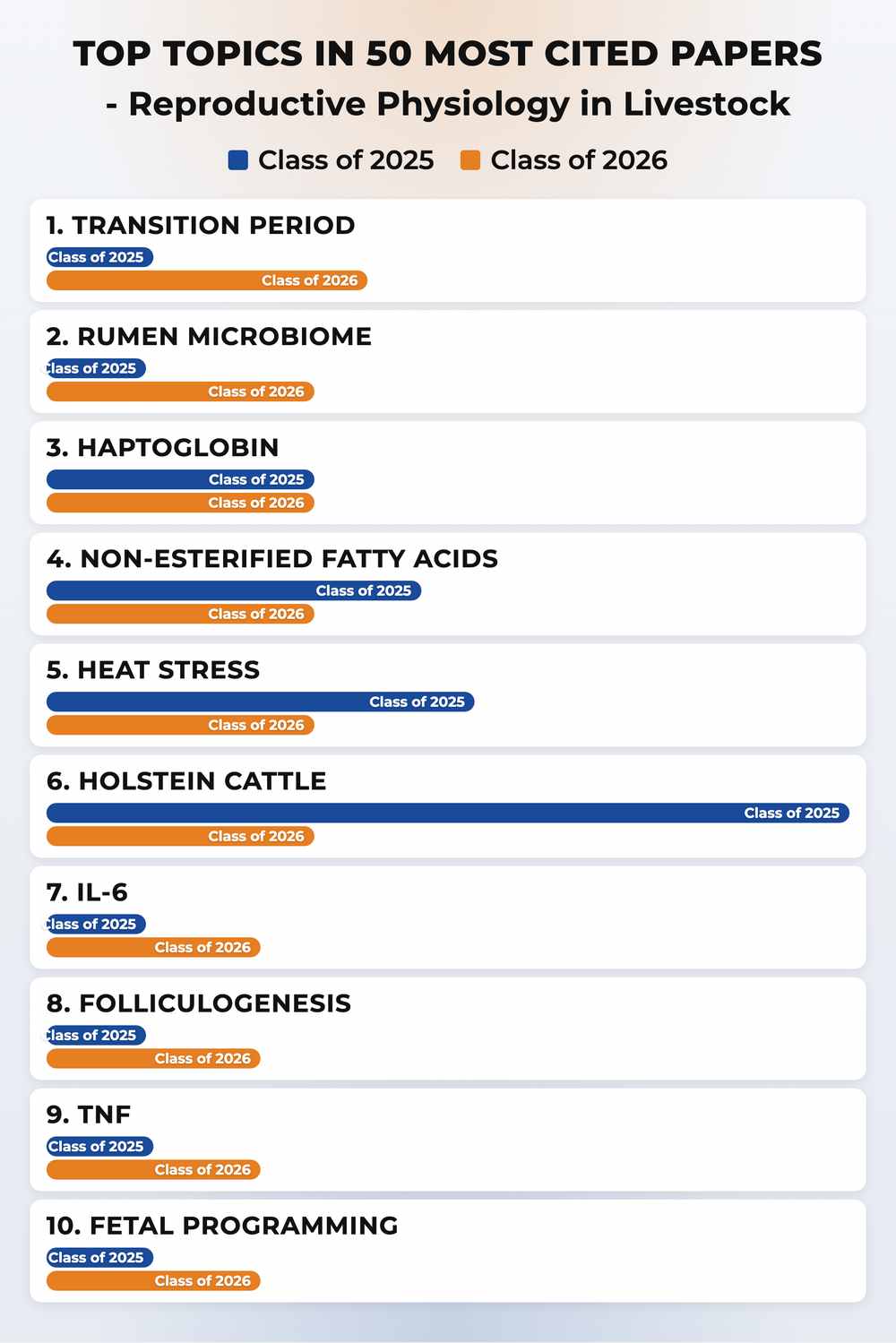
Comparative analysis between the Class of 2025 and Class of 2026 reveals a distinct shift from descriptive herd-level metrics toward high-resolution molecular, microbial, and cellular pathways. The most significant growth is seen in gut and rumen microbiome profiling, rising from zero baseline mentions in the previous cohort to 10% of high-impact papers in 2026. This surge highlights growing interest in how microbial metabolites modulate host energy balance and reproductive health. Similarly, targeted inflammatory mediators including IL-6, negative energy balance pathways, and specialized metabolic regulators such as sphingolipid metabolism experienced rapid expansion. Conversely, generic breed-level observational studies—such as broad evaluations of Holstein cattle performance—saw a sharp decline, dropping from 30% normalized frequency in 2025 down to 10% in 2026. Standalone measurements of standard reproductive steroids like progesterone and basic metabolite counts also diminished in favor of integrated multi-omics and mechanistic approaches. Overall, the field is evolving from empirical management studies toward precision physiology, investigating how subclinical inflammation, heat shock, and gut microbiota directly govern cellular fertility and embryo viability.
Methodology
PRI identifies high-impact research using a transparent, topic-agnostic framework applied consistently across scientific domains. Bibliographic records are drawn from OpenAlex, including publication dates, citation relationships, and document types.
This ranking covers the Class of 2026 cohort: journal articles published in 2024. Reviews and other non-article document types are excluded to ensure comparability.
Research impact is quantified with an 18-month post-publication citation window—the number of citing works published within 18 months of each paper's publication date. This metric captures early impact while controlling for publication age.
An LLM-based relevance classifier then reviews each candidate's title and abstract to confirm substantive alignment with the target domain. Only papers classified as relevant appear in the final ranking.
Zheng Su, Tinsley Li, Thematic Shifts in Early-High-Impact Cancer Genomics and Diagnostics Research: A Bibliometric and Semantic Analysis. bioRxiv 2026.07.04.736459; doi: https://doi.org/10.64898/2026.07.04.736459
Cite this ranking
Pepkio Research Index (PRI). Topics and Trends in Most Cited Reproductive Physiology in Livestock Papers, Class of 2026. https://pri.pepkio.com/top-papers/reproductive-physiology-in-livestock/2026. Accessed 2026-10-16.

Methodology
Zheng Su, Tinsley Li, Thematic Shifts in Early-High-Impact Cancer Genomics and Diagnostics Research: A Bibliometric and Semantic Analysis. bioRxiv 2026.07.04.736459; doi: https://doi.org/10.64898/2026.07.04.736459