
What topics and trends defined most-cited Photosynthetic Processes and Mechanisms research in the Class of 2026?
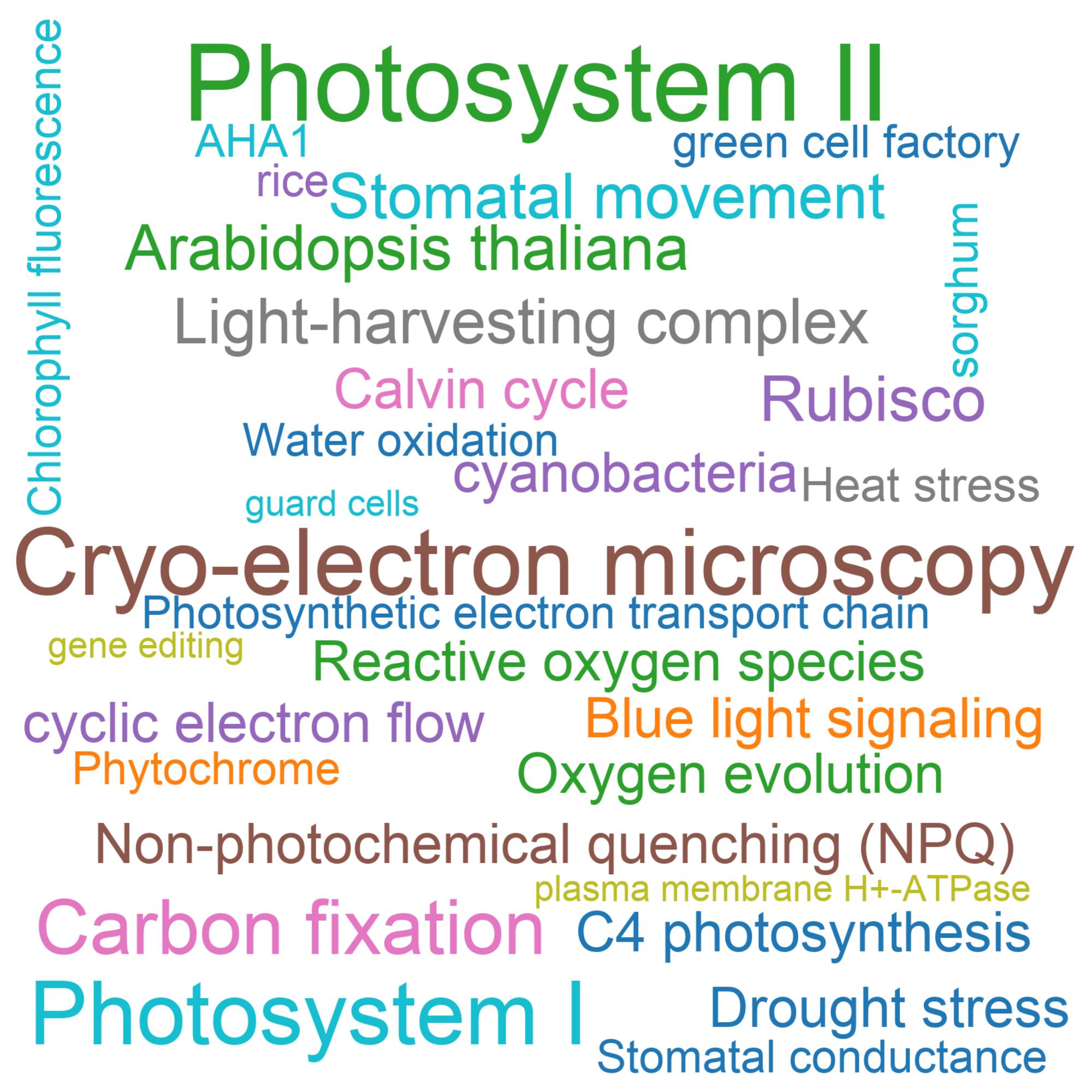
The 2026 cohort in Photosynthetic Processes and Mechanisms is driven by structural biology, with heavy emphasis on Photosystem I/II and Cryo-electron microscopy. We observe a marked shift toward regulatory mechanisms like stomatal movement and C4 photosynthesis, while focus on environmental stress responses and photoprotection has declined.
At a glance
- Field
- Photosynthetic Processes and Mechanisms
- Cohort label
- Class of 2026 (2024 publications)
- Papers analyzed
- 5,875
- Papers ranked
- 20
- Top topics in ranked papers
- Photosystem II, Cryo-electron microscopy, Photosystem I, Carbon fixation
- Publication window
- Jan 1, 2024 – Dec 31, 2024
- Eligibility
- Research articles; reviews excluded
- Citation window
- 18 months post-publication
- 18m citation range
- 28–84
- Data source
- OpenAlex · Retrieved July 2026
- License
- CC BY 4.0
Rankings
20 papers ranked by 18-month citation count
The mechanisms of photoinhibition and repair in plants under high light conditions and interplay with abiotic stressors
Journal of Photochemistry and Photobiology B Biology202410.1016/j.jphotobiol.2024.113004
MYB-related transcription factors control chloroplast biogenesis
Cell202410.1016/j.cell.2024.06.039
Exaptation of ancestral cell-identity networks enables C4 photosynthesis
Nature202410.1038/s41586-024-08204-3
Effects of abiotic stress on chlorophyll metabolism
Plant Science202410.1016/j.plantsci.2024.112030
Oxygen-evolving photosystem II structures during S1–S2–S3 transitions
Nature202410.1038/s41586-023-06987-5
Light-induced remodeling of phytochrome B enables signal transduction by phytochrome-interacting factor
Cell202410.1016/j.cell.2024.09.005
Emergence of a distinct mechanism of C–N bond formation in photoenzymes
Nature202410.1038/s41586-024-08138-w
The primary carbon metabolism in cyanobacteria and its regulation
Frontiers in Plant Science202410.3389/fpls.2024.1417680
Effects of Nitrogen Deficiency on the Photosynthesis, Chlorophyll a Fluorescence, Antioxidant System, and Sulfur Compounds in Oryza sativa
International Journal of Molecular Sciences202410.3390/ijms251910409
Cryo–electron microscopy reveals hydrogen positions and water networks in photosystem II
Science202410.1126/science.adn6541
Stomatal opening under high temperatures is controlled by the OST1-regulated TOT3–AHA1 module
Nature Plants202410.1038/s41477-024-01859-w
A family of NADPH/NADP+ biosensors reveals in vivo dynamics of central redox metabolism across eukaryotes
Nature Communications202410.1038/s41467-024-55302-x
Increasing Rubisco as a simple means to enhance photosynthesis and productivity now without lowering nitrogen use efficiency
New Phytologist202410.1111/nph.20298
The methylerythritol phosphate pathway as an oxidative stress sense and response system
Nature Communications202410.1038/s41467-024-49483-8
Unlocking the adaptation mechanisms of the oleaginous microalga Scenedesmus sp. BHU1 under elevated salt stress: a physiochemical, lipidomics and transcriptomics approach
Frontiers in Microbiology202410.3389/fmicb.2024.1475410
Plants distinguish different photoperiods to independently control seasonal flowering and growth
Science202410.1126/science.adg9196
Rubisco is evolving for improved catalytic efficiency and CO <sub>2</sub> assimilation in plants
Proceedings of the National Academy of Sciences202410.1073/pnas.2321050121
The microRNA408–plantacyanin module balances plant growth and drought resistance by regulating reactive oxygen species homeostasis in guard cells
The Plant Cell202410.1093/plcell/koae144
Dynamic responses of chlorophyll fluorescence parameters to drought across diverse plant families
Physiologia Plantarum202410.1111/ppl.14527
Quantum phase synchronization via exciton-vibrational energy dissipation sustains long-lived coherence in photosynthetic antennas
Nature Communications202410.1038/s41467-024-47560-6
Topic trends
Dominant research themes and year-over-year shifts in Photosynthetic Processes and Mechanisms
What Topics Define the Class of 2026?
The Class of 2026 for Photosynthetic Processes and Mechanisms is defined by structural biology and core reaction centers. Photosystem II and Photosystem I are the most frequently discussed topics, alongside high mentions of Cryo-electron microscopy. This underscores a strong trend toward resolving the high-resolution atomic structures of these massive protein complexes in different functional states. Carbon fixation and Rubisco remain highly prominent, reflecting ongoing efforts to understand and potentially optimize the dark reactions of photosynthesis for improved crop yields. Additionally, research heavily anchors on light-harvesting complexes and established model organisms like Arabidopsis thaliana to uncover the foundational mechanisms of how plants capture and safely process solar energy.
How Did Topics Shift from the Class of 2025 to the Class of 2026?
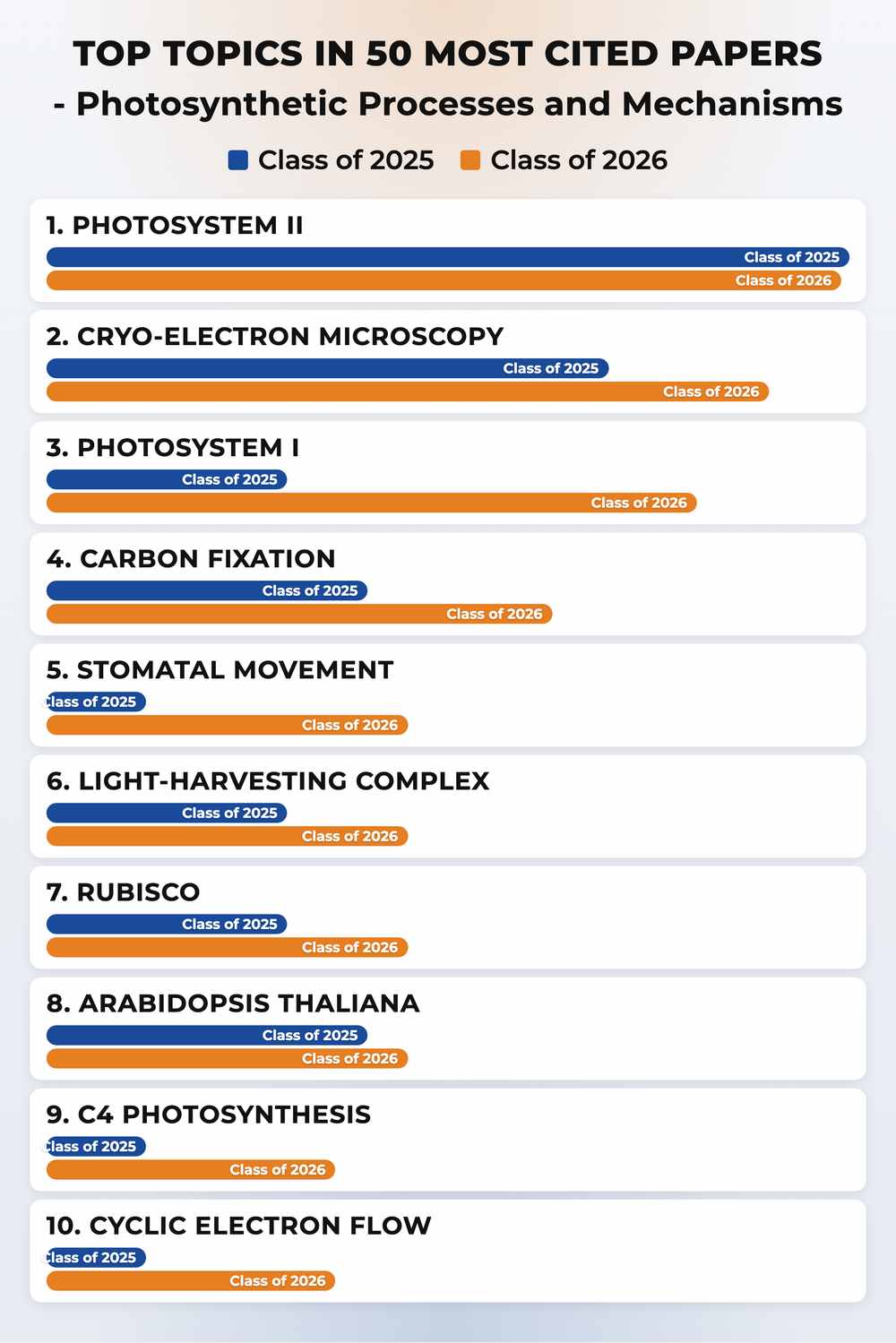
The shift from 2025 to 2026 highlights an emerging focus on regulatory and specialized photosynthetic pathways. Stomatal movement, C4 photosynthesis, and the Calvin cycle saw the largest relative increases, indicating a move toward understanding physiological responses and efficient carbon assimilation strategies. Photosystem I also experienced a massive 2.7-fold increase in focus, reflecting renewed interest in its structural dynamics alongside cyclic electron flow, which also rose significantly. Conversely, topics related to environmental stress responses—such as CO2 concentrating mechanisms, light stress, photoprotection, and chlorophyll fluorescence—declined in prominence. This suggests a subtle transition in the field's top-cited literature, moving away from studying general stress adaptation and toward optimizing the core structural and biochemical machinery of photosynthesis.
Methodology
PRI identifies high-impact research using a transparent, topic-agnostic framework applied consistently across scientific domains. Bibliographic records are drawn from OpenAlex, including publication dates, citation relationships, and document types.
This ranking covers the Class of 2026 cohort: journal articles published in 2024. Reviews and other non-article document types are excluded to ensure comparability.
Research impact is quantified with an 18-month post-publication citation window—the number of citing works published within 18 months of each paper's publication date. This metric captures early impact while controlling for publication age.
An LLM-based relevance classifier then reviews each candidate's title and abstract to confirm substantive alignment with the target domain. Only papers classified as relevant appear in the final ranking.
Zheng Su, Tinsley Li, Thematic Shifts in Early-High-Impact Cancer Genomics and Diagnostics Research: A Bibliometric and Semantic Analysis. bioRxiv 2026.07.04.736459; doi: https://doi.org/10.64898/2026.07.04.736459
Cite this ranking
Pepkio Research Index (PRI). Topics and Trends in Most Cited Photosynthetic Processes and Mechanisms Papers, Class of 2026. https://pri.pepkio.com/top-papers/photosynthetic-processes-and-mechanisms/2026. Accessed 2026-10-16.

Methodology
Zheng Su, Tinsley Li, Thematic Shifts in Early-High-Impact Cancer Genomics and Diagnostics Research: A Bibliometric and Semantic Analysis. bioRxiv 2026.07.04.736459; doi: https://doi.org/10.64898/2026.07.04.736459