
What topics and trends defined most-cited Plant Physiology and Cultivation Studies research in the Class of 2026?
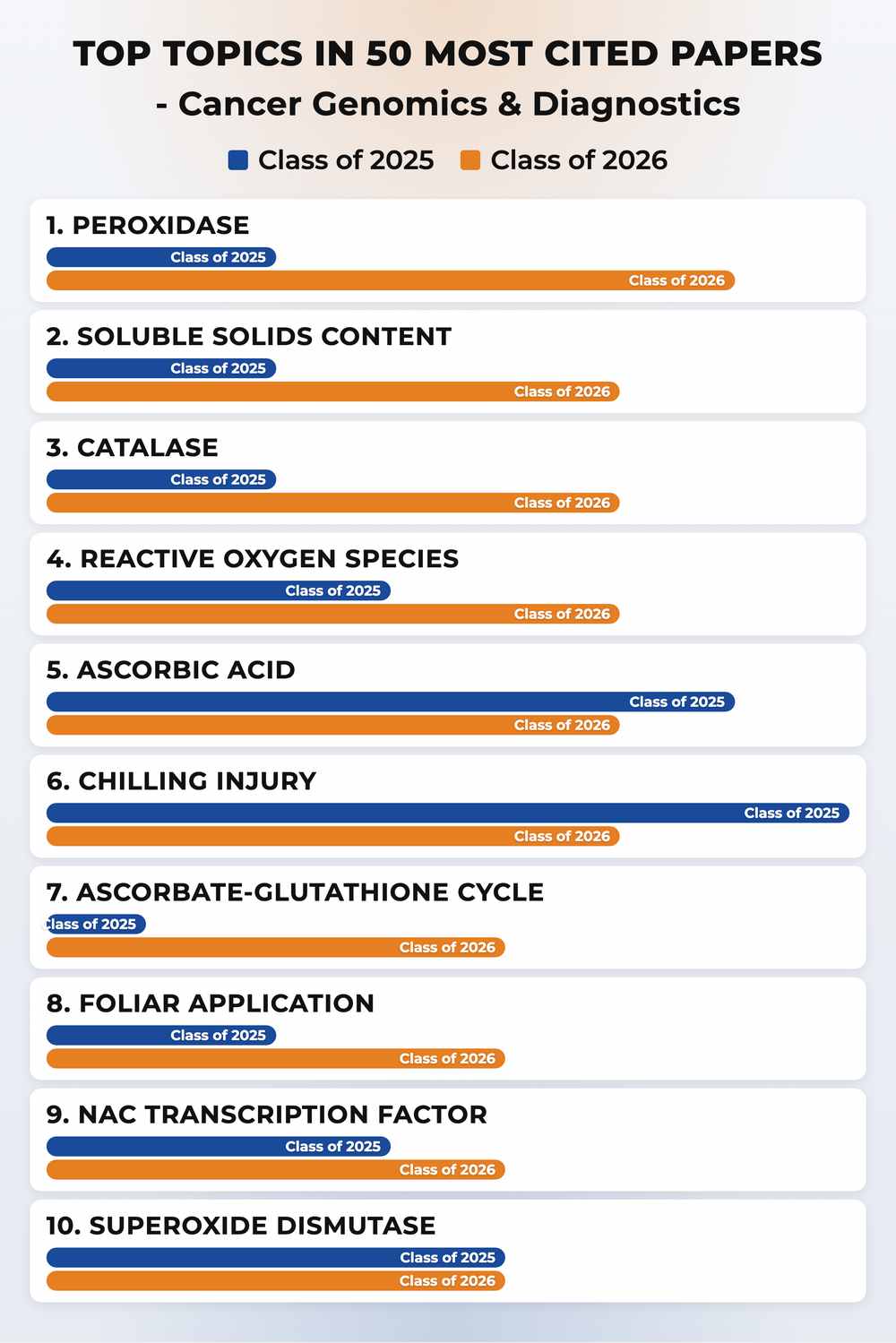
The Class of 2026 reveals a strong shift towards molecular and oxidative stress responses, with topics like the ascorbate-glutathione cycle and antioxidant enzymes (peroxidase, catalase) rising sharply. Meanwhile, macroscopic and physical traits such as fruit softening and fruit firmness saw notable declines, indicating a deeper molecular focus in recent plant physiology research.
At a glance
- Field
- Plant Physiology and Cultivation Studies
- Cohort label
- Class of 2026 (2024 publications)
- Papers analyzed
- 7,478
- Papers ranked
- 20
- Top topics in ranked papers
- Peroxidase, ascorbic acid, catalase, reactive oxygen species, chilling injury
- Publication window
- Jan 1, 2024 – Dec 31, 2024
- Eligibility
- Research articles; reviews excluded
- Citation window
- 18 months post-publication
- 18m citation range
- 25–62
- Data source
- OpenAlex · Retrieved Jul 2026
- License
- CC BY 4.0
Rankings
20 papers ranked by 18-month citation count
Enhanced composite Co-MOF-derived sodium carboxymethyl cellulose visual films for real-time and in situ monitoring fresh-cut apple freshness
Food Hydrocolloids202410.1016/j.foodhyd.2024.110475
Hydrogen sulfide attenuates chilling injury in loquat fruit by alleviating oxidative stress and maintaining cell membrane integrity
Food Chemistry202410.1016/j.foodchem.2024.141094
Advances in apple’s automated orchard equipment: A comprehensive research
Computers and Electronics in Agriculture202410.1016/j.compag.2024.108926
From Salinity to Nutrient-Rich Vegetables: Strategies for Quality Enhancement in Protected Cultivation
Critical Reviews in Plant Sciences202410.1080/07352689.2024.2351678
Effects of Drought Stress on Photosynthesis and Chlorophyll Fluorescence in Blue Honeysuckle
Plants202410.3390/plants13152115
Two gene clusters and their positive regulator SlMYB13 that have undergone domestication-associated negative selection control phenolamide accumulation and drought tolerance in tomato
Molecular Plant202410.1016/j.molp.2024.02.003
Near-gapless and haplotype-resolved apple genomes provide insights into the genetic basis of rootstock-induced dwarfing
Nature Genetics202410.1038/s41588-024-01657-2
Thymol application delays the decline of fruit quality in blueberries via regulation of cell wall, energy and membrane lipid metabolism
Food Chemistry202410.1016/j.foodchem.2024.140193
Exogenous brassinolides and calcium chloride synergically maintain quality attributes of jujube fruit (Ziziphus jujuba Mill.)
Postharvest Biology and Technology202410.1016/j.postharvbio.2024.113039
<scp>MdWRKY31</scp>‐<scp>MdNAC7</scp> regulatory network: orchestrating fruit softening by modulating cell wall‐modifying enzyme <scp>MdXTH2</scp> in response to ethylene signalling
Plant Biotechnology Journal202410.1111/pbi.14445
Transcriptome analysis reveals that trehalose alleviates chilling injury of peach fruit by regulating ROS signaling pathway and enhancing antioxidant capacity
Food Research International202410.1016/j.foodres.2024.114331
Comparative metabolome and transcriptome analyses reveal the role of MeJA in improving postharvest disease resistance and maintaining the quality of Rosa roxburghii fruit
Postharvest Biology and Technology202410.1016/j.postharvbio.2024.113314
Xanthan gum coatings augmented with lemongrass oil preserve postharvest quality and antioxidant defence system of Kinnow fruit under low-temperature storage
International Journal of Biological Macromolecules202410.1016/j.ijbiomac.2024.129776
L-Glutamate treatment alleviates chilling injury of prune (Prunus domestica L.) fruit by regulating ROS homeostasis, GABA shunt, and energy metabolism
Food Chemistry202410.1016/j.foodchem.2024.140899
Climate change impact on Mediterranean viticultural regions and site-specific climate risk-reduction strategies
Mitigation and Adaptation Strategies for Global Change202410.1007/s11027-024-10146-0
Melatonin delays softening of postharvest pepper fruits (Capsicum annuum L.) by regulating cell wall degradation, membrane stability and antioxidant systems
Postharvest Biology and Technology202410.1016/j.postharvbio.2024.112852
A gradient of the HD-Zip regulator Woolly regulates multicellular trichome morphogenesis in tomato
The Plant Cell202410.1093/plcell/koae077
Quantitative analyses of major enzyme activities in postharvest fruit
Future Postharvest and Food202410.1002/fpf2.12021
<i>De novo</i> gene integration into regulatory networks via interaction with conserved genes in peach
Horticulture Research202410.1093/hr/uhae252
Composite coating of xanthan gum with sodium nitroprusside alleviates the quality deterioration in strawberry fruit
Food Hydrocolloids202410.1016/j.foodhyd.2024.110208
Topic trends
Dominant research themes and year-over-year shifts in Plant Physiology and Cultivation Studies
What Topics Define the Class of 2026?
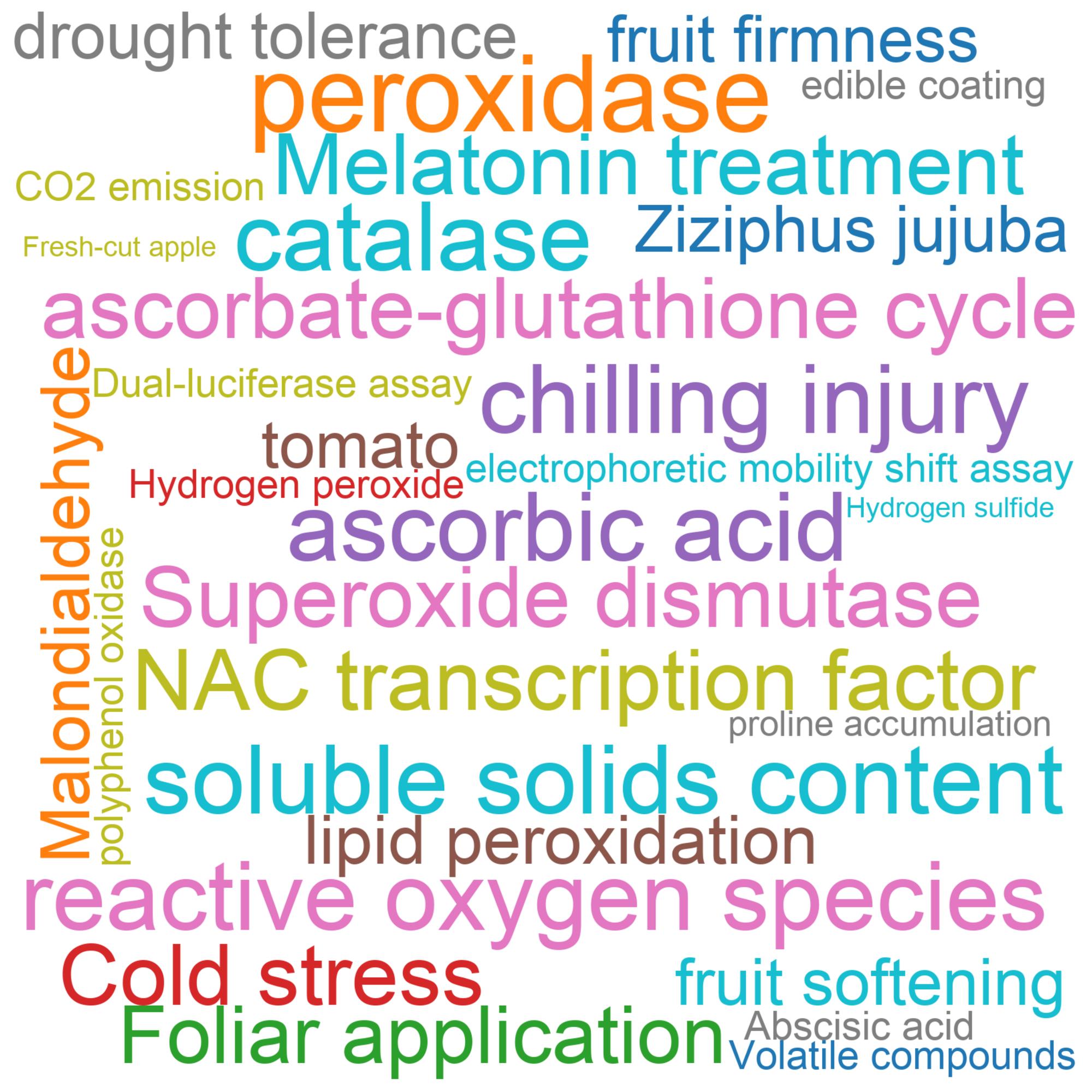
In the Class of 2026, plant physiology and cultivation research is predominantly characterized by studies on oxidative stress and molecular antioxidant responses. The most frequent topics include peroxidase, catalase, and reactive oxygen species, reflecting an intense focus on how plants manage environmental stress at the cellular level. Additionally, metabolic indicators like ascorbic acid and soluble solids content remain highly prevalent. The prominence of these biochemical topics suggests that researchers are moving beyond basic physical assessments to investigate the fundamental metabolic pathways and stress tolerance mechanisms in crops, aiming to improve agricultural resilience through deeper molecular understanding.
How Did Topics Shift from the Class of 2025 to the Class of 2026?
The transition to the Class of 2026 highlights a distinct pivot from macroscopic physical traits toward advanced molecular and biochemical assays. Topics such as the ascorbate-glutathione cycle, drought tolerance, and molecular techniques like the dual-luciferase assay and electrophoretic mobility shift assay emerged rapidly. Conversely, traditionally dominant physiological topics like fruit softening and fruit firmness experienced significant declines, dropping sharply from their previous highs. This evolution underscores a broader trend in plant physiology research: a growing reliance on detailed molecular and genetic analyses to unravel complex stress responses, replacing older, more phenotype-focused methodologies.
Methodology
PRI identifies high-impact research using a transparent, topic-agnostic framework applied consistently across scientific domains. Bibliographic records are drawn from OpenAlex, including publication dates, citation relationships, and document types.
This ranking covers the Class of 2026 cohort: journal articles published in 2024. Reviews and other non-article document types are excluded to ensure comparability.
Research impact is quantified with an 18-month post-publication citation window—the number of citing works published within 18 months of each paper's publication date. This metric captures early impact while controlling for publication age.
An LLM-based relevance classifier then reviews each candidate's title and abstract to confirm substantive alignment with the target domain. Only papers classified as relevant appear in the final ranking.
Zheng Su, Tinsley Li, Thematic Shifts in Early-High-Impact Cancer Genomics and Diagnostics Research: A Bibliometric and Semantic Analysis. bioRxiv 2026.07.04.736459; doi: https://doi.org/10.64898/2026.07.04.736459
Cite this ranking
Pepkio Research Index (PRI). Topics and Trends in Most Cited Plant Physiology and Cultivation Studies Papers, Class of 2026. https://pri.pepkio.com/top-papers/plant-physiology-and-cultivation-studies/2026. Accessed 2026-10-14.

Methodology
Zheng Su, Tinsley Li, Thematic Shifts in Early-High-Impact Cancer Genomics and Diagnostics Research: A Bibliometric and Semantic Analysis. bioRxiv 2026.07.04.736459; doi: https://doi.org/10.64898/2026.07.04.736459