Topics and Trends in Most Cited Pediatric health and respiratory diseases Papers

Ranked by citations 18 months after publication

Class of 2026 (Papers Published in 2024)

What topics and trends defined most-cited Pediatric health and respiratory diseases research in the Class of 2026?

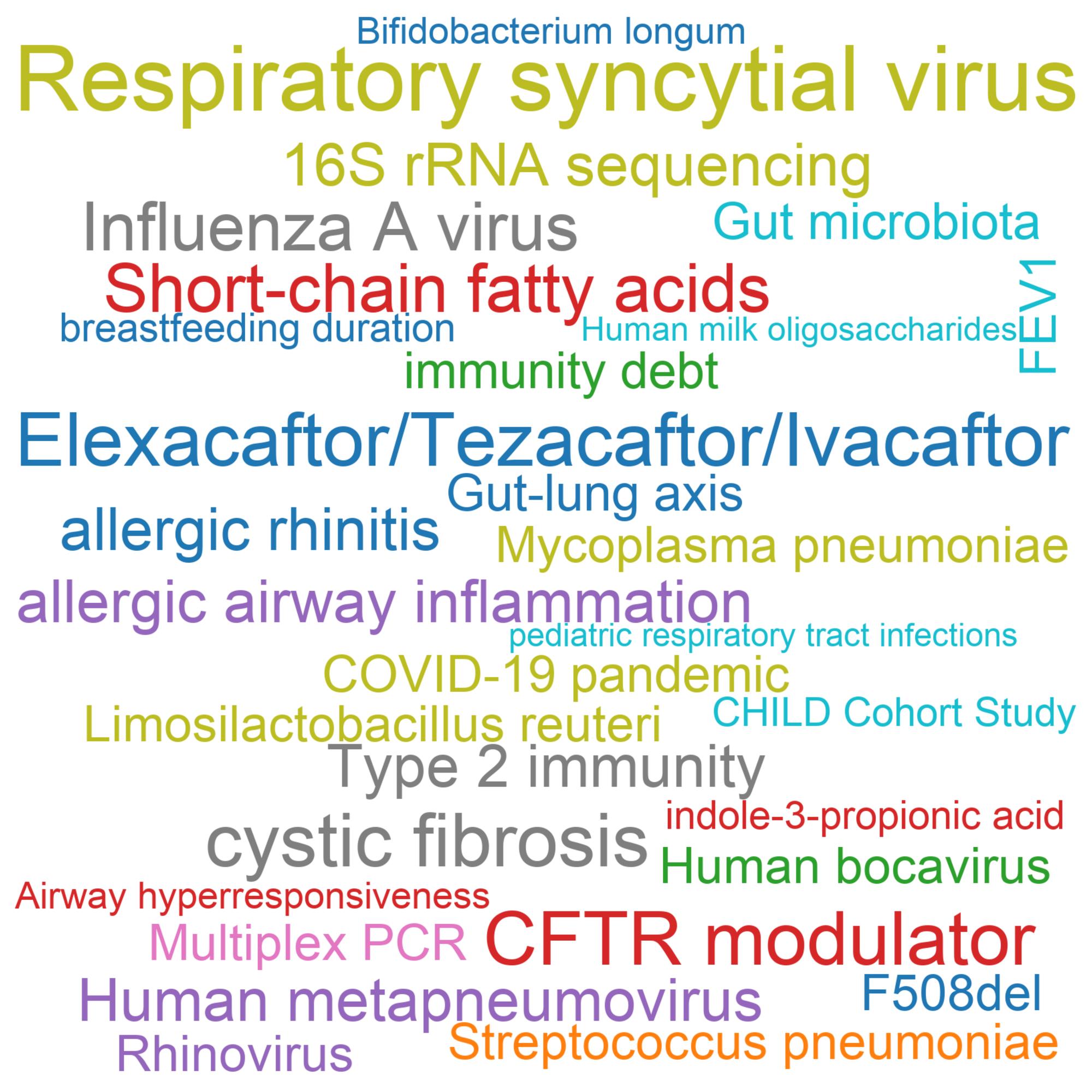
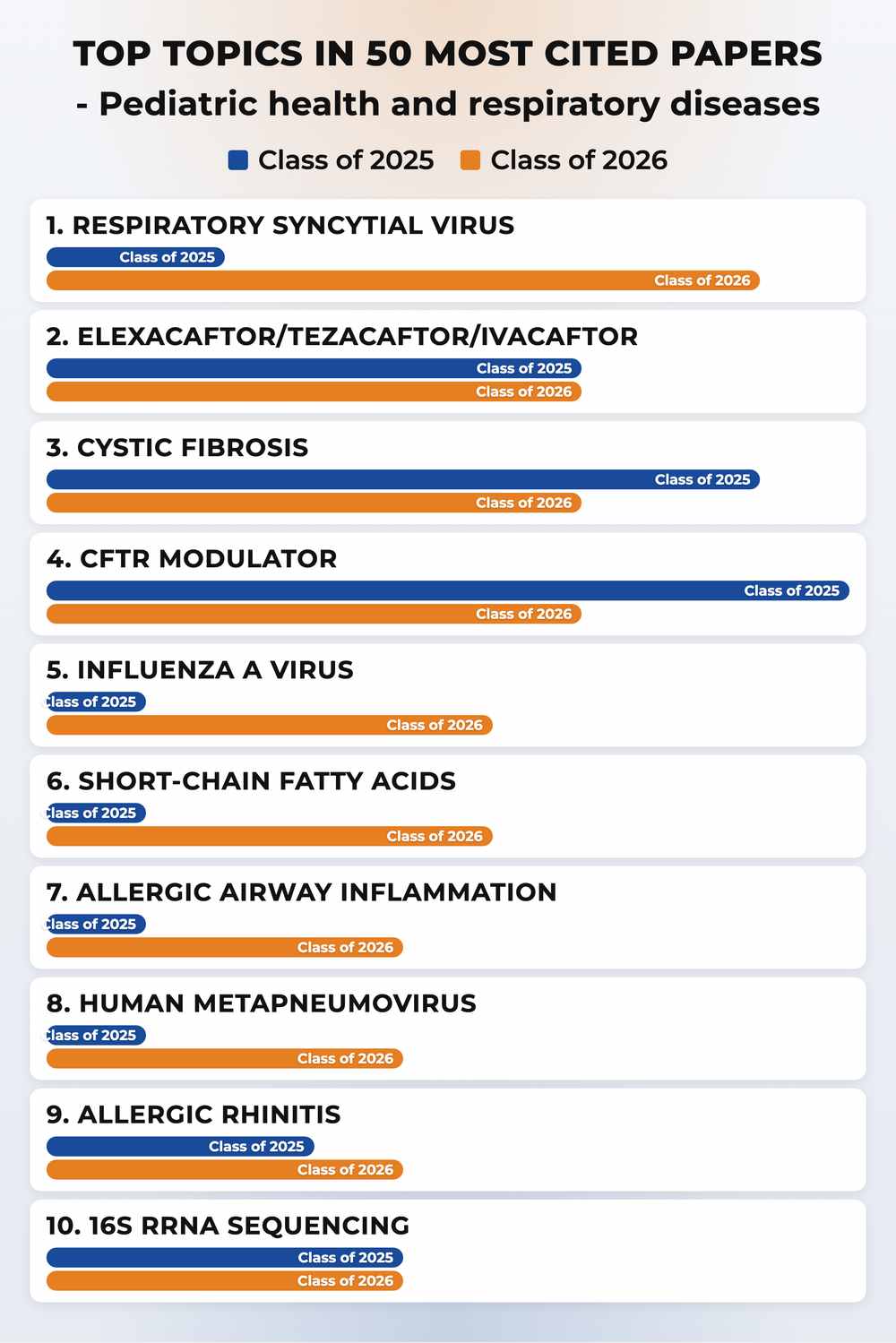
Respiratory syncytial virus, CFTR modulator therapy, and post-pandemic viral resurgence define the Class of 2026 pediatric respiratory cohort, alongside cystic fibrosis, gut microbiome, and pediatric asthma. RSV, post-pandemic resurgence, and cystic fibrosis rose sharply from Class of 2025, while CFTR modulator therapy and airway microbiome studies receded among top-cited papers.

See details ↓

At a glance

Field
Pediatric health and respiratory diseases
Cohort label
Class of 2026 (2024 publications)
Papers analyzed
5,248
Papers ranked
20
Top topics in ranked papers
Respiratory syncytial virus, CFTR modulator therapy, Cystic fibrosis, Post-pandemic viral resurgence, Gut microbiome
Publication window
Jan 1, 2024 – Dec 31, 2024
Eligibility
Research articles; reviews excluded
Citation window
18 months post-publication
18m citation range
17–49
Data source
OpenAlex · Retrieved Jul 2026
License
CC BY 4.0

Rankings

20 papers ranked by 18-month citation count

#1 of 5,248
4918m citations

Microbial colonization programs are structured by breastfeeding and guide healthy respiratory development

Liat Shenhav et al.Cell202410.1016/j.cell.2024.07.022

CorrespondingLiat Shenhav, Padmaja Subbarao, Michael G. Surette, Meghan B. AzadInstitutionInstitute for Systems Genetics, United States

CHILD Cohort StudyNasal microbiomeGut microbiomebreastfeeding durationBreast milk compositionexclusive breastfeedingPediatric asthmaMicrobial colonizationRuminococcus gnavustryptophan biosynthesisimmune modulationearly cessation of breastfeedingpremature microbial maturationrespiratory illness riskInfant microbiome developmentHuman milk oligosaccharidesmediation analysis of breastfeeding effectsmicrobial functional profilingpaced microbial developmentmicrobial intervention targets
#2 of 5,248
4718m citations

Antibiotic-driven dysbiosis in early life disrupts indole-3-propionic acid production and exacerbates allergic airway inflammation in adulthood

Olaf Perdijk et al.Immunity202410.1016/j.immuni.2024.06.010

CorrespondingOlaf Perdijk, Tomasz P. Wypych, Benjamin J. MarslandInstitutionMonash University, Australia

antibiotic-driven dysbiosisMicrobiome disruptionindole-3-propionic acidallergic airway inflammationgut-lung axistryptophan metabolismGut microbiomemicrobial metabolite deficiencyGerm-free miceasthma pathogenesisaryl hydrocarbon receptor signalingTh2 immune responseAirway hyperresponsivenessfecal metabolomicsAntibiotic usemicrobiota-derived indole metabolitesImmune system developmentShort-chain fatty acid-producing bacteriabacterial tryptophan catabolismmucosal immunity
#3 of 5,248
3818m citations

Systematic review of the association between short‐chain fatty acids and allergic diseases

Mari Sasaki et al.Allergy202410.1111/all.16065

CorrespondingMari SasakiInstitutionUniversity Children's Hospital Zürich, Switzerland

short-chain fatty acidsacetatepropionatebutyrateGut microbiomeallergic diseasesAtopic dermatitisWheezingasthmaIgE-mediated food allergyprenatal SCFA exposureearly childhood SCFA exposuresystematic review methodologytiming-specific effectmicrobial fermentation productsallergic disease preventionAllergic marchpre-existing allergic disease patientsMedline/Embase/Web of Science search
#4 of 5,248
3418m citations

Surge of Pediatric Respiratory Tract Infections after the COVID-19 Pandemic and the Concept of “Immune Debt”

Lea Lenglart et al.The Journal of Pediatrics202410.1016/j.jpeds.2024.114420

CorrespondingLéa LenglartInstitutionRobert Debré University Hospital, France

Immunity debtNon-pharmaceutical interventionsPediatric respiratory tract infectionsInterrupted time-series analysisGeneralized additive modelsDose-response relationshipCOVID-19 pandemic rebound effectMultinational pediatric emergency department surveillanceSocial distancingBronchiolitisTonsillitis/pharyngitisPneumoniaUrinary tract infection as control outcomeEuropean pediatric emergency departmentsPost-pandemic viral resurgence
#5 of 5,248
3318m citations

Nirsevimab and Acute Bronchiolitis Episodes in Pediatric Emergency Departments

David Andina Martínez et al.PEDIATRICS202410.1542/peds.2024-066584

CorrespondingDavid Andina MartínezInstitutionHospital Infantil Universitario Niño Jesús, Spain

nirsevimabRespiratory syncytial virusRSV preventionBronchiolitisLower respiratory tract infectionpediatric emergency departmentsextended catch-up immunizationhospital admissionsPediatric intensive care unit admissioninfant populationRSV seasonSpanish regionsRetrospective cohort study
#6 of 5,248
3118m citations

European Respiratory Society statement on preschool wheezing disorders: updated definitions, knowledge gaps and proposed future research directions

Heidi Makrinioti et al.European Respiratory Journal202410.1183/13993003.00624-2024

CorrespondingHeidi MakriniotiInstitutionMassachusetts General Hospital, United States

Preschool wheezingepisodic viral wheezingmultiple-trigger wheezingEuropean Respiratory Society task forcetreatable traitsBlood eosinophil countAllergic sensitizationType 2 inflammationinhaled corticosteroidsLung functionairway infectiongenetic traits guiding managementcaregiver-reported outcomesself-management optionsspecialist referral criteriasevere/difficult-to-treat wheezing definitionclinical phenotypingairway pathologyBiomarker-guided therapyaction plan for wheezing management
#7 of 5,248
3018m citations

Epidemiological characteristics of common respiratory pathogens in children

Guojian Lv et al.Scientific Reports202410.1038/s41598-024-65006-3

CorrespondingKai MuInstitutionZibo Maternal and Child Health Hospital, China

PCR capillary electrophoresis fragment analysisStreptococcus pneumoniaeHaemophilus influenzaeMycoplasma pneumoniaeChlamydia pneumoniaeRhinovirusRespiratory syncytial virusInfluenza A virusParainfluenza virusHuman metapneumovirusHuman bocavirusHuman coronavirusInfluenza B virusMixed infectionage-stratified infection rateSeasonality of respiratory virusessingle pathogen positive detection ratePediatric respiratory tract infection epidemiologycentral Shandong pediatric cohortSputum culture
#8 of 5,248
2918m citations

[Guidelines for the management of community-acquired pneumonia in children (2024 revision)].

Subspecialty Group of Respiratory, the Society of Pediatrics, Chinese Medical Association et al.PubMed202410.3760/cma.j.cn112140-20240728-00523

CorrespondingSubspecialty Group of Respiratory, the Society of Pediatrics, Chinese Medical AssociationInstitutionChinese Medical Association, China

community-acquired pneumoniapediatric guidelinesantimicrobial therapy in childrenempirical antibiotic selectionclinical practice guideline revision
#9 of 5,248
2818m citations

Pharmacological Improvement of Cystic Fibrosis Transmembrane Conductance Regulator Function Rescues Airway Epithelial Homeostasis and Host Defense in Children with Cystic Fibrosis

Jennifer Loske et al.American Journal of Respiratory and Critical Care Medicine202410.1164/rccm.202310-1836oc

CorrespondingJennifer LoskeInstitutionBerlin Institute of Health at Charité - Universitätsmedizin Berlin, Germany

CFTRElexacaftor/tezacaftor/ivacaftorF508del mutationnasal epithelial cellssingle-cell RNA sequencingionocytesAirway basal cellsclub cellsgoblet cellsIFN signalingmajor histocompatibility complex class Imajor histocompatibility complex class IIneutrophilsmacrophagesAirway mucosal homeostasisinnate mucosal immunityCFTR-positive cellsimmune cell inflammatory responses
#10 of 5,248
2318m citations

Impact of COVID‑19 pandemic restrictions and subsequent relaxation on the prevalence of respiratory virus hospitalizations in children

Ahmed Abushahin et al.BMC Pediatrics202410.1186/s12887-024-04566-9

CorrespondingAhmed AbushahinInstitutionSidra Medicine, Qatar

COVID-19 public health measuresrespiratory virus hospitalizationsviral acute lower respiratory tract infection (ALRTI)Respiratory syncytial virusRhinoviruschildren ≤ 36 monthspandemic seasonalityPediatric respiratory tract infection epidemiologySidra Medicine QatarPost-pandemic viral resurgencePediatric intensive care unit admissionLength of stayrespiratory support requirementswinter season transmissionNon-pharmaceutical interventions
#11 of 5,248
2318m citations

Recommendations for Prevention and Control of Influenza in Children, 2024–2025: Policy Statement

Committee on Infectious DiseasesPEDIATRICS202410.1542/peds.2024-068507

CorrespondingCommittee on Infectious DiseasesInstitutionAmerican Academy of Pediatrics, United States

influenza vaccinationtrivalent influenza vaccineantiviral treatmentantiviral chemoprophylaxisinfluenza-like illnesschildren 6 months and olderhigh-risk conditions for influenza complicationshospitalization from influenzaoutpatient antiviral treatment windowhousehold contact prophylaxisAmerican Academy of Pediatrics policy statement2024-2025 influenza seasoncocirculating respiratory virusesimmunocompromised immune response to vaccination
#12 of 5,248
2118m citations

Safety and Immunogenicity of an mRNA-Based hMPV/PIV3 Combination Vaccine in Seropositive Children

Sabine Schnyder Ghamloush et al.PEDIATRICS202410.1542/peds.2023-064748

CorrespondingChristine A. ShawInstitutionModerna, Inc., United States

mRNA-1653Human metapneumovirusparainfluenza virus type 3 (PIV3)mRNA-based combination vaccinemembrane-anchored fusion protein antigen designseropositive pediatric populationphase 1b dose-ranging studyneutralizing antibody titerspreF binding antibodypostF binding antibodypreF-biased antibody responsegeometric mean fold-riseLocal adverse reactionsSystemic adverse reactionsprime-boost immunization schedulevaccine reactogenicitypediatric respiratory illness preventiondose-level comparison (10-μg vs 30-μg)observer-blind placebo-controlled designimmunogenicity in seropositive individuals
#13 of 5,248
2118m citations

A lactobacilli-based inhaled live biotherapeutic product attenuates pulmonary neutrophilic inflammation

Teodora Nicola, Nancy Wenger et al.Nature Communications202410.1038/s41467-024-51169-0

CorrespondingCharitharth Vivek LalInstitutionUniversity of Alabama at Birmingham, United States

Bronchopulmonary dysplasiaLive biotherapeutic productLactobacillus strainsAcetylated proline-glycine-proline (Ac-PGP)MMP-9/PGP pathwayMatrix metalloproteinase-9Neutrophilic inflammationHyperoxia exposureVolutraumaFirmicute depletionAirway microbiomeChronic obstructive pulmonary diseaseMurine model of BPDGain- and loss-of-function studiesInhaled therapeuticsLung structure and functionNeutrophil chemotaxisIn vitro and in vivo disease modelsPro-inflammatory markers
#14 of 5,248
2118m citations

Evaluation of elexacaftor–tezacaftor–ivacaftor treatment in individuals with cystic fibrosis and CFTRN1303K in the USA: a prospective, multicentre, open-label, single-arm trial

George M Solomon et al.The Lancet Respiratory Medicine202410.1016/s2213-2600(24)00205-4

CorrespondingGeorge M. SolomonInstitutionUniversity of Alabama at Birmingham, United States

Elexacaftor/tezacaftor/ivacaftorCFTR N1303K mutationCystic fibrosisCFTR modulator therapysingle-arm trial designSweat chloride testPercent predicted FEV1CFTR gating mutationgene-specific therapy response
#15 of 5,248
2018m citations

Safety and Pharmacokinetics of Nirsevimab in Immunocompromised Children

Joseph Domachowske, Ulrika Wählby Hamrén et al.PEDIATRICS202410.1542/peds.2024-066508

CorrespondingJoseph Domachowske, Ulrika Wählby HamrénInstitutionState University of New York Upstate Medical University, United States

nirsevimabRespiratory syncytial virusRSV lower respiratory tract infectionimmunocompromised childrenextended half-life monoclonal antibodyMUSIC trialpharmacokineticsPrimary immunodeficiencytransplantationHIV infectionhigh-dose systemic corticosteroidsimmunosuppressive chemotherapyantidrug antibodiesnirsevimab clearanceprotein lossintramuscular injectionserum concentrations
#16 of 5,248
1918m citations

Clinical Remission in Patients Affected by Severe Eosinophilic Asthma on Dupilumab Therapy: A Long-Term Real-Life Study

Carla Maria Irene Quarato et al.Journal of Clinical Medicine202410.3390/jcm13010291

CorrespondingGiulia SciosciaInstitutionPoliclinico Universitario "Riuniti" di Foggia, Italy

DupilumabEosinophilic asthmaClinical remissionbiological therapy for type 2 asthmaoral corticosteroid (OCS) dependenceOCS dose reductionAsthma exacerbationsasthma control test (ACT) scorepre-bronchodilator FEV1Fractional exhaled nitric oxide (FeNO)Blood eosinophil countFEF25-75% small airway flowReal-world evidencelong-term follow-up (24 months)obesity as predictor of treatment responseodds ratio for clinical remissioncomplete vs partial remissiontype 2 inflammation biomarkersbaseline clinical characteristics as predictorsIL-4/IL-13 pathway blockade
#17 of 5,248
1918m citations

Increased Trend of Adenovirus Activity After the COVID-19 Pandemic in South Korea: Analysis of National Surveillance Data

Nam-Joo Lee et al.Annals of Laboratory Medicine202410.3343/alm.2023.0484

CorrespondingNam-Joo LeeInstitutionKorea Disease Control and Prevention Agency (KDCA), South Korea

adenovirus detection rateKorea Respiratory Integrated Surveillance SystemCOVID-19 pandemic impactNon-pharmaceutical interventionsRespiratory virus surveillanceHAdV-1 serotypeHAdV-2 serotypeHAdV-3 serotypeChild age groupssummer seasonality shiftPost-pandemic viral resurgenceepidemic preparednessSouth Korea surveillance dataImmunity debt
#18 of 5,248
1918m citations

The respiratory microbiome is linked to the severity of RSV infections and the persistence of symptoms in children

Maartje Kristensen et al.Cell Reports Medicine202410.1016/j.xcrm.2024.101836

CorrespondingMaartje KristensenInstitutionUniversity Medical Center Utrecht, Netherlands

Respiratory syncytial virusAirway microbiomeNasopharyngeal swabBirth cohortRESCEU (RSV Consortium in Europe)pediatric case-control studyHaemophilusStreptococcusMoraxellaDolosigranulumCorynebacteriumInfant microbiome developmentdisease severity associationDisease persistenceconvalescence samplinginfant respiratory infectionmicrobiota-disease interaction16S rRNA gene sequencinghealthy controls comparison
#19 of 5,248
1818m citations

Reported Adverse Events in a Multicenter Cohort of Patients Ages 6-18 Years with Cystic Fibrosis and at Least One F508del Allele Receiving Elexacaftor/Tezacaftor/Ivacaftor

Vito Terlizzi et al.The Journal of Pediatrics202410.1016/j.jpeds.2024.114176

CorrespondingVito TerlizziInstitutionMeyer Children's Hospital IRCCS, Italy

Elexacaftor/tezacaftor/ivacaftorF508del mutationCFTR modulator therapyPediatric cystic fibrosis cohortMulticenter cohort studyAdverse eventsCFTR modulator safety monitoring
#20 of 5,248
1718m citations

Gene expression responses of CF airway epithelial cells exposed to elexacaftor/tezacaftor/ivacaftor suggest benefits beyond improved CFTR channel function

Thomas H Hampton et al.American Journal of Physiology-Lung Cellular and Molecular Physiology202410.1152/ajplung.00272.2024

CorrespondingThomas H HamptonInstitutionDartmouth College, United States

Elexacaftor/tezacaftor/ivacaftorCFTR channel functionCF airway epithelial cells (AECs)gene expression profilingbeta-defensin 1 (hBD-1)bacterial infection resistanceMMP10MMP12lung tissue damageairway inflammationproinflammatory cytokine secretionCFTR modulator therapyCystic fibrosis
Methodology

PRI identifies high-impact research using a transparent, topic-agnostic framework applied consistently across scientific domains. Bibliographic records are drawn from OpenAlex, including publication dates, citation relationships, and document types.

This ranking covers the Class of 2026 cohort: journal articles published in 2024. Reviews and other non-article document types are excluded to ensure comparability.

Research impact is quantified with an 18-month post-publication citation window—the number of citing works published within 18 months of each paper's publication date. This metric captures early impact while controlling for publication age.

An LLM-based relevance classifier then reviews each candidate's title and abstract to confirm substantive alignment with the target domain. Only papers classified as relevant appear in the final ranking.

Zheng Su, Tinsley Li, Thematic Shifts in Early-High-Impact Cancer Genomics and Diagnostics Research: A Bibliometric and Semantic Analysis. bioRxiv 2026.07.04.736459; doi: https://doi.org/10.64898/2026.07.04.736459

Cite this ranking

Pepkio Research Index (PRI). Topics and Trends in Most Cited Pediatric health and respiratory diseases Papers, Class of 2026. https://pri.pepkio.com/top-papers/pediatric-health-and-respiratory-diseases/2026. Accessed 2026-07-13.

Zheng Su, Tinsley Li, Thematic Shifts in Early-High-Impact Cancer Genomics and Diagnostics Research: A Bibliometric and Semantic Analysis. bioRxiv 2026.07.04.736459; doi: https://doi.org/10.64898/2026.07.04.736459