
What topics and trends defined most-cited Neonatal Respiratory Health Research research in the Class of 2026?
Neonatal respiratory health research in the Class of 2026 is defined by a major shift toward passive RSV immunization, led by nirsevimab and targeted prophylaxis. Concurrently, focus moved from broad observational metrics toward hyperoxia-induced acute lung injury and bronchopulmonary dysplasia prevention in preterm infants.
At a glance
- Field
- Neonatal Respiratory Health Research
- Cohort label
- Class of 2026 (2024 publications)
- Papers analyzed
- 9,303
- Papers ranked
- 20
- Top topics in ranked papers
- Respiratory syncytial virus (RSV), preterm infants, nirsevimab, bronchopulmonary dysplasia
- Publication window
- Jan 1, 2024 – Dec 31, 2024
- Eligibility
- Research articles; reviews excluded
- Citation window
- 18 months post-publication
- 18m citation range
- 28–98
- Data source
- OpenAlex · Retrieved Jul 2026
- License
- CC BY 4.0
Rankings
20 papers ranked by 18-month citation count
Impact of nirsevimab prophylaxis on paediatric respiratory syncytial virus (RSV)-related hospitalisations during the initial 2023/24 season in Luxembourg
Eurosurveillance202410.2807/1560-7917.es.2024.29.4.2400033
RSV Prefusion F Protein–Based Maternal Vaccine — Preterm Birth and Other Outcomes
New England Journal of Medicine202410.1056/nejmoa2305478
Global, regional, and national burden of preterm birth, 1990–2021: a systematic analysis from the global burden of disease study 2021
EClinicalMedicine202410.1016/j.eclinm.2024.102840
Early-life respiratory syncytial virus disease and long-term respiratory health
The Lancet Respiratory Medicine202410.1016/s2213-2600(24)00246-7
Effectiveness of Nirsevimab Immunoprophylaxis Administered at Birth to Prevent Infant Hospitalisation for Respiratory Syncytial Virus Infection: A Population-Based Cohort Study
Vaccines202410.3390/vaccines12040383
Tracing the origin of alveolar stem cells in lung repair and regeneration
Cell202410.1016/j.cell.2024.03.010
Initial Oxygen Concentration for the Resuscitation of Infants Born at Less Than 32 Weeks’ Gestation
JAMA Pediatrics202410.1001/jamapediatrics.2024.1848
Deviations in RSV epidemiological patterns and population structures in the United States following the COVID-19 pandemic
Nature Communications202410.1038/s41467-024-47757-9
Safety and Efficacy of Nirsevimab in a Universal Prevention Program of Respiratory Syncytial Virus Bronchiolitis in Newborns and Infants in the First Year of Life in the Valle d’Aosta Region, Italy, in the 2023–2024 Epidemic Season
Vaccines202410.3390/vaccines12050549
Analyses of 1236 genotyped primary ciliary dyskinesia individuals identify regional clusters of distinct DNA variants and significant genotype–phenotype correlations
European Respiratory Journal202410.1183/13993003.01769-2023
Etiologically Based Functional Taxonomy of the Preterm Birth Syndrome
Clinics in Perinatology202410.1016/j.clp.2024.02.014
Survival of Infants Born at 22 to 25 Weeks’ Gestation Receiving Care in the NICU: 2020–2022
PEDIATRICS202410.1542/peds.2024-065963
Systemic Postnatal Corticosteroids, Bronchopulmonary Dysplasia, and Survival Free of Cerebral Palsy
JAMA Pediatrics202410.1001/jamapediatrics.2024.4575
Neurodevelopmental Outcomes After Late Preterm Antenatal Corticosteroids
JAMA202410.1001/jama.2024.4303
Intratracheal Budesonide Mixed With Surfactant for Extremely Preterm Infants
JAMA202410.1001/jama.2024.17380
Predictors of Death or Severe Impairment in Neonates With Hypoxic-Ischemic Encephalopathy
JAMA Network Open202410.1001/jamanetworkopen.2024.49188
Mechanosensitive channels TMEM63A and TMEM63B mediate lung inflation–induced surfactant secretion
Journal of Clinical Investigation202410.1172/jci174508
Physiological versus time based cord clamping in very preterm infants (ABC3): a parallel-group, multicentre, randomised, controlled superiority trial
The Lancet Regional Health - Europe202410.1016/j.lanepe.2024.101146
Quantitative Lung Ultrasonography to Guide Surfactant Therapy in Neonates Born Late Preterm and Later
JAMA Network Open202410.1001/jamanetworkopen.2024.13446
RSV Neutralizing Antibodies Following Nirsevimab and Palivizumab Dosing
PEDIATRICS202410.1542/peds.2024-067174
Topic trends
Dominant research themes and year-over-year shifts in Neonatal Respiratory Health Research
What Topics Define the Class of 2026 in Neonatal Respiratory Health?
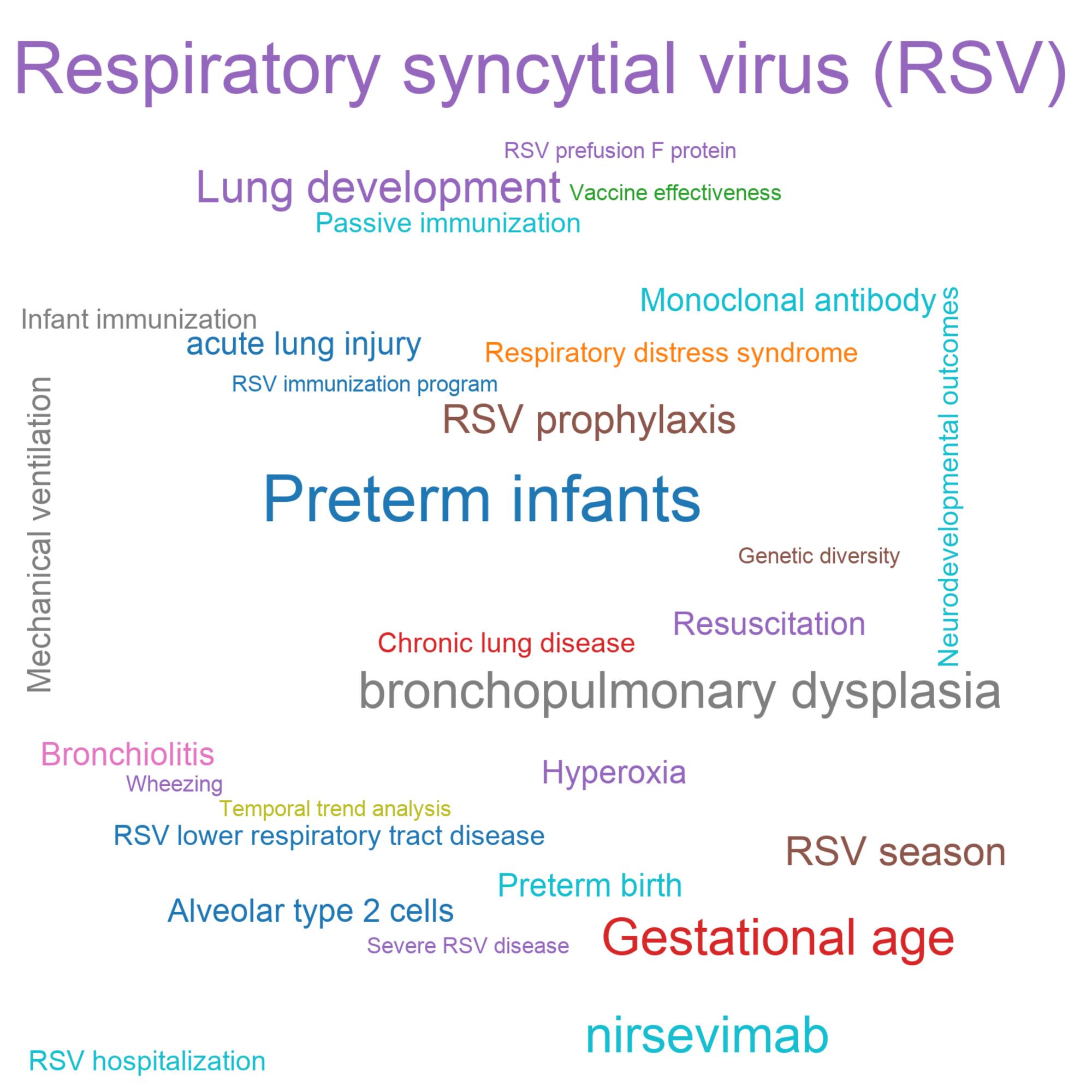
The Class of 2026 in neonatal respiratory health research is anchored by major advances in viral prophylaxis and specialized neonatal intensive care. Respiratory Syncytial Virus (RSV) dominates thematic discourse, appearing in 34% of top-cited publications (17 mentions), alongside related concepts including nirsevimab (18%), RSV prophylaxis (12%), and RSV season management (12%). This pronounced concentration reflects recent regulatory breakthroughs and widespread clinical implementation of long-acting monoclonal antibody immunizations designed to protect vulnerable infant populations. Intertwined with viral prevention is a strong focus on premature infant pulmonary care. Preterm infants represent the second most frequent theme at 28% (14 mentions), supported by key diagnostic and developmental markers such as gestational age (18%), bronchopulmonary dysplasia (18%), and lung development (14%). Therapeutic and pathological studies actively examine acute lung injury (8%), mechanical ventilation (8%), hyperoxia-induced injury (8%), and neonatal resuscitation protocols (8%). Together, these dominant clusters underscore an overarching paradigm shift from reactive intervention toward preventive immunizations and lung-protective management strategies for high-risk neonates.
How Did Topics Shift from the Class of 2025 to the Class of 2026?
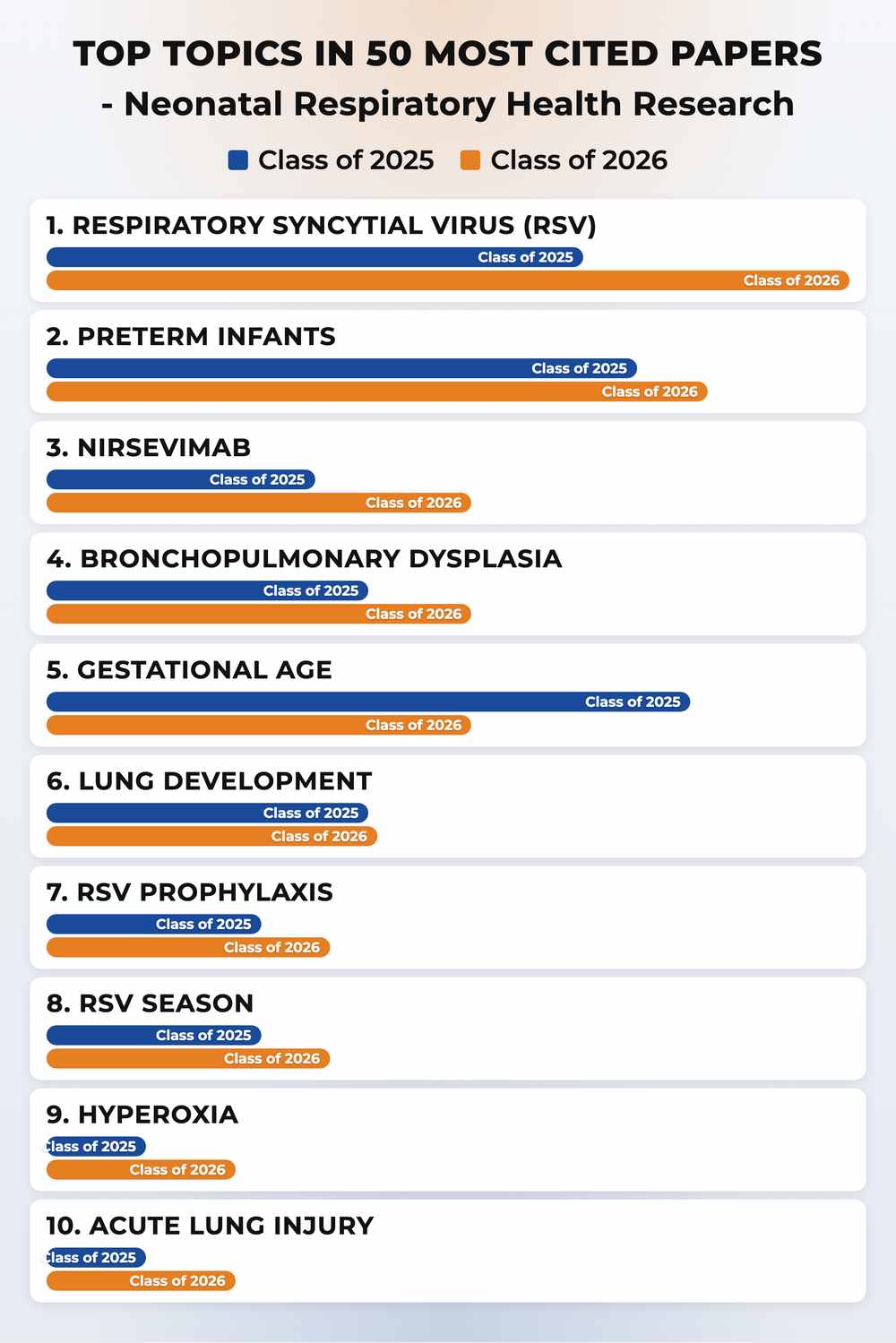
Comparative analysis between the Class of 2025 and Class of 2026 highlights a significant surge in targeted immunization research alongside emerging mechanistic studies on neonatal lung injury. The most prominent positive shift centers on RSV prevention strategies and clinical outcomes. Following the real-world rollout of nirsevimab, mentions of nirsevimab rose from 11.4% to 18.0% (1.58-fold increase), while broader RSV prophylaxis and RSV hospitalization studies also expanded significantly, with hospital-level tracking emerging as a new focus area (6% frequency). Furthermore, acute lung injury and bronchiolitis research experienced a 3.52-fold increase in mention rate (from 2.3% to 8.0%). Conversely, foundational baseline metrics experienced a relative decline in research focus. Broad observational terms such as gestational age declined from 27.3% to 18.0% (0.66-fold change), while chronic lung disease fell from 11.4% to 6.0% (0.53-fold change). Similarly, conventional oxygen therapy and postmenstrual age tracking saw relative drops to 4.0%. In their place, high-impact research shifted toward specific pathophysiological mechanisms, evidenced by new entries in hyperoxia-induced cellular toxicity (8.0%), corticosteroids, and pulmonary fibrosis. This progression demonstrates a maturing field transitioning from broad observational cohort characterization to targeted molecular therapeutics and population-level passive immunization.
Methodology
PRI identifies high-impact research using a transparent, topic-agnostic framework applied consistently across scientific domains. Bibliographic records are drawn from OpenAlex, including publication dates, citation relationships, and document types.
This ranking covers the Class of 2026 cohort: journal articles published in 2024. Reviews and other non-article document types are excluded to ensure comparability.
Research impact is quantified with an 18-month post-publication citation window—the number of citing works published within 18 months of each paper's publication date. This metric captures early impact while controlling for publication age.
An LLM-based relevance classifier then reviews each candidate's title and abstract to confirm substantive alignment with the target domain. Only papers classified as relevant appear in the final ranking.
Zheng Su, Tinsley Li, Thematic Shifts in Early-High-Impact Cancer Genomics and Diagnostics Research: A Bibliometric and Semantic Analysis. bioRxiv 2026.07.04.736459; doi: https://doi.org/10.64898/2026.07.04.736459
Cite this ranking
Pepkio Research Index (PRI). Topics and Trends in Most Cited Neonatal Respiratory Health Research Papers, Class of 2026. https://pri.pepkio.com/top-papers/neonatal-respiratory-health-research/2026. Accessed 2026-10-16.

Methodology
Zheng Su, Tinsley Li, Thematic Shifts in Early-High-Impact Cancer Genomics and Diagnostics Research: A Bibliometric and Semantic Analysis. bioRxiv 2026.07.04.736459; doi: https://doi.org/10.64898/2026.07.04.736459