
What topics and trends defined most-cited Glycosylation and Glycoproteins Research research in the Class of 2026?
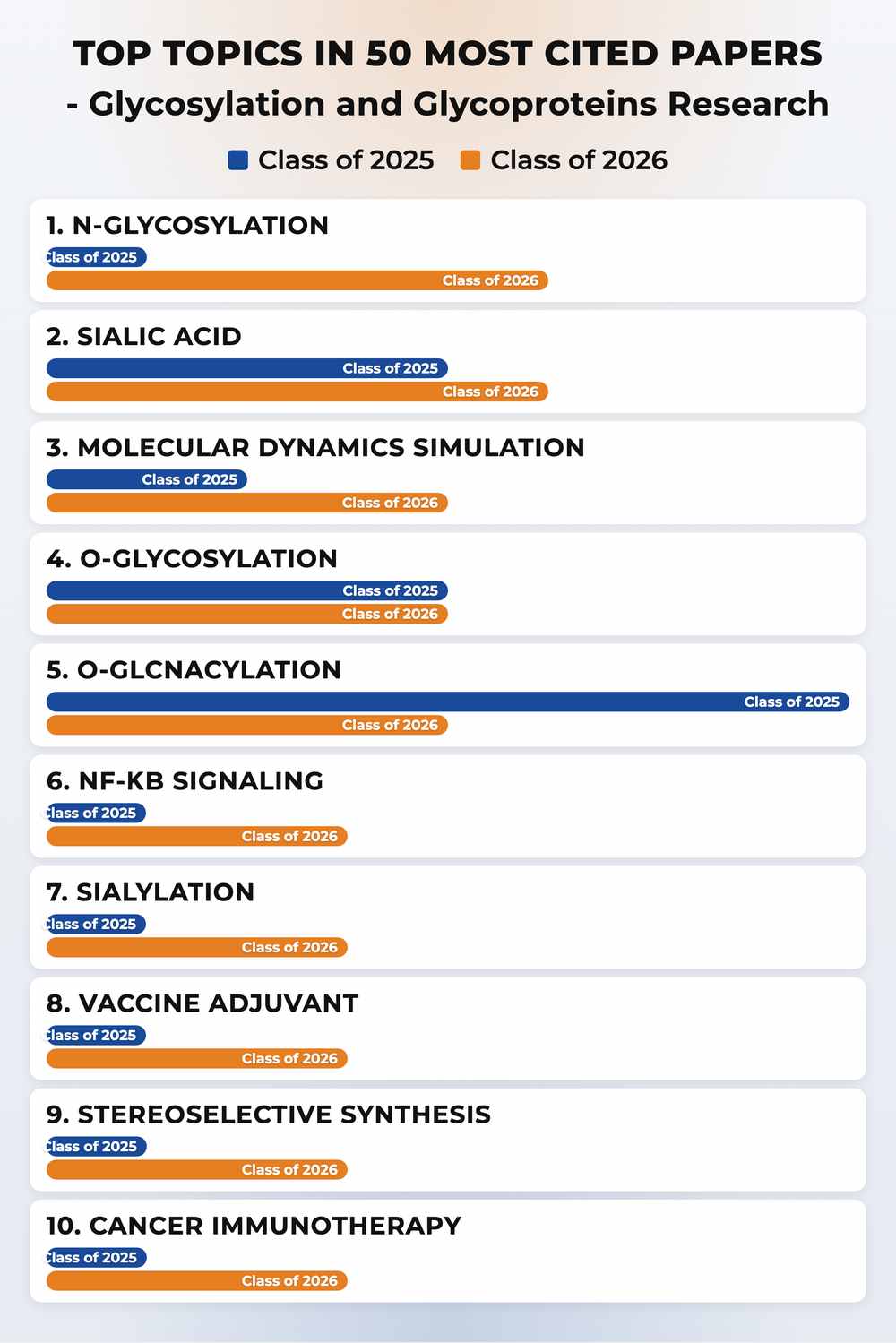
The Class of 2026 underscores a massive 5-fold surge in N-glycosylation research and a striking emergence of NF-κB signaling and sialylation studies. While O-GlcNAcylation focus halved, the field shows an accelerating convergence with cancer immunotherapy, leveraging molecular dynamics and stereoselective synthesis to decode complex glycan functions.
At a glance
- Field
- Glycosylation and Glycoproteins Research
- Cohort label
- Class of 2026 (2024 publications)
- Papers analyzed
- 4,997
- Papers ranked
- 20
- Top topics in ranked papers
- N-glycosylation, post-translational modification, sialic acid
- Publication window
- Jan 1, 2024 – Dec 31, 2024
- Eligibility
- Research articles; reviews excluded
- Citation window
- 18 months post-publication
- 18m citation range
- 34–105
- Data source
- OpenAlex · Retrieved July 2026
- License
- CC BY 4.0
Rankings
20 papers ranked by 18-month citation count
Designed endocytosis-inducing proteins degrade targets and amplify signals
Nature202410.1038/s41586-024-07948-2
Direct radical functionalization of native sugars
Nature202410.1038/s41586-024-07548-0
Complete biosynthesis of the potent vaccine adjuvant QS-21
Nature Chemical Biology202410.1038/s41589-023-01538-5
Mannose metabolism reshapes T cell differentiation to enhance anti-tumor immunity
Cancer Cell202410.1016/j.ccell.2024.11.003
Glycosphingolipid synthesis mediates immune evasion in KRAS-driven cancer
Nature202410.1038/s41586-024-07787-1
Chemical Synthesis of Human Proteoforms and Application in Biomedicine
ACS Central Science202410.1021/acscentsci.4c00642
Restoring protein glycosylation with GlycoShape
Nature Methods202410.1038/s41592-024-02464-7
Avian and Human Influenza A Virus Receptors in Bovine Mammary Gland
Emerging infectious diseases202410.3201/eid3009.240696
O-GlcNAc forces an α-synuclein amyloid strain with notably diminished seeding and pathology
Nature Chemical Biology202410.1038/s41589-024-01551-2
Predicting glycan structure from tandem mass spectrometry via deep learning
Nature Methods202410.1038/s41592-024-02314-6
A unique serum IgG glycosylation signature predicts development of Crohn’s disease and is associated with pathogenic antibodies to mannose glycan
Nature Immunology202410.1038/s41590-024-01916-8
Binding of Akkermansia muciniphila to mucin is O-glycan specific
Nature Communications202410.1038/s41467-024-48770-8
Clinical and biochemical footprints of congenital disorders of glycosylation: Proposed nosology
Molecular Genetics and Metabolism202410.1016/j.ymgme.2024.108476
An N-glycome tissue atlas of 15 human normal and cancer tissue types determined by MALDI-imaging mass spectrometry
Scientific Reports202410.1038/s41598-023-50957-w
Pancreatic cancer-associated fibroblasts modulate macrophage differentiation via sialic acid-Siglec interactions
Communications Biology202410.1038/s42003-024-06087-8
Phenylboronic acid-functionalized biomaterials for improved cancer immunotherapy via sialic acid targeting
Advances in Colloid and Interface Science202410.1016/j.cis.2024.103301
Protein glycosylation in cardiovascular health and disease
Nature Reviews Cardiology202410.1038/s41569-024-00998-z
Integrated chemoenzymatic synthesis of a comprehensive sulfated ganglioside glycan library to decipher functional sulfoglycomics and sialoglycomics
Nature Chemistry202410.1038/s41557-024-01540-x
Sialylated glycoproteins suppress immune cell killing by binding to Siglec-7 and Siglec-9 in prostate cancer
Journal of Clinical Investigation202410.1172/jci180282
Rapid simulation of glycoprotein structures by grafting and steric exclusion of glycan conformer libraries
Cell202410.1016/j.cell.2024.01.034
Topic trends
Dominant research themes and year-over-year shifts in Glycosylation and Glycoproteins Research
What Topics Define the Class of 2026?
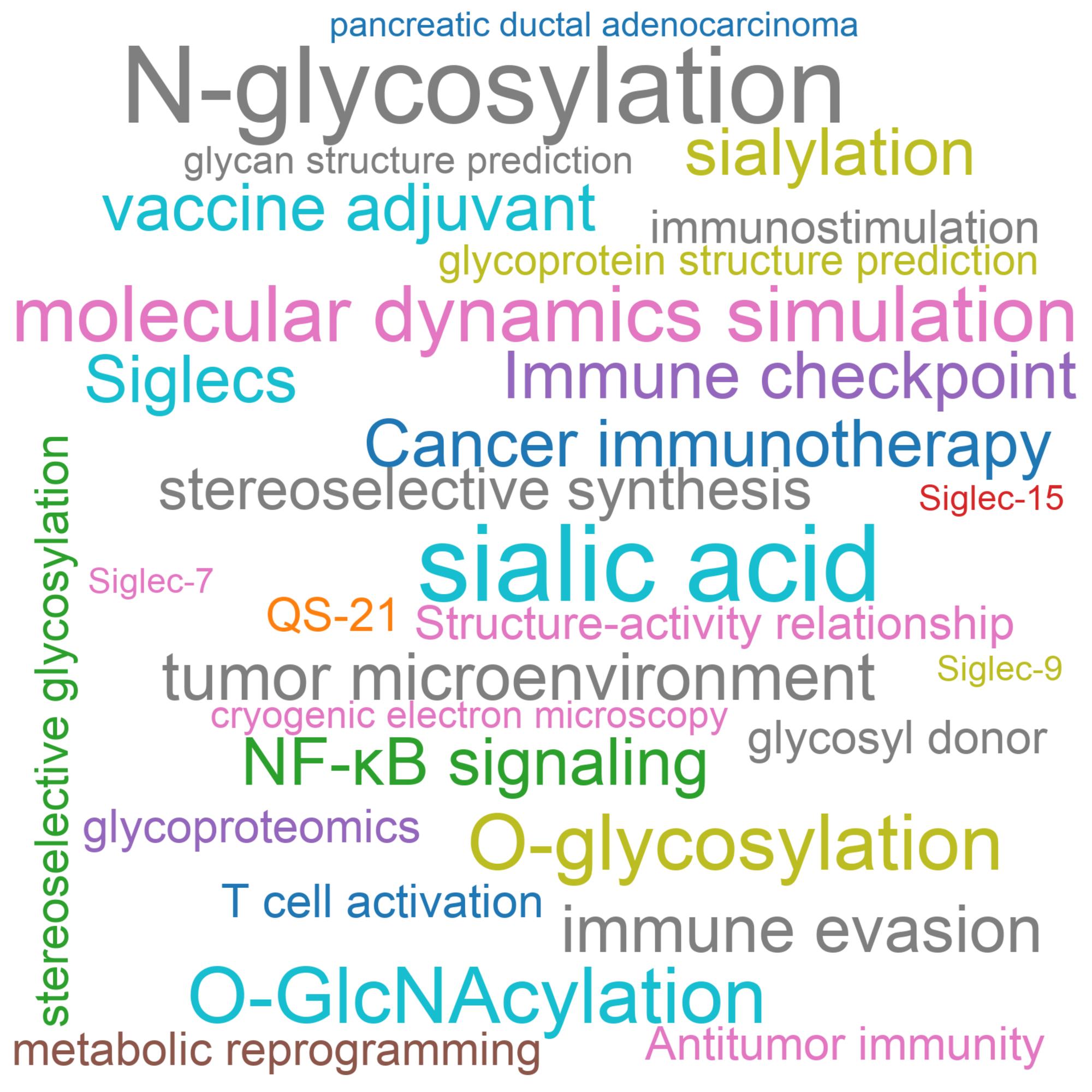
The Class of 2026 is dominated by foundational studies in N-glycosylation and its role as a key post-translational modification. Sialic acid biology remains highly prominent, reflecting its importance in cellular interactions and immune evasion. We observe a strong representation of structural and mechanistic approaches, notably molecular dynamics simulations and stereoselective synthesis of glycans, which are essential for dissecting complex glycosylation patterns. Furthermore, the intersection of glycobiology with immunology is a major theme, highlighted by concepts like cancer immunotherapy, the tumor microenvironment, and immune checkpoint regulation.
How Did Topics Shift from the Class of 2025 to the Class of 2026?
We see a dramatic surge in specific signaling and structural topics. NF-κB signaling and generalized sialylation emerged from a near-zero baseline frequency in 2025 to become prominent themes in 2026. N-glycosylation research also experienced a massive 5-fold increase in representation, underscoring a renewed focus on this core modification. Cancer immunotherapy applications similarly tripled in frequency. Conversely, O-GlcNAcylation research decreased by half compared to the previous cohort, alongside slight decreases in general post-translational modification focus. Overall, the data indicates a shift away from broader profiling towards specific, translationally relevant pathways like immune evasion and specialized sialic acid signaling.
Methodology
PRI identifies high-impact research using a transparent, topic-agnostic framework applied consistently across scientific domains. Bibliographic records are drawn from OpenAlex, including publication dates, citation relationships, and document types.
This ranking covers the Class of 2026 cohort: journal articles published in 2024. Reviews and other non-article document types are excluded to ensure comparability.
Research impact is quantified with an 18-month post-publication citation window—the number of citing works published within 18 months of each paper's publication date. This metric captures early impact while controlling for publication age.
An LLM-based relevance classifier then reviews each candidate's title and abstract to confirm substantive alignment with the target domain. Only papers classified as relevant appear in the final ranking.
Zheng Su, Tinsley Li, Thematic Shifts in Early-High-Impact Cancer Genomics and Diagnostics Research: A Bibliometric and Semantic Analysis. bioRxiv 2026.07.04.736459; doi: https://doi.org/10.64898/2026.07.04.736459
Cite this ranking
Pepkio Research Index (PRI). Topics and Trends in Most Cited Glycosylation and Glycoproteins Research Papers, Class of 2026. https://pri.pepkio.com/top-papers/glycosylation-and-glycoproteins-research/2026. Accessed 2026-10-16.

Methodology
Zheng Su, Tinsley Li, Thematic Shifts in Early-High-Impact Cancer Genomics and Diagnostics Research: A Bibliometric and Semantic Analysis. bioRxiv 2026.07.04.736459; doi: https://doi.org/10.64898/2026.07.04.736459